Era
Ancient
Early civilizations through the fall of Rome.
c. 3,000 BCE – 500 CE
Overview
The Ancient Era covers the rise of the first literate civilizations — Mesopotamia, Egypt, China, India, Greece, and Rome — through the collapse of the Western Roman Empire. It was a period of extraordinary weapons innovation driven by metallurgy, state military organization, and large-scale warfare between rival empires.
The transition from stone to copper, then bronze, then iron fundamentally changed what weapons could do and who could afford them. By the late Ancient Era, professional standing armies armed with standardized weapons had replaced tribal war bands.
Key Developments
Bronze Age Weapons (c. 3,300 – 1,200 BCE)
Bronze — an alloy of copper and tin — was harder and more durable than copper alone, enabling longer blades and more effective armor.
- Khopesh — Egyptian sickle-sword, one of the first purpose-designed swords
- Chariot — Not a weapon itself, but a weapons platform that dominated Near Eastern and Egyptian warfare
- Composite bow — Layers of horn, sinew, and wood gave this short recurve bow exceptional power; the signature weapon of steppe and Near Eastern cavalry
- Bronze spear and shield — The foundation of Greek and Near Eastern infantry combat
- Scale armor and bronze helmets — Early metal armor appeared in this period
Iron Age and Classical Period (c. 1,200 BCE – 500 CE)
Iron was harder to smelt but produced superior weapons and was far more abundant than tin, democratizing metal weaponry.
- Greek hoplite panoply — Dory spear, hoplon shield, xiphos shortsword, bronze cuirass and Corinthian helmet; the basis of phalanx warfare
- Sarissa — Philip II of Macedon's extended pike (up to 6 meters), the weapon that made Alexander's phalanx nearly unbreakable
- Roman pilum and gladius — The heavy javelin (pilum) was thrown just before melee to disrupt enemy formations; the gladius shortsword excelled in close combat in the press of the shield wall
- Scutum — The large Roman rectangular shield that enabled the testudo (tortoise) formation
- Ballista and onager — Roman artillery that could batter fortifications or rain bolts on enemy formations
- Gladius evolution to spatha — As Rome faced cavalry threats, the longer spatha cavalry sword replaced the gladius
Armor
Ancient armor progressed from linen quilting and leather to bronze plates, scale armor, chainmail (appearing by the 3rd century BCE), and the later lamellar armor used by Persian and Parthian cavalry.
Naval Weapons
The trireme, with its bronze ram, was the premier naval weapon of the classical Mediterranean. Naval combat was decided by ramming and boarding, with marines using standard infantry weapons.
Regional Traditions
| Region | Signature Weapons | |--------|------------------| | Egypt | Khopesh, composite bow, chariot | | Greece | Hoplite spear, xiphos, ballista | | Rome | Pilum, gladius, scorpio artillery | | Persia | Composite bow, akinakes, cavalry | | China | Dagger-axe (ge), crossbow, bronze sword |
This article is a stub. Contributions covering specific cultures, battles, and individual weapon types are welcome.
Battles & Operations
-
Battle of Kadesh (c. May 1274 BC)
The Battle of Kadesh, fought around 1274 BC beside the Orontes River in Syria, set the Egyptian army of Ramesses II against the Hittite… Continued…
-
Battle of Marathon (August or September 490 BC)
The Battle of Marathon, fought in late summer 490 BC on the coastal plain northeast of Athens, ended the first Persian invasion of Greece.… Continued…
-
Battle of Salamis (September 480 BC)
The Battle of Salamis, fought in September 480 BC in the narrow strait between the island of Salamis and the coast near Athens, was the… Continued…
-
Battle of Thermopylae (August or September 480 BC)
The Battle of Thermopylae was fought in late summer 480 BC in the narrow coastal pass of Thermopylae in central Greece, where a Greek force… Continued…
-
Battle of Gaugamela (1 October 331 BC)
The Battle of Gaugamela, fought on 1 October 331 BC near Arbela in northern Mesopotamia, decided the war between Alexander the Great and… Continued…
-
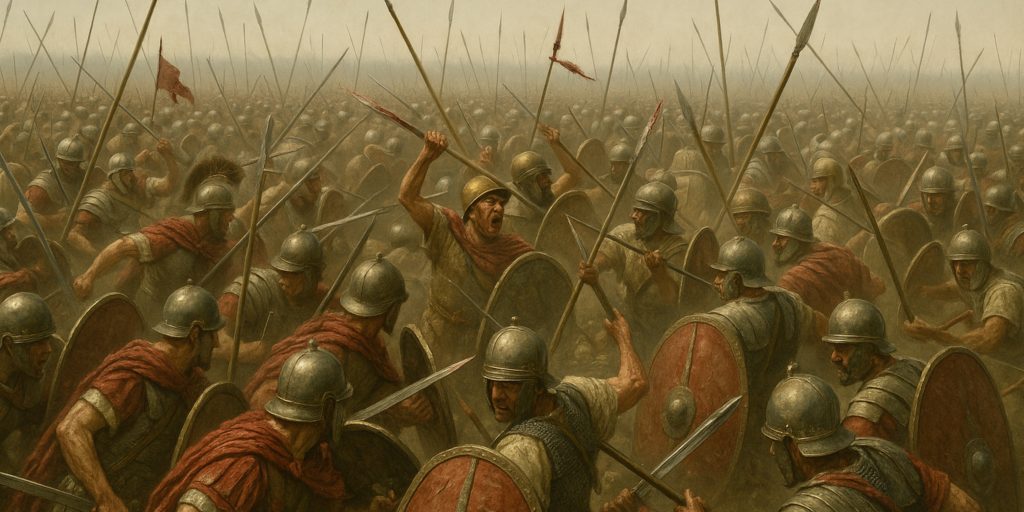
Battle of Cannae (2 August 216 BC)
The Battle of Cannae, fought on 2 August 216 BC in Apulia in southern Italy, was Hannibal's masterpiece and one of the worst defeats in… Continued…
-
Battle of Zama (October 202 BC)
The Battle of Zama, fought in North Africa in 202 BC, ended the Second Punic War. The Roman general Publius Cornelius Scipio, with the help… Continued…
-
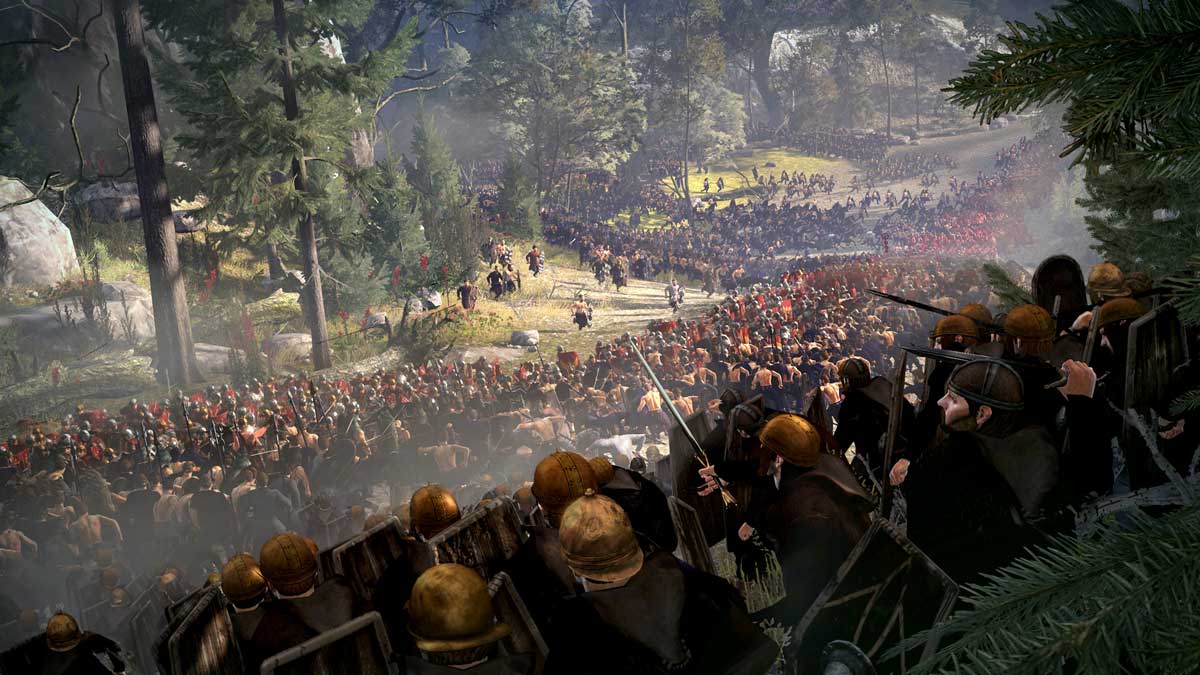
Battle of Teutoburg Forest (September 9 AD)
The Battle of the Teutoburg Forest was the destruction of three Roman legions — the XVII, XVIII and XIX — with their auxiliaries by an… Continued…
Weapons
-
Assyrian Composite Bow
The composite bow of the Neo-Assyrian Empire, built of wood, horn and sinew bonded with glue, was the principal weapon of the most… Continued…
-
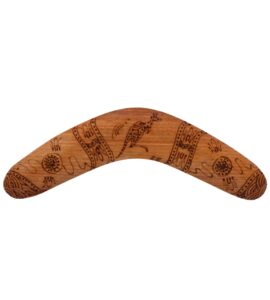
Boomerang
The boomerang is a curved throwing stick, and the returning kind is only one small branch of a very old family. A boomerang carved from… Continued…
-
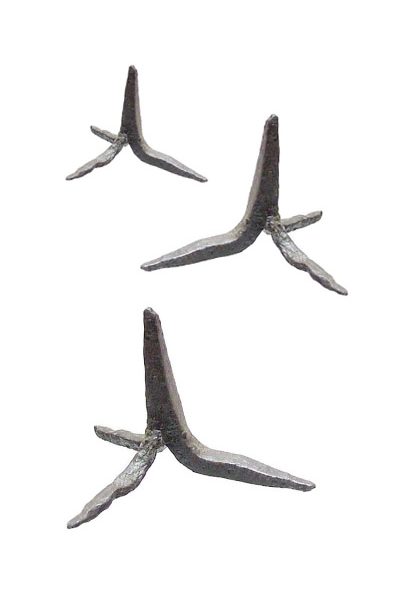
Caltrops
A caltrop is a small iron device of four spikes joined at the center so that however it lands, one spike always points up. Scattered on the… Continued…
-
Celtic La Tène Sword
The La Tène sword was the iron sword of the Celtic peoples of Europe from about 450 BC until the Roman conquest, named after an… Continued…
-
Chinese Ji
The ji is the Chinese halberd: a spear point combined with a side blade on a long shaft, able to thrust, hook and cut. It grew out of the… Continued…
-
Chinese Jian
The jian is the double-edged straight sword of China, in continuous use for more than two and a half thousand years. It began as a short… Continued…
-
Chu-ko-nu
The chu-ko-nu, or zhuge nu, is the Chinese repeating crossbow. A box magazine on top of the stock held a stack of bolts, and a single lever… Continued…
-
Corinthian Helmet
The Corinthian helmet is the classic helmet of the Greek hoplite: a bronze helmet beaten from a single sheet, covering the whole head and… Continued…
-
Egyptian Khopesh
The khopesh is the curved sickle-sword of Bronze Age Egypt, its blade sweeping into a crescent with the cutting edge on the OUTSIDE of the… Continued…
-
Fire Ship
A fire ship was a vessel filled with flammable material, set alight and sent drifting or sailing into an enemy fleet. Wooden ships with… Continued…
-
Greek Aspis
The aspis was the great round shield of the Greek hoplite: a deep bowl of laminated wood about 90 centimeters across, often faced in thin… Continued…
-
Greek Kopis
The kopis was the forward-curved, single-edged chopping sword of classical Greece. Its blade is concave near the hilt and swells toward the… Continued…
-
Greek Trireme
The trireme was the main warship of the eastern Mediterranean from the late sixth century BC to the fourth century BC. It was a long… Continued…
-
Greek Xiphos
The xiphos was the sidearm of the Greek hoplite: a double-edged, leaf-bladed short sword drawn when the spear — always the primary weapon … Continued…
-
Han Crossbow
The Han crossbow was the mass-issue missile weapon of Chinese armies from the Warring States period through the Han dynasty, more than a… Continued…
-
Hoplite Dory
The dory was the thrusting spear of the Greek hoplite, the main weapon of the citizen soldiers who fought in the phalanx from the seventh… Continued…
-
Iberian Falcata
The falcata is the curved, single-edged sword of the Iberians of pre-Roman Spain, used from about the fifth to the first century BC. Its… Continued…
-
Linothorax
The linothorax was a body armor made of many layers of linen glued or stitched together, worn by Greek hoplites and later by the Macedonian… Continued…
-
Macedonian Sarissa
The sarissa was the great two-handed pike of the Macedonian phalanx, introduced by Philip II around 359 BC and carried by the infantry of… Continued…
-
Montefortino Helmet
The Montefortino helmet was the most common helmet of the Roman Republic, worn by legionaries from the fourth century BC into the first… Continued…
-
Naue II Sword
The Naue II sword is the most widespread sword type of the European Late Bronze Age: a leaf-shaped bronze blade cast in one piece with a… Continued…
-
Persian Akinakes
The akinakes is the straight, double-edged short sword of the Achaemenid Persian Empire, borrowed from the Scythian horsemen of the steppe… Continued…
-
Prehistoric Sling
The sling is one of the oldest and simplest projectile weapons: a pouch on two cords, whirled and released to throw a stone or a shaped… Continued…
-
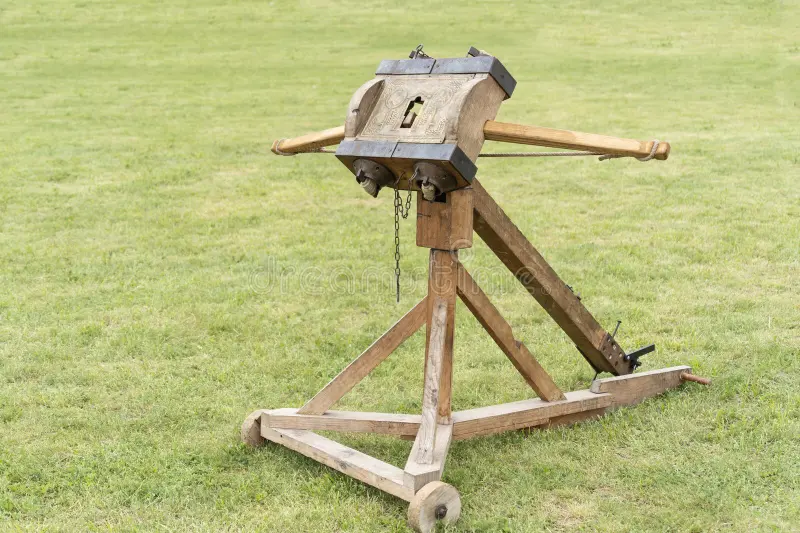
Roman Ballista
The ballista was the torsion artillery of the ancient world: a two-armed engine powered by twisted skeins of sinew or hair, shooting heavy… Continued…
-
Roman Gladius
The gladius was the short sword of the Roman legionary and the weapon that conquered the Mediterranean world. Adopted from Iberian patterns… Continued…
-
Roman Hasta
The hasta was the thrusting spear of the early Roman army. In the manipular legion of the Punic Wars it was the weapon of the triarii, the… Continued…
-
Roman Lorica Segmentata
The lorica segmentata is the articulated iron plate cuirass that has come to define the Roman legionary in the modern imagination… Continued…
-
Roman Pilum
The pilum was the Roman legionary's heavy javelin: a barbed iron head on a long, thin iron shank socketed into a wooden shaft, thrown in a… Continued…
-
Roman Pugio
The pugio was the dagger of the Roman soldier, worn on the left hip opposite the gladius. Its broad, leaf-shaped double-edged blade, often… Continued…
-
Roman Scutum
The scutum was the large shield of the Roman legionary: an oval, and later rectangular, shield curved to wrap around the body, made of… Continued…
-
Roman Spatha
The spatha was the long, straight, double-edged sword of the Roman Empire. First carried by auxiliary cavalry in the first century AD… Continued…
-
Stone Mace-head
The stone mace-head is a shaped, perforated stone mounted on a wooden handle — one of the first weapons made specifically to kill people… Continued…