Origin
Switzerland
Switzerland's military reputation was built on its pike-and-halberd infantry, which dominated European battlefields in the 15th century. Swiss mercenaries were the most sought-after soldiers in Europe. The halberd — a combination of axe, hook, and spear — is still carried ceremonially by the Papal Swiss Guard.
Overview
Switzerland's weapon history centers on the remarkable military dominance of Swiss pike and halberd infantry in the 15th century, the enduring reputation of Swiss mercenaries, and the country's later development as a precision manufacturing center that produced high-quality firearms and military equipment.
The Swiss Infantry Revolution
In the 15th century, Swiss infantry from the forest cantons defeated the finest feudal cavalry in Europe — defeating the Duke of Burgundy's armored knights at Grandson (1476), Murten (1476), and Nancy (1477).
Halberd (Helmbarte)
The halberd — a combination of axe blade, spear point, and hook on a 6-foot shaft — was the signature Swiss weapon of the 14th–15th centuries. It could:
- Thrust with the spear point
- Hack with the axe blade
- Hook and drag mounted knights from their horses with the rear spike
The halberd is still carried by the Papal Swiss Guard at the Vatican.
Pike
As the 15th century progressed, Swiss formations increasingly used pikes — 16–18 foot spears — in dense formations. Swiss pike blocks were nearly impossible to frontally assault and were decisive in the Italian Wars.
Zweihänder
Elite Swiss soldiers called Doppelsöldner (double-pay men) used enormous two-handed swords to break enemy pike formations by sweeping aside the pike heads, opening a gap for their companions.
Swiss Mercenaries
Swiss mercenaries were the most sought-after soldiers in Europe from the late 15th through early 17th centuries. French kings, Italian city-states, and the Papacy competed for Swiss contracts. The reputation for reliability and fighting quality was extraordinary — "No money, no Swiss" (Point d'argent, point de Suisse) became a proverb.
Modern Swiss Weapons
- Schmidt-Rubin — Swiss straight-pull bolt-action rifle series; extremely accurate
- SIG P220 — 9mm/.45 ACP semi-automatic; one of the most accurate production pistols of its era; widely adopted by military and police
- SIG SG 550 (Sturmgewehr 90) — Swiss standard assault rifle; 5.56mm; superb accuracy and reliability; the basis for the US SIG MCX and other designs
This article is a stub.
-
Halberd
The halberd combined axe blade, thrusting spike, and back hook on a two-meter haft — a complete toolkit for infantry facing armored… Continued…
-
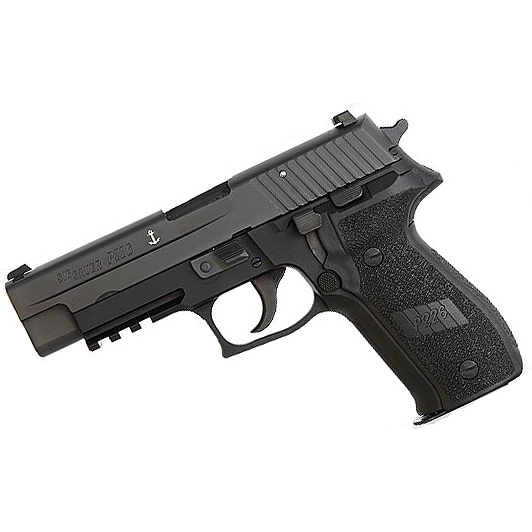
Mk 25
The Mk 25 is the United States Navy's designation for the SIG Sauer P226 as carried by the Navy SEALs: a standard P226 in 9mm with a… Continued…
-
Morning Star
The morning star is a spiked club: a wooden or iron shaft topped with a heavy ball or cylinder studded with steel spikes, used across… Continued…
-
Pike
The pike is the longest infantry weapon ever carried in formation: an ash shaft of 16 to 22 feet tipped with a small steel head, used by… Continued…
-
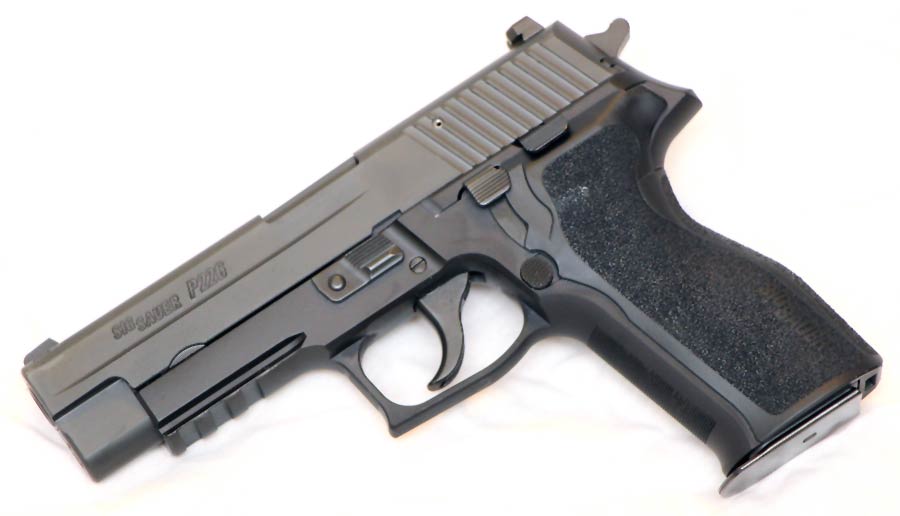
Sig Sauer P226
The SIG Sauer P226 is a full-size double-action service pistol introduced in 1984 for the United States Army's XM9 trials, which it lost to… Continued…
-
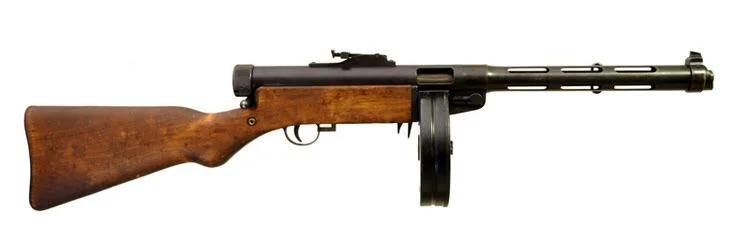
Suomi KP/-31
The Suomi KP/-31 was the Finnish Army's submachine gun in the Second World War. Designed by Aimo Lahti and made by the Tikkakoski company… Continued…
-
Vetterli Rifle
The Vetterli rifle was the Italian army's first bolt-action rifle for metallic cartridges, adopted in 1870 and based on a design by the… Continued…