Weapon Type
Helmets
Head protection.
Armor — Subcategory
Overview
The helmet is the most universally adopted piece of armor across human history — the head contains the brain, face, and major blood vessels; a blow to the head is far more likely to incapacitate than a blow to most body areas. Helmets appear in every metalworking culture from the Bronze Age onward, and even cultures without metalworking produced head protection from leather, wood, and bone.
Ancient Helmets
Bronze Age Helmets (2000–1000 BCE)
- Greek Corinthian helmet — Bronze; covered the entire face except eye slits and a mouth cutout; heavy but excellent protection; the iconic classical Greek helmet
- Phrygian helmet — Open-faced; forward-pointing top crest; later form; used by cavalry and light infantry
- Mycenaean boar's tusk helmet — Rows of boar tusks on a leather foundation; described in Homer; found at Mycenae
- Mesopotamian helmets — Bronze; rounded cap form; depicted on Sumerian and Assyrian monuments
Roman Helmets
- Montefortino — Rounded bronze helmet with cheek guards; standard Republican Roman helmet
- Coolus — Bronze rounded cap with cheek guards; Gallic origin; adopted by Roman army
- Imperial Gallic/Italic — Iron; distinctive neck guard; cheek guards; often with decorative eyebrow embossing; the iconic "centurion" helmet
Medieval Helmets
Spangenhelm (300–1200 CE)
- Segmented construction: an iron framework (spangen) with bronze or iron plates filling the segments
- Used across the Dark Ages by Germanic, Byzantine, and Viking warriors
- Often with a chainmail coif (aventail) hanging from the brim
Nasal Helmet
- Simple conical or dome-shaped helmet with a nasal bar projecting down to protect the nose
- Standard Norman helmet; depicted throughout the Bayeux Tapestry
- Inexpensive; quick to produce; widely used 10th–12th centuries
Great Helm (1200–1350)
- Fully enclosed helmet; flat-topped or later rounded; narrow eye slits and ventilation holes
- Completely enclosed the head; extremely protective; hot; limited vision and hearing
- Worn by knights over a coif of mail; the most protective head armor of the period
Bascinet (1300–1420)
- Open-faced pointed helmet; often with a pivoting visor (klappvisor)
- The aventail (chainmail neck defense) attached to the brim
- The hounskull visor — pointed, dog-faced — gave excellent protection and reasonable vision
Sallet and Armet (1400–1500)
- Sallet — Streamlined helmet with a long tail protecting the neck; open or half-faced; German pattern
- Armet — Fully enclosed; cheek pieces closed around the face and locked; Italian pattern; the most complete head protection of the plate armor era
Early Modern Helmets
- Morion — Open-faced with tall comb and curved brim; iconic conquistador helmet; Spanish infantry
- Burgonet — Open-faced cavalry helmet with cheek guards and neck guard; 16th–17th century
- Lobster-tail pot — Back-fluted neck guard; face bars; the iconic Roundhead/English Civil War cavalry helmet
Modern Military Helmets
- Pickelhaube — Prussian/German leather helmet with spike; 1842–1916; no real ballistic protection; primarily dress/identification
- Adrian helmet — French steel helmet (1915); first modern steel combat helmet; adopted after French soldiers put metal soup bowls on their heads for protection
- Brodie helmet ("Tommy helmet") — British/American WWI helmet; flat brim; steel; primarily stopped shrapnel from above
- M1 steel helmet — US WWII; two-piece (steel pot + liner); the standard American helmet from 1941 to the 1980s
- PASGT helmet — Kevlar; US from 1983; ballistic protection against pistol rounds and fragments
- ACH (Advanced Combat Helmet) — Improved Kevlar; lighter; better ballistic performance; current US standard
- ECH (Enhanced Combat Helmet) — Ultra-high molecular weight polyethylene; stops rifle rounds; heaviest but most protective
This article is a stub. Contributions covering specific helmet types, cultures, and materials are welcome.
Battles & Operations
Weapons
-
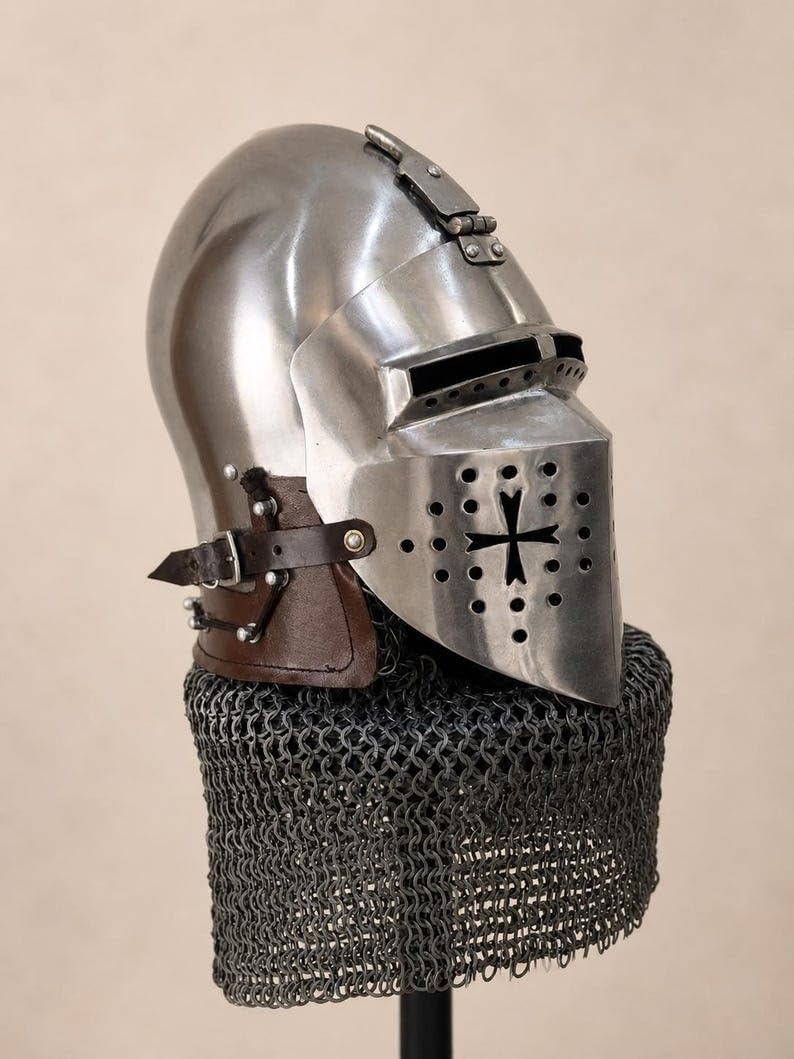
Bascinet
The bascinet was the most widely worn helmet of fourteenth-century Europe: an iron skull cap drawn up into a point, with a curtain of mail… Continued…
-
Brodie Helmet
The Brodie helmet is the shallow, wide-brimmed steel helmet designed by John Leopold Brodie in 1915 and worn by British and Commonwealth… Continued…
-
Corinthian Helmet
The Corinthian helmet is the classic helmet of the Greek hoplite: a bronze helmet beaten from a single sheet, covering the whole head and… Continued…
-
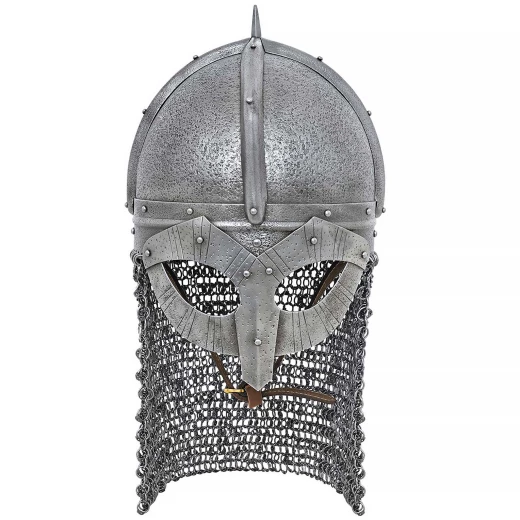
Gjermundbu Helmet
The Gjermundbu helmet is the only nearly complete helmet known from the Viking Age. It was found in 1943 in a tenth-century burial mound on… Continued…
-
Great Helm
The great helm was the fully enclosed, flat-topped or sugarloaf helmet of the high medieval knight, worn from around 1220 until the mid… Continued…
-
Kettle Hat
The kettle hat was an open-faced iron or steel helmet with a wide brim, known in French as the chapel de fer, the iron hat. It appeared in… Continued…
-
Lobster-Pot Helmet
The lobster-pot helmet was the standard helmet of European light-armored cavalry in the seventeenth century. Known in German as the… Continued…
-
M1 Helmet
The M1 helmet was the steel combat helmet of the United States armed forces from 1941 until the mid 1980s, worn through the Second World… Continued…
-
Montefortino Helmet
The Montefortino helmet was the most common helmet of the Roman Republic, worn by legionaries from the fourth century BC into the first… Continued…
-
Morion Helmet
The morion is the open steel helmet with a tall comb and a brim swept up to points at front and back that armed pikemen and arquebusiers… Continued…
-
PASGT Helmet
The PASGT helmet was the standard combat helmet of the United States armed forces from the early 1980s until the mid-2000s. Its name stands… Continued…
-
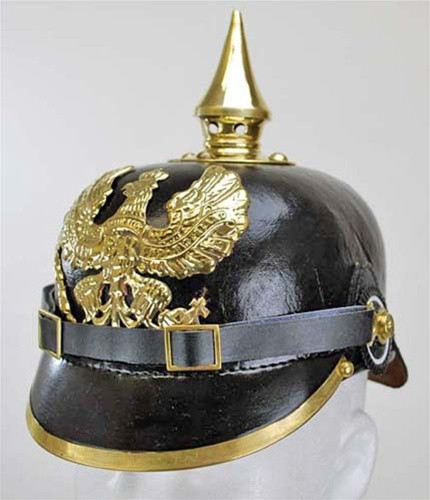
Pickelhaube
The Pickelhaube is the spiked leather helmet of the Prussian and Imperial German armies, adopted by King Frederick William IV in 1842 and… Continued…