Era
World War II
Peak of conventional arms development.
1939 – 1945
Overview
World War II involved more nations, more soldiers, more weapons, and more deaths than any conflict in history. It was a war of industrial production as much as battlefield skill — the side that could manufacture, supply, and replace weapons fastest ultimately prevailed. American industrial output, Soviet manpower, and British resilience eventually overwhelmed German and Japanese production and tactical excellence.
The war produced rapid innovation across every weapons category: small arms, armor, artillery, aviation, naval warfare, and ultimately nuclear weapons. Many weapons that defined the late 20th century — the AK-47, the modern assault rifle concept, jet aircraft, the aircraft carrier — trace their direct lineage to WWII development.
Infantry Small Arms
Rifles
- M1 Garand — American 8-round semi-automatic; arguably the best standard infantry rifle of the war
- German Karabiner 98k — 5-round bolt-action; accurate and reliable; the standard German infantry rifle
- Soviet Mosin-Nagant M91/30 — 5-round bolt-action; produced in enormous numbers; used with 4x scope by Soviet snipers to deadly effect
- British Lee-Enfield No. 4 — 10-round magazine; robust and fast
- Japanese Arisaka Type 99 — 5-round bolt-action; reliable; chambered in 7.7mm
The Assault Rifle
The most significant small arms development of the war was the German Sturmgewehr 44 (StG 44) — the world's first practical assault rifle. It fired an intermediate 7.92×33mm Kurz cartridge that was less powerful than a full rifle cartridge but more controllable in automatic fire, in a selective-fire platform with a 30-round magazine. It directly inspired the Soviet AK-47 design.
Submachine Guns
SMGs flourished in the war's close-quarters environments:
- Soviet PPSh-41 — 71-round drum or 35-round box; 900 rounds/minute; cheap, robust, and produced in millions
- German MP 40 — Folding stock; 32-round magazine; iconic German SMG
- British Sten — Extremely cheap to produce (a few dollars); 32-round magazine; used across the Commonwealth and resistance forces
- American M3 "Grease Gun" — .45 ACP; simple and reliable; replaced the Thompson in US service
- Italian Beretta Model 38 — Well-made and accurate; one of the best SMGs of the war
Machine Guns
- German MG 42 — 1,200 rounds/minute; air-cooled; the fastest-firing MG of the war; its distinctive "buzz saw" sound was immediately recognizable; designed for quick barrel changes
- American M1919 Browning — Water and then air-cooled; reliable; used as infantry, vehicle, and aircraft gun
- British Bren — 500 rounds/minute; .303; the standard Commonwealth LMG
- Soviet DP-27 — Pan magazine; reliable; the standard Soviet LMG
Anti-Tank Weapons
As tank armor thickened, dedicated infantry anti-tank weapons became essential:
- American Bazooka (M1/M9) — Shoulder-fired rocket launcher; 60mm HEAT warhead; gave infantry a real chance against medium tanks
- German Panzerfaust — Single-shot disposable recoilless launcher; large shaped-charge warhead; effective against all Allied tanks; produced in millions
- German Panzerschreck — Copy of the American Bazooka; 88mm; larger warhead; reusable
- British PIAT — Spring-launched spigot mortar; no backblast; used in confined spaces
Armored Warfare
Key Tanks
| Nation | Tank | Notes | |--------|------|-------| | Germany | Panzer IV | Workhorse of the Panzerwaffe; long 75mm gun | | Germany | Tiger I | 88mm gun; nearly impenetrable frontal armor; mechanically unreliable | | Germany | Panther | Excellent medium tank; sloped armor; long 75mm | | Soviet Union | T-34/76 and T-34/85 | Sloped armor; reliable; outperformed German tanks in numbers | | Soviet Union | IS-2 | 122mm gun; could destroy a Tiger at long range | | United States | M4 Sherman | Reliable and produced in huge numbers; under-gunned against late-war German tanks | | United States | M26 Pershing | 90mm gun; arrived late; could defeat Tigers |
Aviation
Fighters
- German Bf 109 — Germany's primary fighter; 30,000+ built
- German Fw 190 — Outstanding fighter and ground attack aircraft
- British Supermarine Spitfire — Elliptical wing; Merlin engine; matched the Bf 109 in most performance parameters
- American P-51 Mustang — With Merlin engine; long-range escort fighter; allowed B-17s to reach deep targets in Germany
- Japanese Zero (A6M) — Early-war superiority; highly maneuverable but unprotected
- German Me 262 — First operational jet fighter; too few, too late
Bombers
- American B-17 Flying Fortress — 4-engine heavy bomber; daylight precision bombing campaign
- American B-29 Superfortress — Delivered the atomic bombs; capable of reaching Japan from Saipan
Nuclear Weapons
The Manhattan Project produced two atomic bombs used in combat:
- Little Boy — Gun-type uranium bomb; dropped on Hiroshima, August 6, 1945
- Fat Man — Implosion-type plutonium bomb; dropped on Nagasaki, August 9, 1945
These weapons, killing approximately 110,000–210,000 people, ended the Pacific War and inaugurated the nuclear age, defining the strategic calculus of the Cold War that followed.
This article is a stub. Contributions covering specific weapons, theaters, battles, and technological developments are welcome.
Battles & Operations
-
Winter War (30 November 1939 - 13 March 1940)
The Winter War was a conflict between Finland and the Soviet Union that began with a Soviet invasion on 30 November 1939 and ended on 13… Continued…
-
Battle of Britain (10 July - 31 October 1940)
The Battle of Britain, fought over southern England and the Channel from July to October 1940, was the first major campaign fought entirely… Continued…
-
Battle of Midway (4-7 June 1942)
The Battle of Midway, fought from 4 to 7 June 1942 around Midway Atoll in the central Pacific, was the turning point of the naval war… Continued…
-
Battle of Stalingrad (23 August 1942 - 2 February 1943)
The Battle of Stalingrad, fought from the late summer of 1942 to February 1943 in and around the Soviet city on the Volga, was the turning… Continued…
-
Battle of Kursk (5 July - 23 August 1943)
The Battle of Kursk, fought from 5 July to 23 August 1943 in western Russia and eastern Ukraine, was the last major German offensive on the… Continued…
-
Battle of Arnhem (17-26 September 1944)
The Battle of Arnhem, fought from 17 to 26 September 1944, was the final and failed stage of Operation Market Garden, the Allied attempt to… Continued…
-
Normandy Landings (6 June 1944)
The Normandy Landings of 6 June 1944, D-Day, were the largest seaborne invasion in history and the start of the Allied liberation of… Continued…
-
Siege of Bastogne (20-27 December 1944)
The Siege of Bastogne, from 20 to 27 December 1944, was the best-known episode of the Battle of the Bulge. The US 101st Airborne Division… Continued…
-
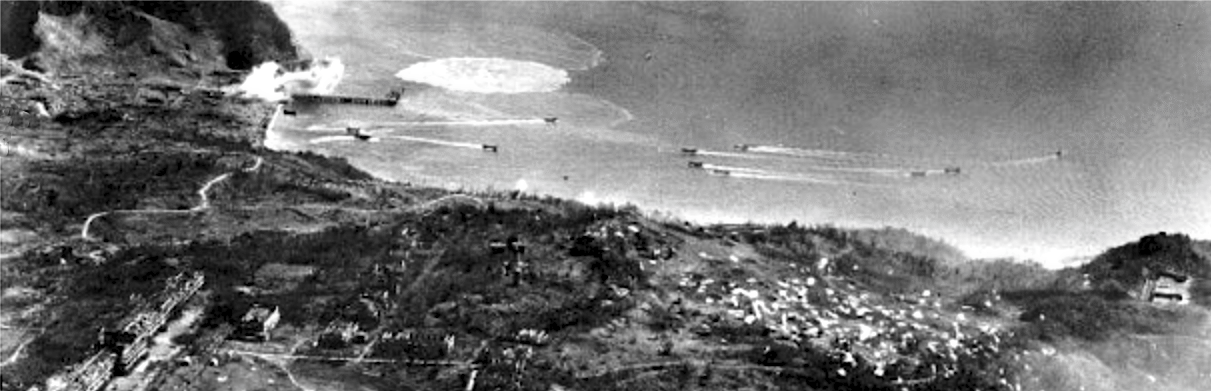
Battle of Corregidor (16-26 February 1945)
The Battle of Corregidor, 16 to 26 February 1945, recaptured the island fortress at the mouth of Manila Bay that American and Filipino… Continued…
-
Battle of Iwo Jima (19 February - 26 March 1945)
The Battle of Iwo Jima, fought from 19 February to 26 March 1945 on a small volcanic island south of Japan, was one of the hardest battles… Continued…
-
Battle of Okinawa (1 April - 22 June 1945)
The Battle of Okinawa, fought from 1 April to 22 June 1945, was the last major battle of the Pacific War and one of its largest. The US… Continued…
Weapons
-
8.8 cm Flak
The 8.8 cm Flak was the German family of heavy anti-aircraft guns known to Allied soldiers simply as the 88. The Flak 18 of 1933 and the… Continued…
-
Bangalore Torpedo
The Bangalore torpedo is a long explosive charge made of steel tubes that can be joined end to end, pushed under barbed wire or across a… Continued…
-
Bazooka
The bazooka was the American 2.36-inch shoulder-fired rocket launcher of the Second World War, built as the M1, M1A1 and M9. Introduced in… Continued…
-
Bofors 40 mm Gun
The Bofors 40 mm gun is a light anti-aircraft gun designed by the Swedish firm AB Bofors in the early 1930s. It fired a two-pound explosive… Continued…
-
Bolo Knife
The bolo is the broad-bladed working knife of the Philippines — wider toward the tip, weighted for the chop, the universal tool of field… Continued…
-
Bren
The Bren was the light machine gun of the British and Commonwealth armies from 1938 until the 1990s: a Czech design from Brno… Continued…
-
Brodie Helmet
The Brodie helmet is the shallow, wide-brimmed steel helmet designed by John Leopold Brodie in 1915 and worn by British and Commonwealth… Continued…
-
Browning Hi-Power
The Browning Hi-Power is a 9x19mm semi-automatic pistol begun by John Browning in the 1920s and completed after his death by Dieudonne… Continued…
-
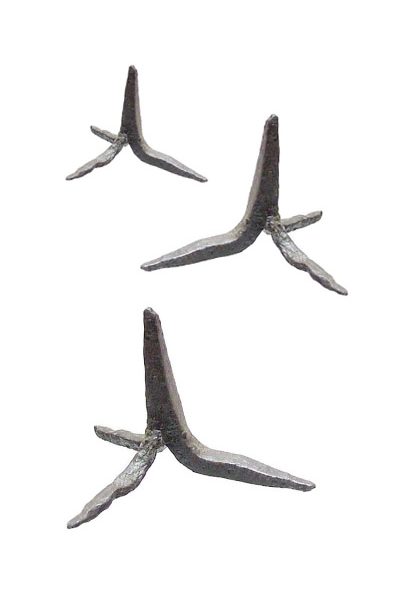
Caltrops
A caltrop is a small iron device of four spikes joined at the center so that however it lands, one spike always points up. Scattered on the… Continued…
-
Cossack Shashka
The shashka is the guardless saber of the Caucasus and the Cossacks — a slightly curved, single-edged blade carried edge-up in the scabbard… Continued…
-
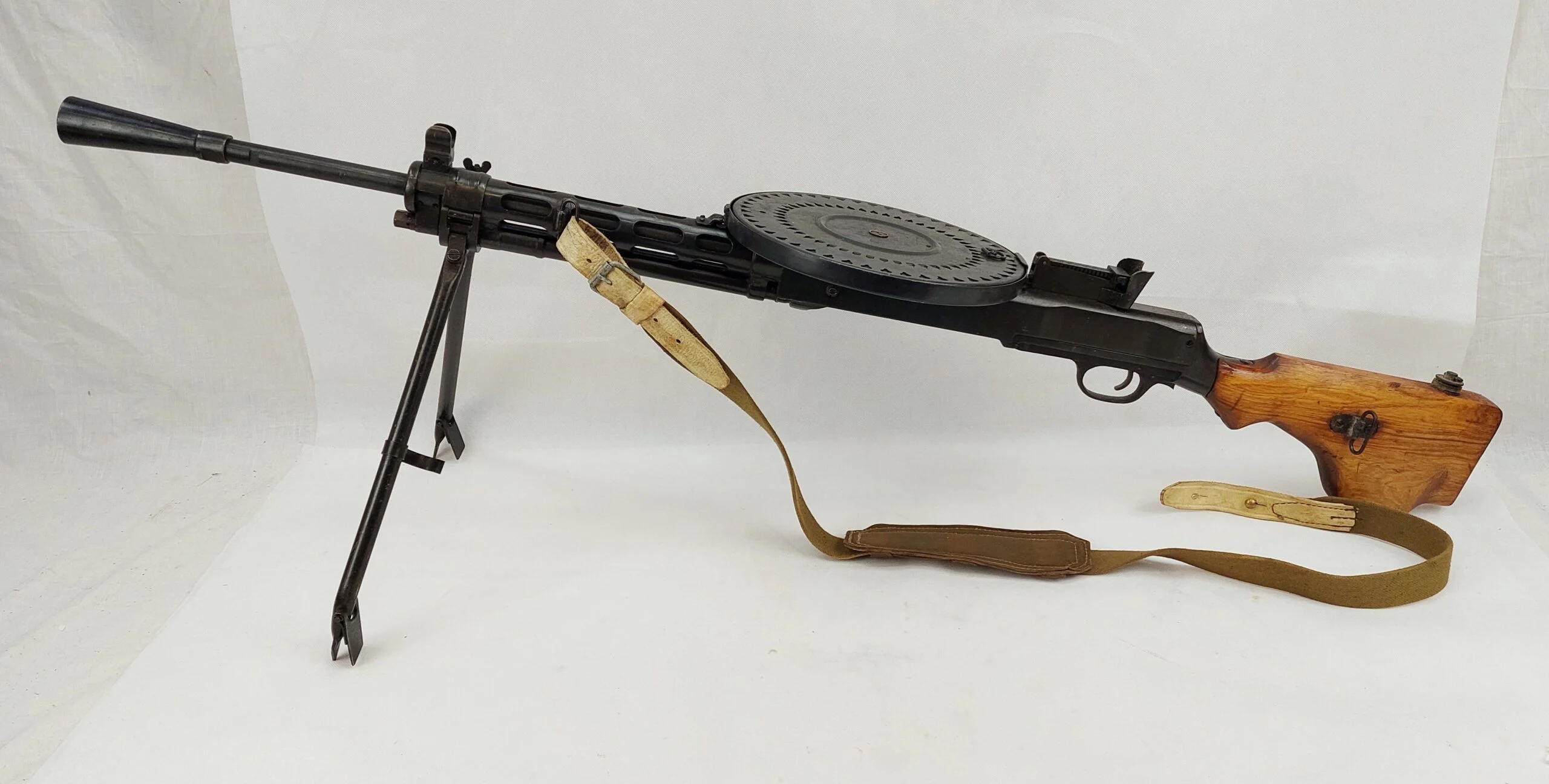
Degtyaryov DP-27
The DP-27 was the standard light machine gun of the Soviet Army from the late 1920s through the Second World War. Designed by Vasily… Continued…
-
Ek Commando Knife
The Ek Commando knife is the private-purchase fighting knife of World War II America: hand-ground daggers and fighters from John Ek's… Continued…
-
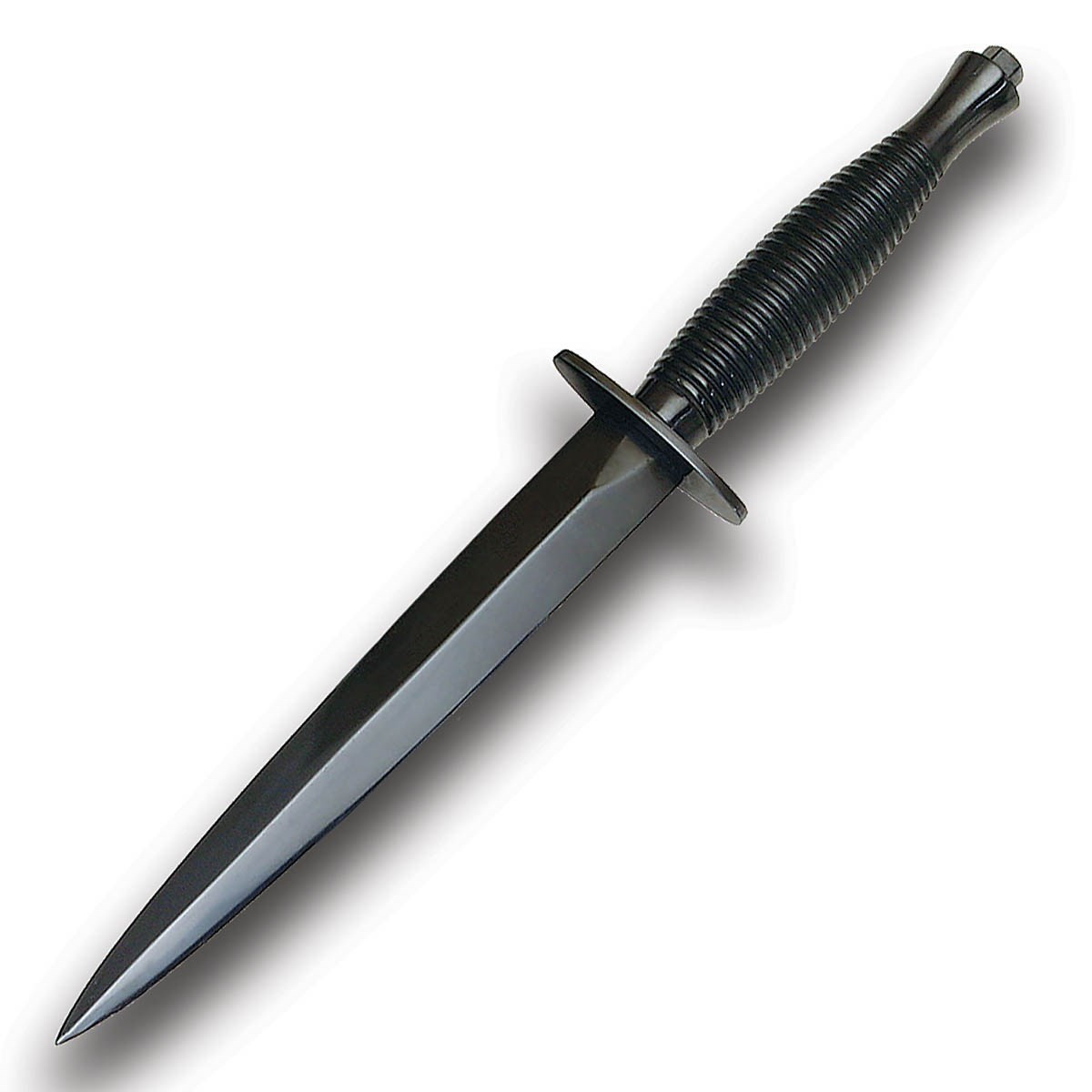
Fairbairn–Sykes Fighting Knife
The Fairbairn–Sykes Fighting Knife was a slim, double-edged dagger designed in 1940 by William Fairbairn and Eric Sykes, two former… Continued…
-
Flak Jacket
The flak jacket is the fragmentation-protective vest of the mid-twentieth century: first the steel-plated flak suits of American bomber… Continued…
-
French 75
The French 75, the Canon de 75 modèle 1897, was the first modern quick-firing field gun. A hydraulic and air recoil system let the barrel… Continued…
-
Hotchkiss M1914
The Hotchkiss M1914 was the standard heavy machine gun of the French army in the First World War. Made by the Hotchkiss company near Paris… Continued…
-
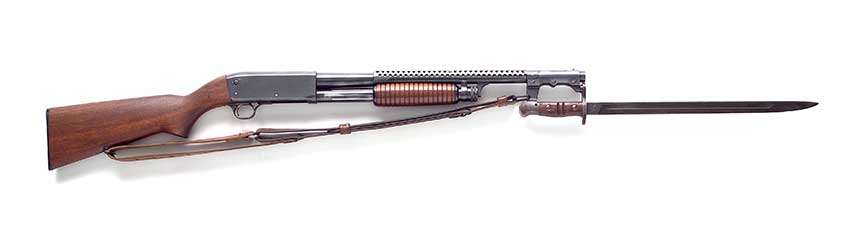
Ithaca 37
The Ithaca 37 is an American pump-action shotgun made by the Ithaca Gun Company of Ithaca, New York, from 1937. Based on a John Browning… Continued…
-
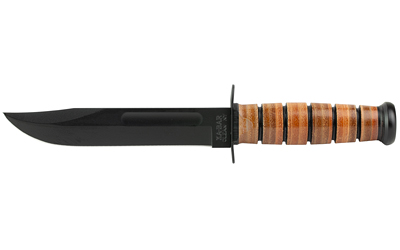
KA-BAR Knife
The KA-BAR is the fighting and utility knife of the United States Marine Corps: a seven-inch clip-point blade of carbon steel with a blood… Continued…
-
Kai Gunto
The kai gunto, 'navy military sword', was the sword of officers of the Imperial Japanese Navy from the late 1930s through the Second World… Continued…
-
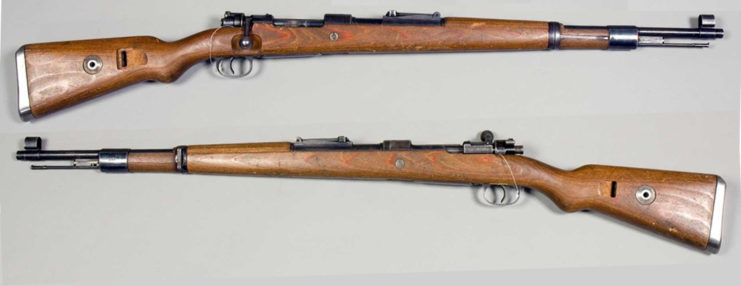
Karabiner 98k
The Karabiner 98k was the standard rifle of the German armed forces in the Second World War. Adopted in 1935, it was a shortened version of… Continued…
-
Katyusha Rocket Launcher
The Katyusha was a Soviet multiple rocket launcher of the Second World War. Its best-known form, the BM-13, carried rails for sixteen 132mm… Continued…
-
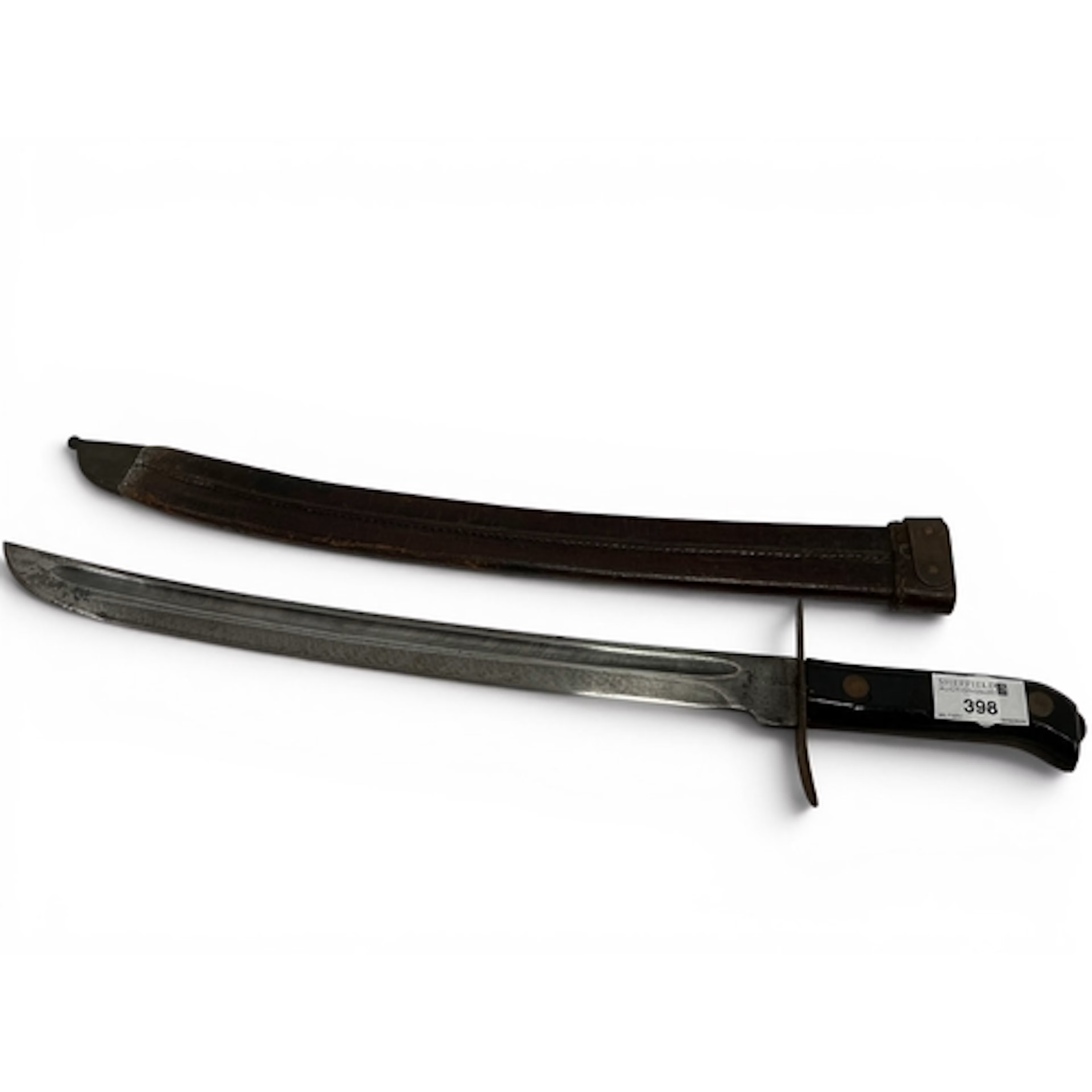
Klewang
The klewang is a single-edged short sword from the Indonesian archipelago, and the name of the Dutch military weapon developed from it.… Continued…
-
Krag-Jørgensen
The Krag-Jørgensen is a bolt-action rifle designed in Norway by Ole Krag and Erik Jørgensen and adopted by Denmark in 1889, the United… Continued…
-
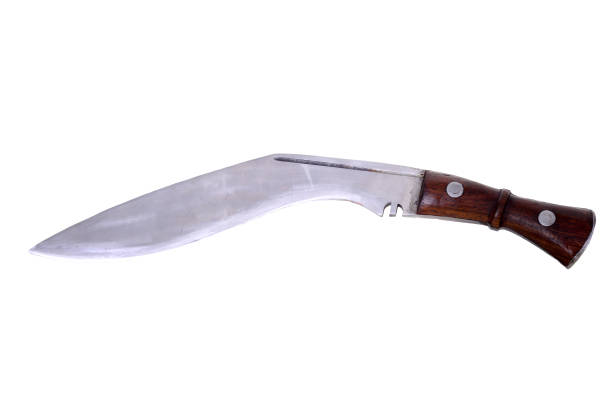
Kukri
The kukri is the forward-curved knife of Nepal: a broad, downward-angled blade that concentrates a blow like a hatchet while handling like… Continued…
-
Lahti L-39
The Lahti L-39 is a Finnish 20mm anti-tank rifle designed by Aimo Lahti and used during the Second World War. Firing the powerful 20x138mmB… Continued…
-
Lebel Model 1886
The Lebel Model 1886 was the first military rifle to fire smokeless powder, and it made every other army's rifle obsolete overnight. Its… Continued…
-
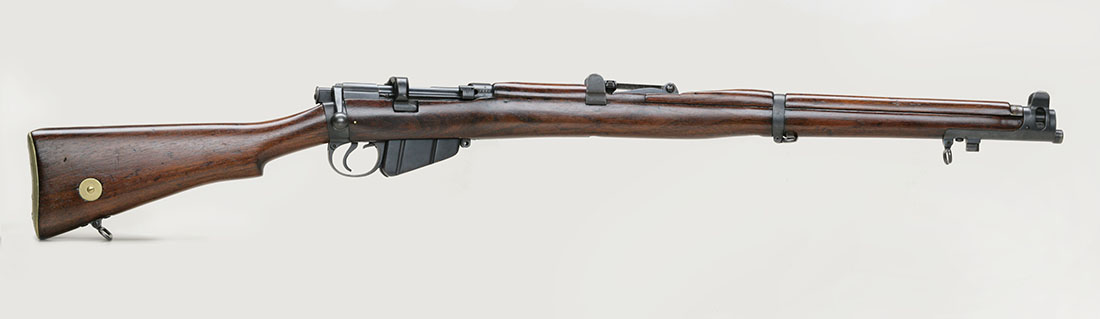
Lee-Enfield Rifle
The Lee-Enfield was the British Empire's rifle for over half a century: a bolt-action .303 whose rear-locking action and ten-round magazine… Continued…
-
Lewis Gun
The Lewis gun was the British Empire's light machine gun of the First World War: an air-cooled, gas-operated gun with a distinctive fat… Continued…
-
M1 Carbine
The M1 Carbine was the most-produced American small arm of the Second World War: a five-pound, semi-automatic .30-caliber carbine designed… Continued…
-
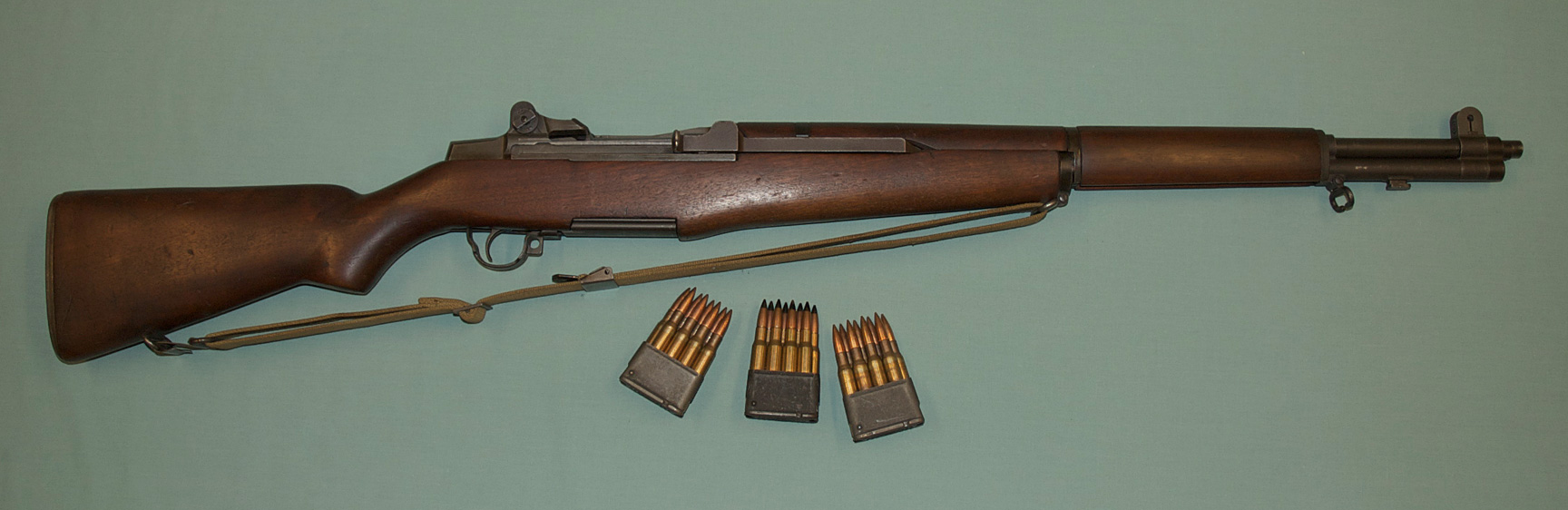
M1 Garand
The M1 Garand was the first semi-automatic rifle adopted as the standard arm of any major power, giving the American infantryman of the… Continued…
-
M1 Helmet
The M1 helmet was the steel combat helmet of the United States armed forces from 1941 until the mid 1980s, worn through the Second World… Continued…
-
M1903 Springfield
The M1903 Springfield was the United States' service rifle from 1903 until the M1 Garand replaced it in the late 1930s, and a sniper's and… Continued…
-
M1911 Pistol
The M1911 is John Browning's masterpiece: a short-recoil, single-action semi-automatic in .45 ACP that served as the standard American… Continued…
-
M1917 Enfield
The M1917 Enfield, officially the United States Rifle, cal .30, Model of 1917, was the bolt-action rifle carried by most American soldiers… Continued…
-
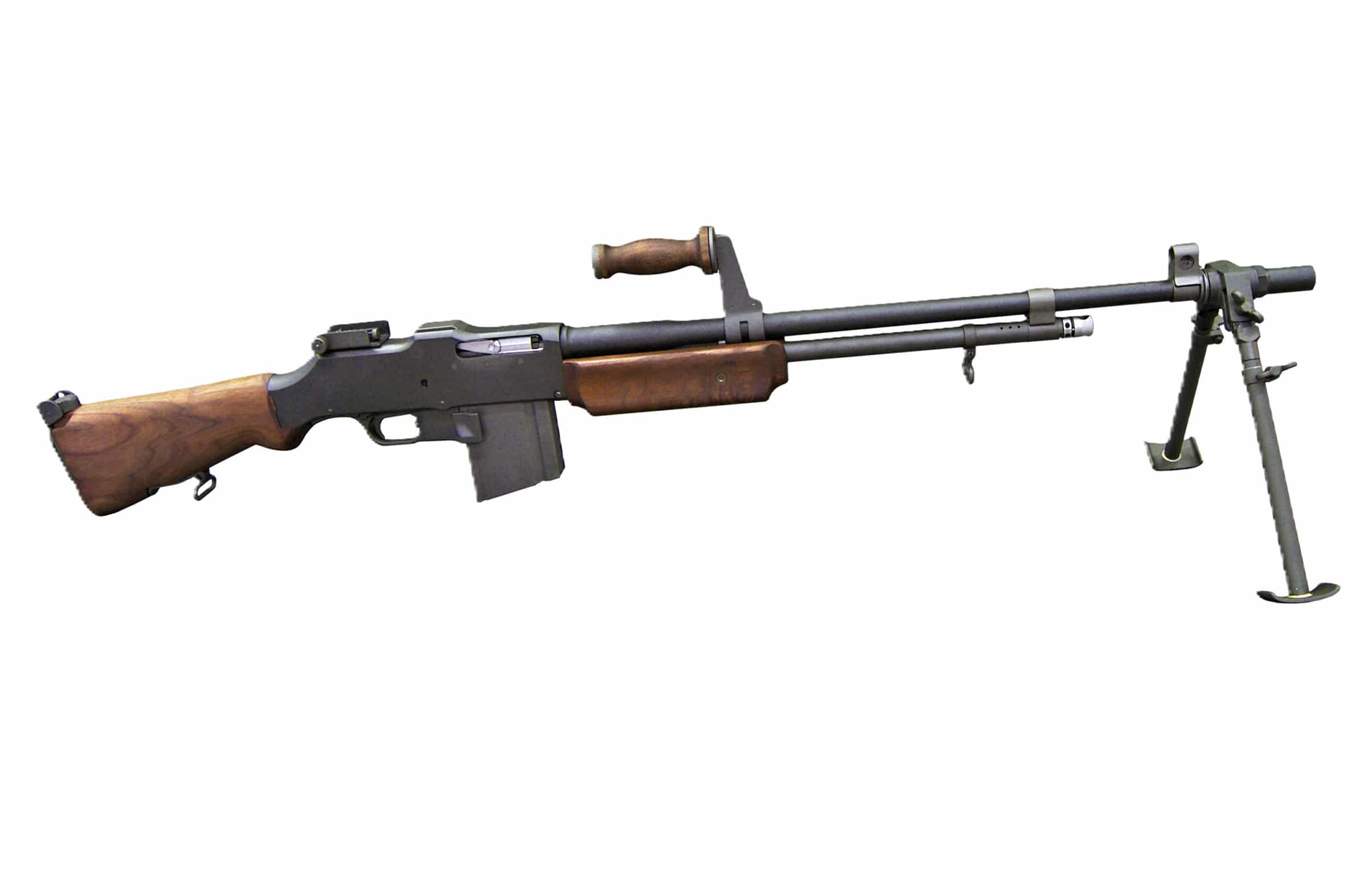
M1918 BAR
The Browning Automatic Rifle was John Moses Browning's shoulder-fired automatic weapon, adopted by the United States Army in 1918 and the… Continued…
-
M1919 Browning Machine Gun
The M1919 Browning is John Browning's water-cooled M1917 machine gun made air-cooled: a short-recoil, belt-fed .30-06 weapon that armed… Continued…
-
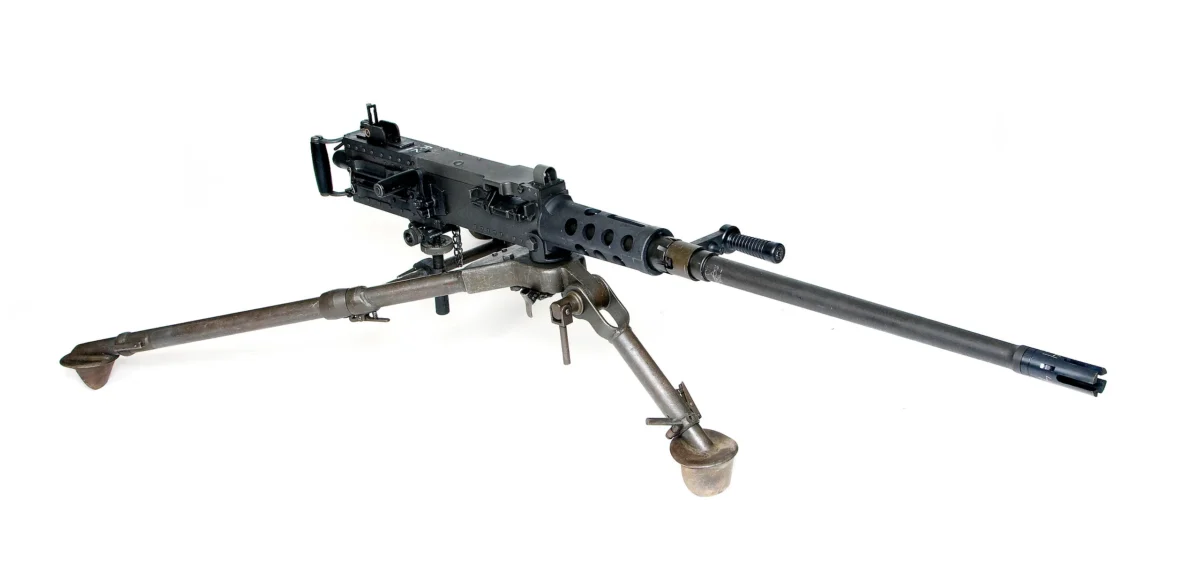
M2 Browning Machine Gun
The M2 is the American heavy machine gun of .50 caliber, designed by John Browning at the end of the First World War and adopted in its… Continued…
-
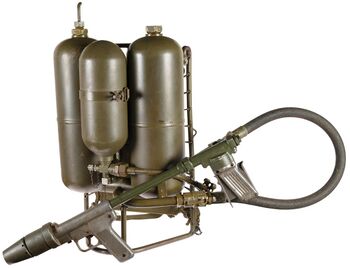
M2 Flamethrower
The M2 was the American portable flamethrower of the late Second World War and the Korean War. It was a backpack with two fuel tanks and a… Continued…
-
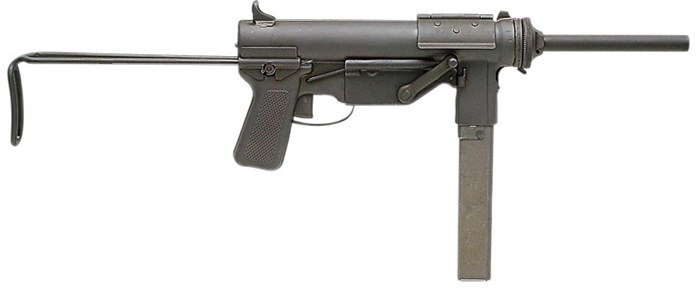
M3 Grease Gun
The M3 'Grease Gun' was America's Sten: a .45 caliber submachine gun of stamped steel and welded seams, designed in 1942 to replace the… Continued…
-
MG 42
The MG 42 was the German general-purpose machine gun of the Second World War and the most influential machine gun of the twentieth century.… Continued…
-
MG FF Cannon
The MG FF was a 20 mm aircraft cannon used by the German Luftwaffe from the late 1930s. It was a licensed version of the Swiss Oerlikon FF… Continued…
-
MP40
The MP40 was Germany's war-production submachine gun: 9mm Parabellum from an open bolt, a plain tube receiver of stampings and welds, no… Continued…
-
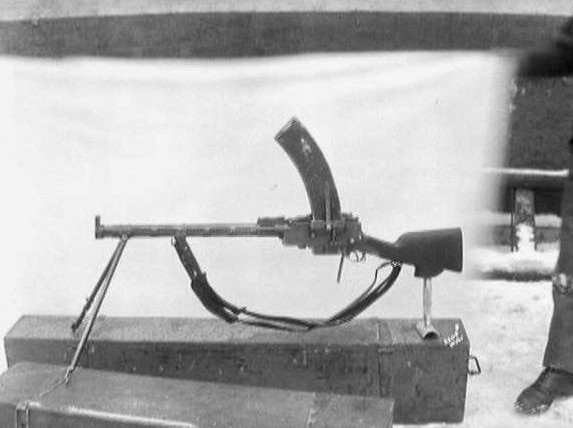
Madsen Machine Gun
The Madsen was a Danish light machine gun and the first weapon of its kind to be mass-produced, entering service in 1902. Light enough for… Continued…
-
Marine Raider Stiletto
The Marine Raider stiletto is the U.S. Marine Corps' copy of the British Fairbairn-Sykes fighting knife: a slim double-edged dagger… Continued…
-
Mark 13 Torpedo
The Mark 13 was the standard aerial torpedo of the United States Navy in the Second World War, carried by the TBD Devastator and TBF… Continued…
-
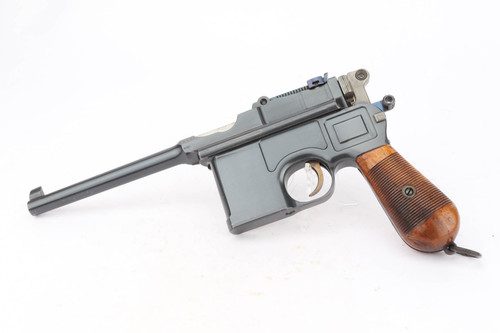
Mauser C96
The Mauser C96 is a German semi-automatic pistol that entered service in 1896, designed by the Feederle brothers at Mauser's Oberndorf… Continued…
-
Mills Bomb
The Mills bomb was the British Army's standard hand grenade from 1915 until the 1970s. Designed by the Birmingham engineer William Mills… Continued…
-
Mk 2 Fragmentation Grenade
The Mk 2 was the standard American fragmentation hand grenade from the end of the First World War into the Vietnam War. Its cast-iron body… Continued…
-
Model 24 Stielhandgranate
The Model 24 Stielhandgranate was the standard German hand grenade of the Second World War, the 'potato masher' of Allied soldiers. It had… Continued…
-
Molotov Cocktail
A Molotov cocktail is a glass bottle filled with gasoline or another flammable liquid, lit by a burning rag or a chemical igniter and… Continued…
-
Mosin Nagant 1891/30 Sniper Rifle
The Mosin-Nagant 1891/30 Sniper Rifle is the sniper version of the standard Soviet infantry rifle of the Second World War. Rifles chosen… Continued…
-

Mosin-Nagant M/28-30
The Mosin-Nagant M/28-30 was a Finnish rifle made in the 1930s for the Suojeluskunta, the Civil Guard, a volunteer home-defense force. It… Continued…
-
Mosin-Nagant M1891
The Mosin-Nagant was Russia's service rifle for over sixty years: a five-shot bolt action in the powerful rimmed 7.62x54R cartridge… Continued…
-
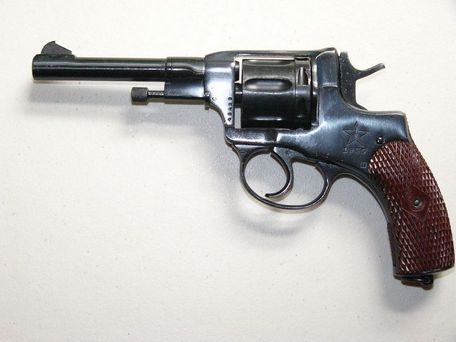
Nagant M1895 Pistol
The Nagant M1895 is the seven-shot Belgian-designed service revolver of Imperial Russia and the Soviet Union, unique among military… Continued…
-
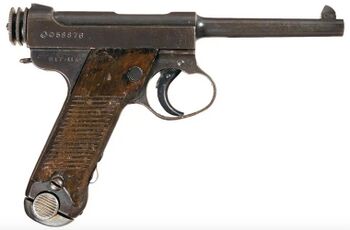
Nambu Type 14
The Nambu Type 14 was the standard service pistol of Japan in the Second World War. Designed by Kijirō Nambu's team and adopted in 1925… Continued…
-
PIAT
The PIAT (Projector, Infantry, Anti-Tank) was the British and Commonwealth infantry's hand-held anti-tank weapon from 1943 to the early… Continued…
-
PPS-43
The PPS-43 is a Soviet submachine gun introduced in 1942, designed by Alexei Sudayev and first built in besieged Leningrad. Made almost… Continued…
-
PPSh-41
The PPSh-41 was the Soviet Union's war-winning submachine gun: a stamped-steel design by Georgy Shpagin firing the 7.62x25 Tokarev… Continued…
-
PTRD-41
The PTRD-41 was a Soviet single-shot anti-tank rifle designed by Vasily Degtyaryov in a few weeks in the summer of 1941 and adopted that… Continued…
-
Panzerfaust
The Panzerfaust was a German single-shot, disposable anti-tank weapon of the Second World War. A simple steel tube launched a large… Continued…
-
Pattern 1907 Bayonet
The Pattern 1907 was the British Army's sword bayonet for the Short Magazine Lee-Enfield rifle through both world wars. Its 17-inch blade… Continued…
-
Puukko
The puukko is the traditional Finnish belt knife: a short, single-edged blade with a straight back, a plain handle usually made of birch… Continued…
-
SC 250 Bomb
The SC 250 was the standard German 250 kg general-purpose bomb of the Second World War. The letters stood for Sprengbombe Cylindrisch… Continued…
-
SVT-40 Rifle
The SVT-40 was the Soviet Union's semi-automatic infantry rifle of the Second World War: Fedor Tokarev's gas-operated, tilting-bolt design… Continued…
-
Satchel Charge
A satchel charge is a bag of explosive blocks, with a carrying strap and a fuse, that a soldier throws or places against a bunker, pillbox… Continued…
-
Schwarzlose Machine Gun
The Schwarzlose was the standard heavy machine gun of the Austro-Hungarian army in the First World War. Designed by the German engineer… Continued…
-
Spetsnaz Trench Shovel
The Russian small infantry spade, the MPL-50, is a short, all-steel-bladed entrenching tool of nineteenth-century design that became a… Continued…
-
StG 44
The StG 44 — Sturmgewehr, 'storm rifle' — was the first true assault rifle: select-fire, stamped-steel, and chambered for the intermediate… Continued…
-
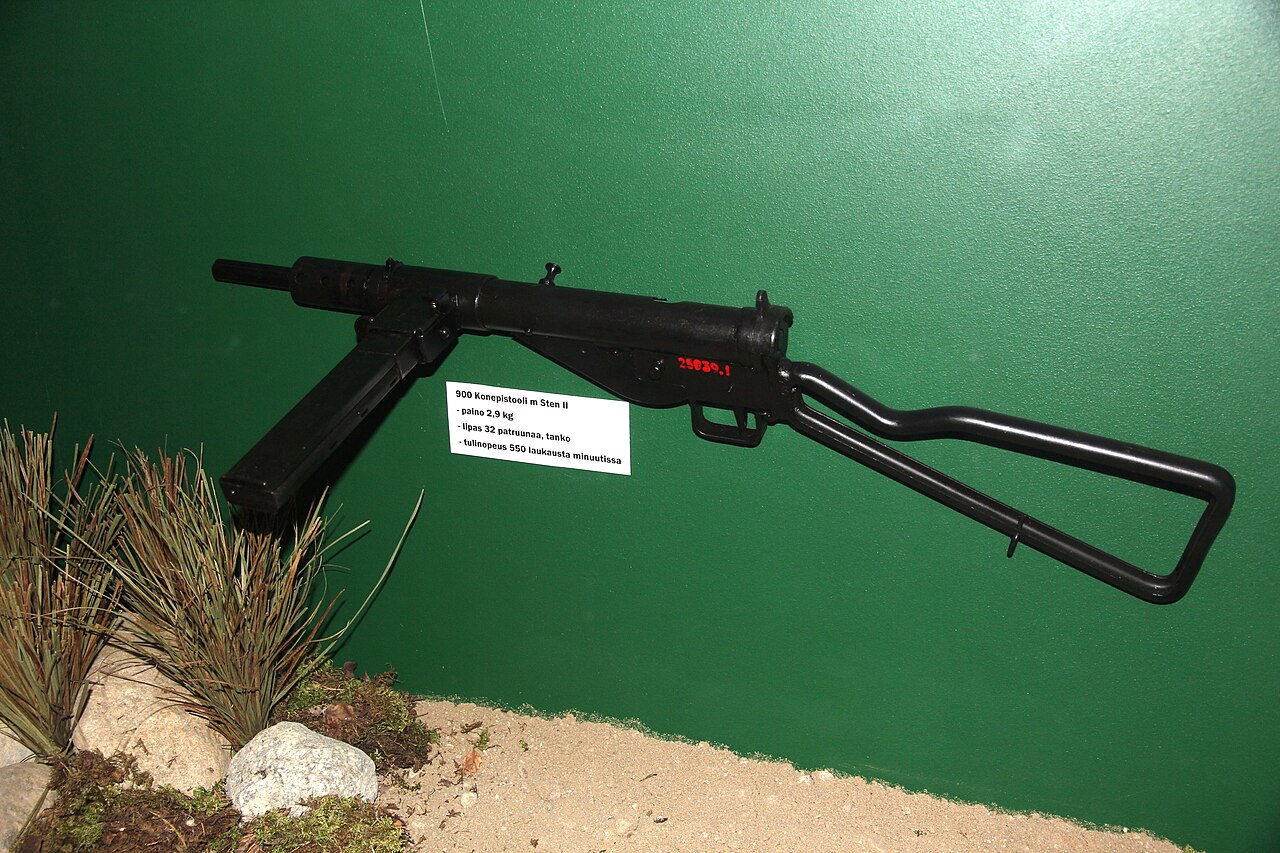
Sten Gun
The Sten was Britain's emergency submachine gun: a 9mm open-bolt weapon of stampings, tube, and spot welds that cost a few pounds and a few… Continued…
-
Steyr-Mannlicher M1895
The Steyr-Mannlicher M1895 was the service rifle of the Austro-Hungarian army through the First World War. Designed by Ferdinand… Continued…
-
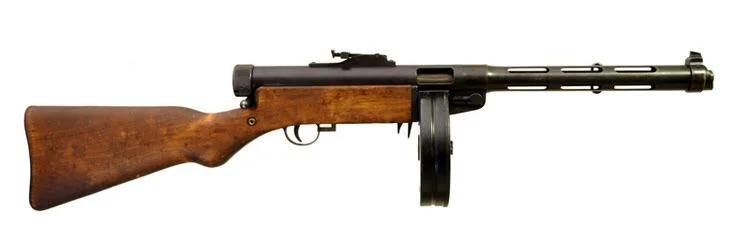
Suomi KP/-31
The Suomi KP/-31 was the Finnish Army's submachine gun in the Second World War. Designed by Aimo Lahti and made by the Tikkakoski company… Continued…
-
Swedish Military Mora Knife
The Mora knife is the plain Swedish sheath knife made in and around Mora, in the province of Dalarna, and it was the everyday knife of the… Continued…
-
Thompson Submachine Gun
The Thompson was America's first submachine gun: a .45 ACP automatic designed as a trench broom for a war that ended before it shipped.… Continued…
-
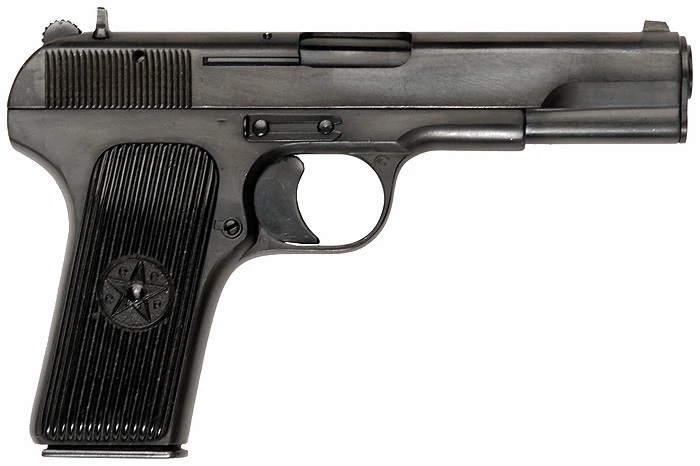
Tokarev TT-33 Pistol
The Tokarev TT-33 was the service pistol of the Red Army from the 1930s until the Makarov replaced it in the 1950s: Fedor Tokarev's… Continued…
-
Type 89 Grenade Discharger
The Type 89 grenade discharger was a light 50mm mortar used by the Imperial Japanese Army from 1929 through the Second World War. It could… Continued…
-
Type 91 Torpedo
The Type 91 was the aerial torpedo of the Imperial Japanese Navy in the Second World War. Adopted in 1931, it was smaller and faster than… Continued…
-
Type 92 Heavy Machine Gun
The Type 92 was the standard heavy machine gun of the Imperial Japanese Army from the early 1930s to 1945. An air-cooled, gas-operated gun… Continued…
-
Type 96 Light Machine Gun
The Type 96 was the standard light machine gun of the Imperial Japanese Army in the early years of the Second World War. Designed by Kijirō… Continued…
-
Type 97 Hand Grenade
The Type 97 was the standard hand grenade of the Imperial Japanese Army and Navy in the Second World War. Adopted in 1937, it had a grooved… Continued…
-
Type 99 Rifle
The Type 99 was the last bolt-action rifle of the Imperial Japanese Army: a 7.7mm development of the 6.5mm Type 38 Arisaka adopted in 1939… Continued…
-
Vickers Machine Gun
The Vickers was the British Army's medium machine gun for more than fifty years. Adopted in 1912, it was a lighter, improved version of the… Continued…
-
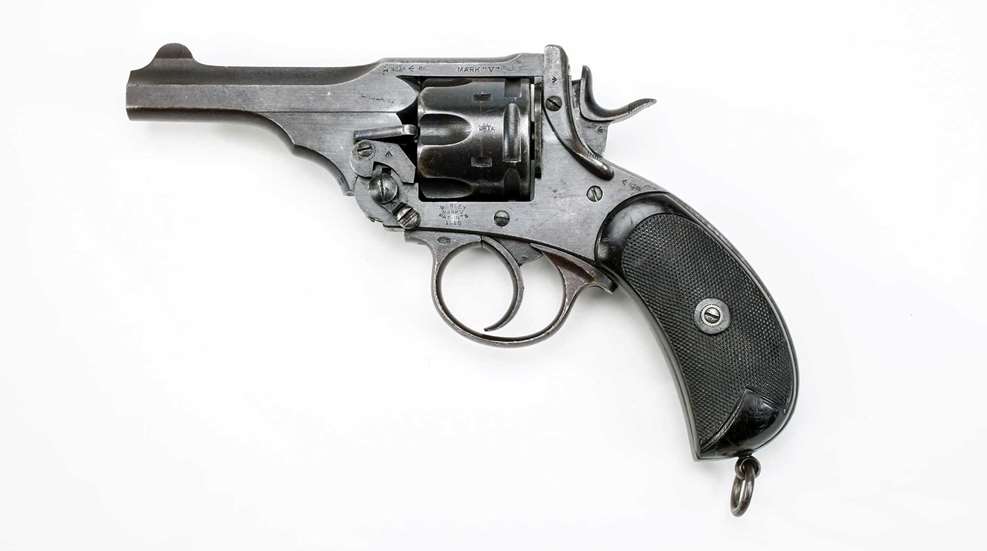
Webley Revolver
The Webley revolver was the British service sidearm from 1887 until after the Second World War. A top-break revolver made by Webley & Scott… Continued…
-
Winchester Model 1897
The Winchester Model 1897 is a pump-action shotgun designed by John Moses Browning and made by Winchester from 1897 to 1957. An improved… Continued…
-
ZiS-3
The ZiS-3 was the standard Soviet 76.2mm divisional gun of the Second World War, officially the 76 mm divisional gun model 1942. Designed… Continued…