Era
World War I
Bolt-action rifles, machine guns, trench warfare weapons.
1914 – 1918
Overview
World War I was the first fully industrialized global conflict, and it exposed a lethal mismatch between weapons technology and tactics. Armies entered the war expecting mobile operations but encountered the combined defensive power of the bolt-action rifle, barbed wire, machine gun, and heavy artillery — a combination that produced the trench warfare stalemate of the Western Front.
The four years of the war drove unprecedented weapons innovation on all sides, producing tanks, aircraft as weapons platforms, poison gas, effective hand grenades, trench mortars, and the first practical submachine guns.
Small Arms
Rifles
The bolt-action rifle was the primary infantry weapon of all major powers:
- German Gewehr 98 — Mauser action; 5-round internal magazine; accurate and reliable
- British Lee-Enfield SMLE (Short Magazine Lee-Enfield) — 10-round magazine; the fastest bolt-action in service; trained British regulars could fire 15 aimed rounds per minute ("Mad Minute")
- French Lebel Model 1886 — 8-round tubular magazine; obsolescent but reliable
- Russian Mosin-Nagant M1891 — 5-round internal magazine; tough and reliable
- American Springfield M1903 — Mauser-based design; 5-round internal magazine
Machine Guns
Machine guns fundamentally changed infantry combat, making frontal assaults across open ground catastrophically costly.
- German MG 08 — Recoil-operated, water-cooled; mounted on a heavy sled mount; fired 400 rounds/minute; the dominant defensive weapon of the Western Front
- British Vickers Mk I — Water-cooled, extremely reliable; could fire continuously for hours
- British Lewis Gun — Air-cooled, 47-round pan magazine; light enough for infantry use; the first practical light machine gun
- French Chauchat — Light machine gun/automatic rifle; 20-round magazine; mechanically unreliable but widely issued
- American Browning M1917 — Water-cooled; highly reliable; arrived late in the war
Pistols
- German Luger P08 — 9mm; iconic toggle-link action; standard German sidearm
- German Mauser C96 — Used in large numbers as a substitute standard pistol
- British Webley Mk VI — .455 caliber top-break revolver
- American Colt M1911 — .45 ACP semi-automatic; adopted 1911; still in service past WWII
Trench Warfare Weapons
The unique conditions of trench warfare drove development of specialized close-quarters weapons:
- Hand grenades — Essential for clearing trenches; German stick grenade (Stielhandgranate) and British Mills bomb (No. 36) were the most widely used
- Trench mortar — Plunging fire to reach behind cover; British Stokes mortar was simple and effective
- Flamethrower (Flammenwerfer) — German invention; used to clear bunkers and trenches; limited range and fuel supply
- Trench club / knobkerrie — For silent trench raids; many improvised from lead-weighted clubs, spiked trench clubs, and pickaxe handles
- Trench knife — Short, stiff blade for close quarters; American M1917/M1918 trench knives had a distinctive knuckle-duster guard
Artillery
Artillery caused the majority of casualties in WWI — estimates suggest 60% or more of all deaths were artillery-related.
- 75mm field gun (French "75") — Famous for its hydraulic recoil mechanism allowing rapid fire without re-aiming; 15 rounds/minute
- German 77mm field gun — Standard German field piece
- British 18-pounder — Standard British field gun
- Heavy artillery — Enormous guns firing shells weighing hundreds of kilograms; the German 42cm "Big Bertha" howitzer demolished Belgian forts
- Paris Gun — German ultra-long-range gun; 130km range; first weapon to shell a target from beyond the horizon
New Weapons of the War
Poison Gas
First used by Germany at Ypres in April 1915, chemical weapons became standard on both sides:
- Chlorine — First gas used; suffocating; visible green-yellow cloud
- Phosgene — Delayed effect; responsible for the majority of gas deaths
- Mustard gas (dichlorodiethyl sulfide) — A blistering agent; not immediately lethal but incapacitating; the most feared gas weapon
Tanks
Introduced by Britain at the Somme in 1916, tanks were designed specifically to cross trenches and suppress machine guns.
- British Mark I–V — Lozenge-shaped tracks; armed with 6-pounder cannon or Hotchkiss machine guns; mechanically unreliable
- French Renault FT — Two-man light tank; rotating turret; the first tank with a modern turret design; influential on all subsequent tank development
- German A7V — Germany's only WWI production tank; unwieldy; produced in tiny numbers
Aircraft
Aircraft transitioned from unarmed reconnaissance to fighters and bombers within the war's first two years:
- Fokker Eindecker — The first effective fighter, using a synchronized gun that fired through the propeller arc
- Sopwith Camel, SPAD XIII — Advanced Allied fighters of the later war
- Bombing raids — Both sides conducted strategic bombing of cities by 1917–18
Submachine Gun
- German MP 18 — The first practical submachine gun; 9mm, 32-round drum magazine; issued to Stormtroopers for trench clearing in 1918; only arrived in numbers near the war's end
This article is a stub. Contributions covering specific weapons, battles, and technical developments are welcome.
Battles & Operations
-
First Battle of the Marne (5-12 September 1914)
The First Battle of the Marne was fought east of Paris from 5 to 12 September 1914. After a month of German advances through Belgium and… Continued…
-
Battle of the Somme (1 July - 18 November 1916)
The Battle of the Somme was a joint British and French offensive against the German lines in northern France, fought from 1 July to 18… Continued…
-
Meuse-Argonne Offensive (26 September - 11 November 1918)
The Meuse-Argonne Offensive, fought from 26 September to 11 November 1918, was the main American battle of the First World War and part of… Continued…
Weapons
-
Bangalore Torpedo
The Bangalore torpedo is a long explosive charge made of steel tubes that can be joined end to end, pushed under barbed wire or across a… Continued…
-
Bolo Knife
The bolo is the broad-bladed working knife of the Philippines — wider toward the tip, weighted for the chop, the universal tool of field… Continued…
-
Brodie Helmet
The Brodie helmet is the shallow, wide-brimmed steel helmet designed by John Leopold Brodie in 1915 and worn by British and Commonwealth… Continued…
-
Chauchat
The Chauchat, officially the Fusil Mitrailleur Modèle 1915 CSRG, was the French army's light automatic weapon of the First World War. It… Continued…
-
French 75
The French 75, the Canon de 75 modèle 1897, was the first modern quick-firing field gun. A hydraulic and air recoil system let the barrel… Continued…
-
Hotchkiss M1914
The Hotchkiss M1914 was the standard heavy machine gun of the French army in the First World War. Made by the Hotchkiss company near Paris… Continued…
-
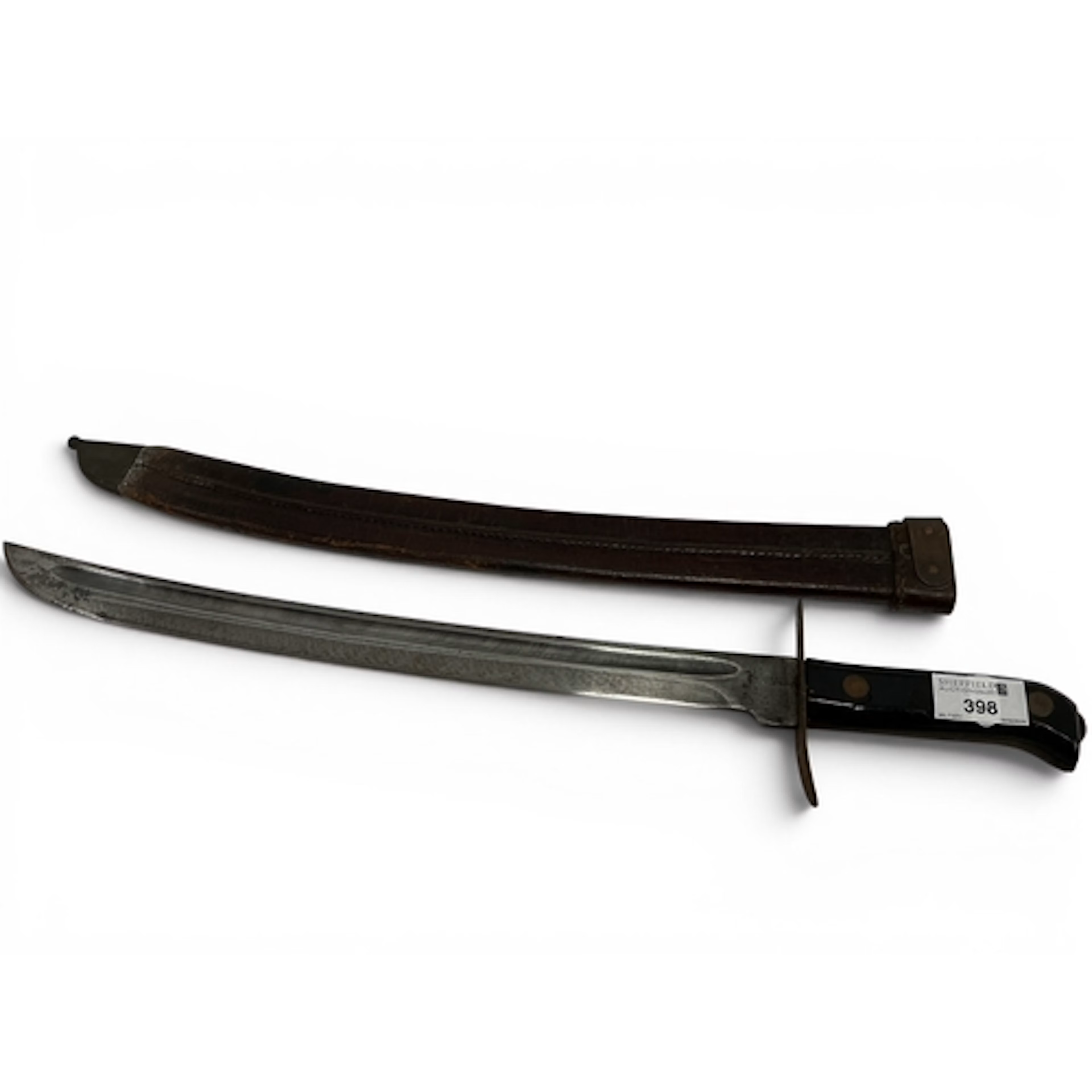
Klewang
The klewang is a single-edged short sword from the Indonesian archipelago, and the name of the Dutch military weapon developed from it.… Continued…
-
Krag-Jørgensen
The Krag-Jørgensen is a bolt-action rifle designed in Norway by Ole Krag and Erik Jørgensen and adopted by Denmark in 1889, the United… Continued…
-
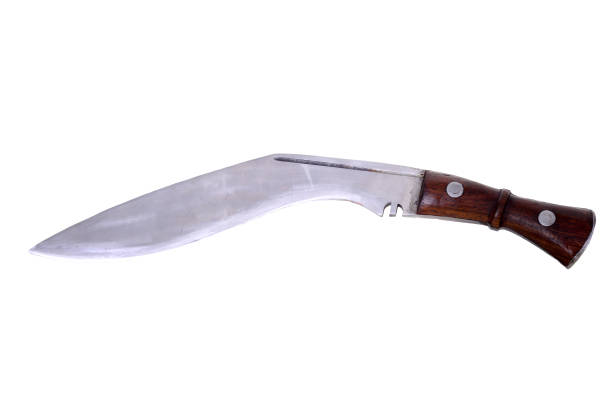
Kukri
The kukri is the forward-curved knife of Nepal: a broad, downward-angled blade that concentrates a blow like a hatchet while handling like… Continued…
-
Lebel Model 1886
The Lebel Model 1886 was the first military rifle to fire smokeless powder, and it made every other army's rifle obsolete overnight. Its… Continued…
-
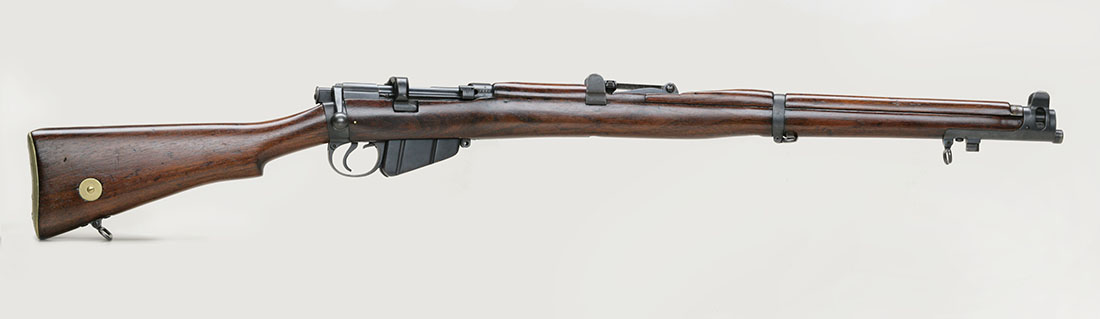
Lee-Enfield Rifle
The Lee-Enfield was the British Empire's rifle for over half a century: a bolt-action .303 whose rear-locking action and ten-round magazine… Continued…
-
Lewis Gun
The Lewis gun was the British Empire's light machine gun of the First World War: an air-cooled, gas-operated gun with a distinctive fat… Continued…
-
Luger P08
The Luger P08 is the toggle-locked semi-automatic pistol of the German military through both World Wars, and for many the most recognizable… Continued…
-
M1903 Springfield
The M1903 Springfield was the United States' service rifle from 1903 until the M1 Garand replaced it in the late 1930s, and a sniper's and… Continued…
-
M1911 Pistol
The M1911 is John Browning's masterpiece: a short-recoil, single-action semi-automatic in .45 ACP that served as the standard American… Continued…
-
M1917 Enfield
The M1917 Enfield, officially the United States Rifle, cal .30, Model of 1917, was the bolt-action rifle carried by most American soldiers… Continued…
-
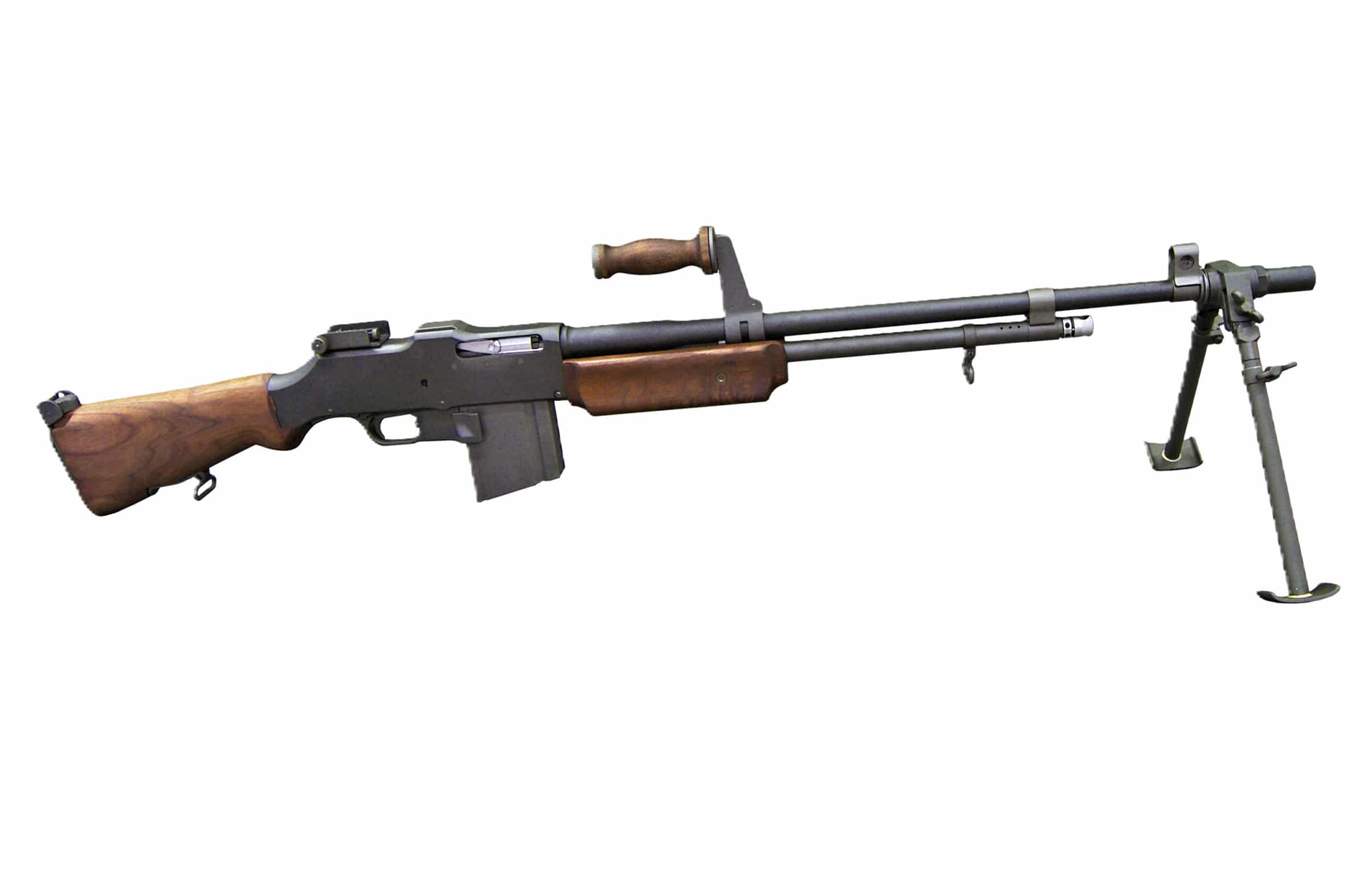
M1918 BAR
The Browning Automatic Rifle was John Moses Browning's shoulder-fired automatic weapon, adopted by the United States Army in 1918 and the… Continued…
-
MP 18
The MP 18 was the first practical submachine gun to go into service: a light automatic weapon firing pistol cartridges, designed by Hugo… Continued…
-
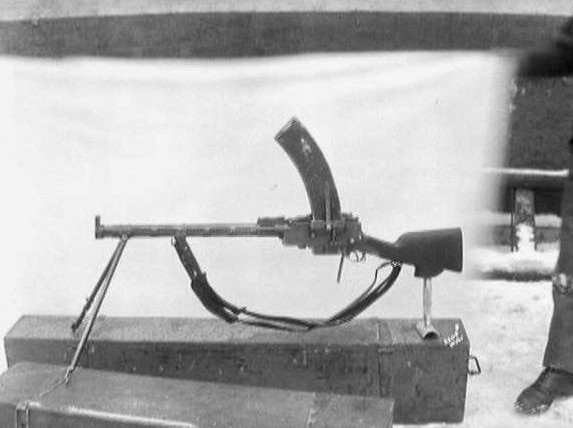
Madsen Machine Gun
The Madsen was a Danish light machine gun and the first weapon of its kind to be mass-produced, entering service in 1902. Light enough for… Continued…
-
Mark I Trench Knife
The Mark I trench knife of 1918 is the most recognizable close-combat weapon of the Great War: a double-edged dagger blade beneath a cast… Continued…
-
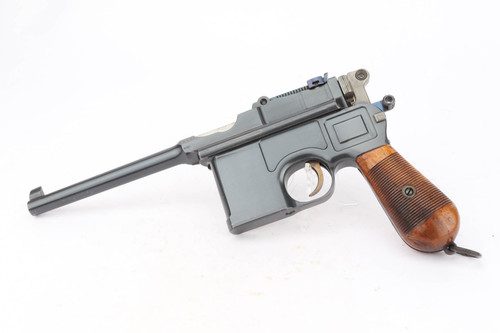
Mauser C96
The Mauser C96 is a German semi-automatic pistol that entered service in 1896, designed by the Feederle brothers at Mauser's Oberndorf… Continued…
-
Mauser Gewehr 98
The Gewehr 98 is the definitive Mauser: the 1898 pattern bolt-action whose controlled-round feed, dual front locking lugs, and massive claw… Continued…
-
Maxim Gun
The Maxim gun was the first true machine gun: a weapon that used the energy of each shot to load and fire the next, and would keep firing… Continued…
-
Mills Bomb
The Mills bomb was the British Army's standard hand grenade from 1915 until the 1970s. Designed by the Birmingham engineer William Mills… Continued…
-
Model 24 Stielhandgranate
The Model 24 Stielhandgranate was the standard German hand grenade of the Second World War, the 'potato masher' of Allied soldiers. It had… Continued…
-
Mondragón Rifle
The Mondragón rifle was the first semi-automatic rifle adopted as the standard service arm of any army. Designed by the Mexican general… Continued…
-
Mosin-Nagant M1891
The Mosin-Nagant was Russia's service rifle for over sixty years: a five-shot bolt action in the powerful rimmed 7.62x54R cartridge… Continued…
-
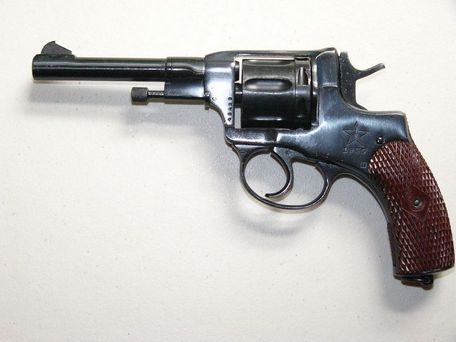
Nagant M1895 Pistol
The Nagant M1895 is the seven-shot Belgian-designed service revolver of Imperial Russia and the Soviet Union, unique among military… Continued…
-
Pattern 1907 Bayonet
The Pattern 1907 was the British Army's sword bayonet for the Short Magazine Lee-Enfield rifle through both world wars. Its 17-inch blade… Continued…
-
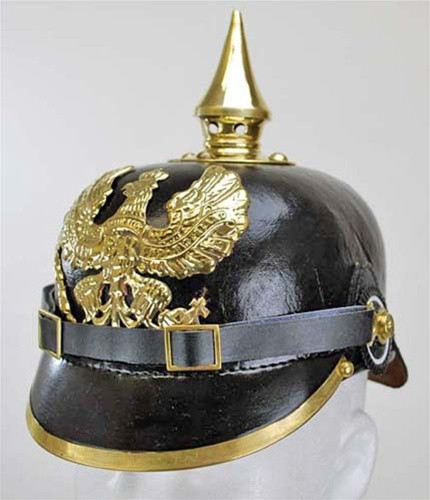
Pickelhaube
The Pickelhaube is the spiked leather helmet of the Prussian and Imperial German armies, adopted by King Frederick William IV in 1842 and… Continued…
-
Satchel Charge
A satchel charge is a bag of explosive blocks, with a carrying strap and a fuse, that a soldier throws or places against a bunker, pillbox… Continued…
-
Schwarzlose Machine Gun
The Schwarzlose was the standard heavy machine gun of the Austro-Hungarian army in the First World War. Designed by the German engineer… Continued…
-
Spetsnaz Trench Shovel
The Russian small infantry spade, the MPL-50, is a short, all-steel-bladed entrenching tool of nineteenth-century design that became a… Continued…
-
Steyr-Mannlicher M1895
The Steyr-Mannlicher M1895 was the service rifle of the Austro-Hungarian army through the First World War. Designed by Ferdinand… Continued…
-
Vetterli Rifle
The Vetterli rifle was the Italian army's first bolt-action rifle for metallic cartridges, adopted in 1870 and based on a design by the… Continued…
-
Vickers Machine Gun
The Vickers was the British Army's medium machine gun for more than fifty years. Adopted in 1912, it was a lighter, improved version of the… Continued…
-
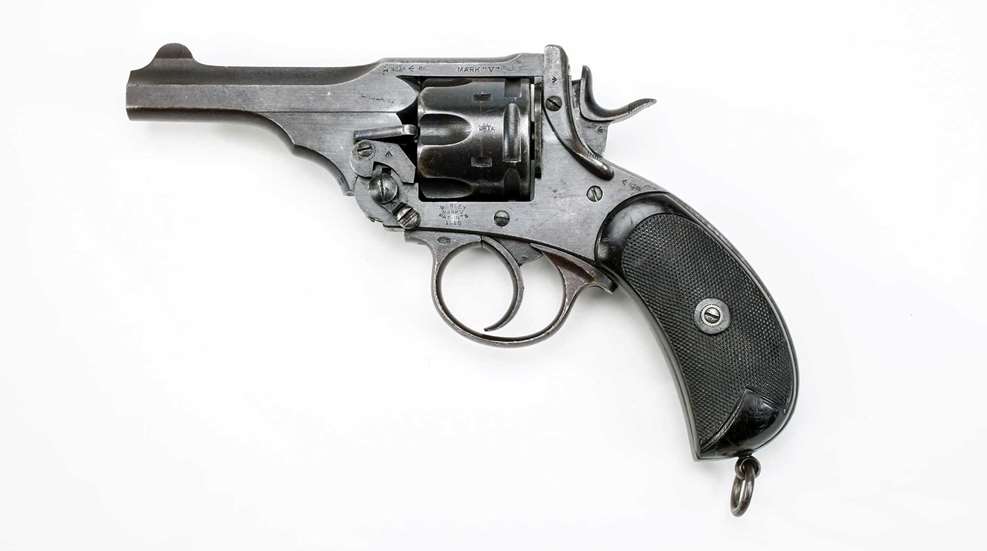
Webley Revolver
The Webley revolver was the British service sidearm from 1887 until after the Second World War. A top-break revolver made by Webley & Scott… Continued…
-
Winchester Model 1897
The Winchester Model 1897 is a pump-action shotgun designed by John Moses Browning and made by Winchester from 1897 to 1957. An improved… Continued…