Historical Context
World War I
The first industrialized global conflict introduced bolt-action rifles, machine guns, poison gas, tanks, aircraft, and heavy artillery at unprecedented scale. Trench warfare drove rapid innovation in hand grenades, trench mortars, and flamethrowers as armies sought to break grinding stalemates.
1914 – 1918
Overview
World War I was the first fully industrialized global conflict, drawing in the major powers of Europe, the Ottoman Empire, and eventually the United States. It is defined militarily by the catastrophic mismatch between offensive tactics (cavalry charges, infantry advances) and defensive technology (machine guns, barbed wire, artillery), producing the Western Front stalemate and four years of grinding attrition warfare that drove unprecedented weapons innovation.
For detailed weapon listings by category, see the World War I Era article. This article covers the conflict's specific weapons context and key engagements.
The Defensive-Offensive Imbalance
The war opened with all major powers expecting mobile operations. What emerged instead on the Western Front was a continuous line of trenches from the English Channel to Switzerland — a stalemate produced by:
- Machine gun — 400–600 rounds per minute of sustained fire; one gun could cover an entire sector against infantry attack
- Barbed wire — Cheap, fast to deploy, slowed infantry attacks to a crawl under machine gun fire
- Artillery — Dominated the battlefield; caused 60%+ of all casualties; destroying wire and suppressing machine guns required massive bombardment
- Bolt-action rifle — At 15 aimed rounds per minute (British SMLE), accurate to 500+ yards; added to defensive firepower
Weapons That Tried to Break the Stalemate
Artillery Escalation
Both sides built enormous artillery parks. By 1917, British preparatory bombardments lasted weeks (Passchendaele). The challenge: bombardment churned the ground into impassable mud and eliminated the element of surprise.
Poison Gas
Germany first used mass chlorine gas at Second Ypres (April 1915). Both sides escalated through phosgene (most lethal) to mustard gas (most feared — a persistent blister agent). Gas masks became standard issue. Gas ultimately failed to break the stalemate but caused enormous suffering.
Tank
Britain introduced the tank at the Somme (September 1916). Early Mark I tanks were mechanically unreliable and too few in number. Cambrai (November 1917) — 476 tanks in a massed attack — demonstrated what concentrated armor could achieve before mechanical breakdowns limited exploitation.
Aircraft
Aviation evolved from unarmed reconnaissance to fighters (synchronized forward-firing guns, 1915), ground attack, and strategic bombing within the war's first two years. The Fokker Eindecker and Sopwith Camel are icons of this period.
Stormtrooper Tactics and the MP 18
Germany developed Stormtrooper (Stoßtruppen) infiltration tactics — small units bypassing strong points, penetrating deep, disrupting command and supply. Their weapons: stick grenades, flamethrowers, light machine guns, and late in the war the MP 18 submachine gun — the world's first practical SMG, ideal for trench clearing.
Key Engagements for Weapons History
| Battle | Year | Weapons Significance | |--------|------|---------------------| | Second Ypres | 1915 | First mass use of poison gas | | Somme (Day 1) | 1916 | Machine gun dominance; 57,000 British casualties in one day | | Somme (Sept 1916) | 1916 | First tank use in combat | | Cambrai | 1917 | First massed tank assault | | Spring Offensive | 1918 | Stormtrooper/infiltration tactics; MP 18 debut |
This article is a stub. Contributions covering specific battles, weapons, and commanders are welcome.
Battles & Operations
-
First Battle of the Marne (5-12 September 1914)
The First Battle of the Marne was fought east of Paris from 5 to 12 September 1914. After a month of German advances through Belgium and… Continued…
-
Battle of the Somme (1 July - 18 November 1916)
The Battle of the Somme was a joint British and French offensive against the German lines in northern France, fought from 1 July to 18… Continued…
-
Meuse-Argonne Offensive (26 September - 11 November 1918)
The Meuse-Argonne Offensive, fought from 26 September to 11 November 1918, was the main American battle of the First World War and part of… Continued…
Weapons
-
Bangalore Torpedo
The Bangalore torpedo is a long explosive charge made of steel tubes that can be joined end to end, pushed under barbed wire or across a… Continued…
-
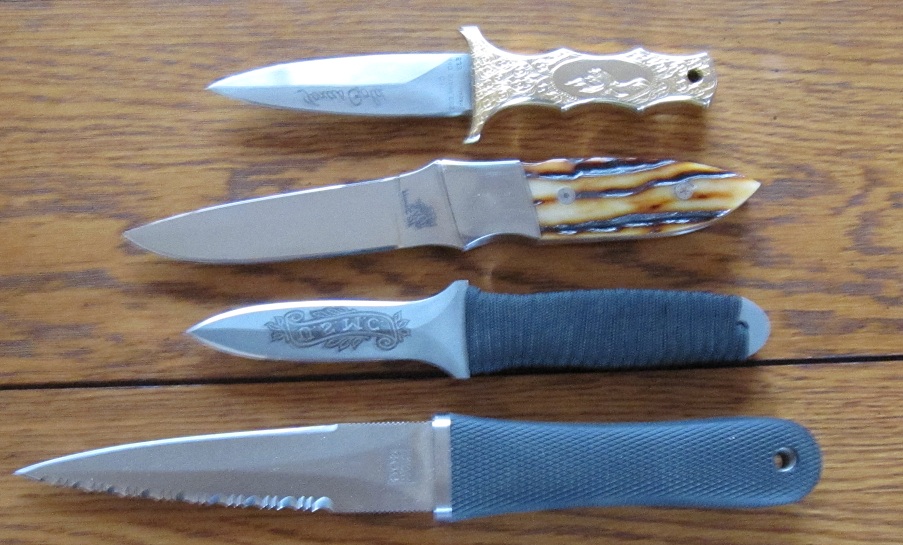
Boot Knife
A boot knife is a small, usually double-edged fighting knife made to ride hidden in a boot top or along the calf, where a hand could reach… Continued…
-
Brodie Helmet
The Brodie helmet is the shallow, wide-brimmed steel helmet designed by John Leopold Brodie in 1915 and worn by British and Commonwealth… Continued…
-
Chauchat
The Chauchat, officially the Fusil Mitrailleur Modèle 1915 CSRG, was the French army's light automatic weapon of the First World War. It… Continued…
-
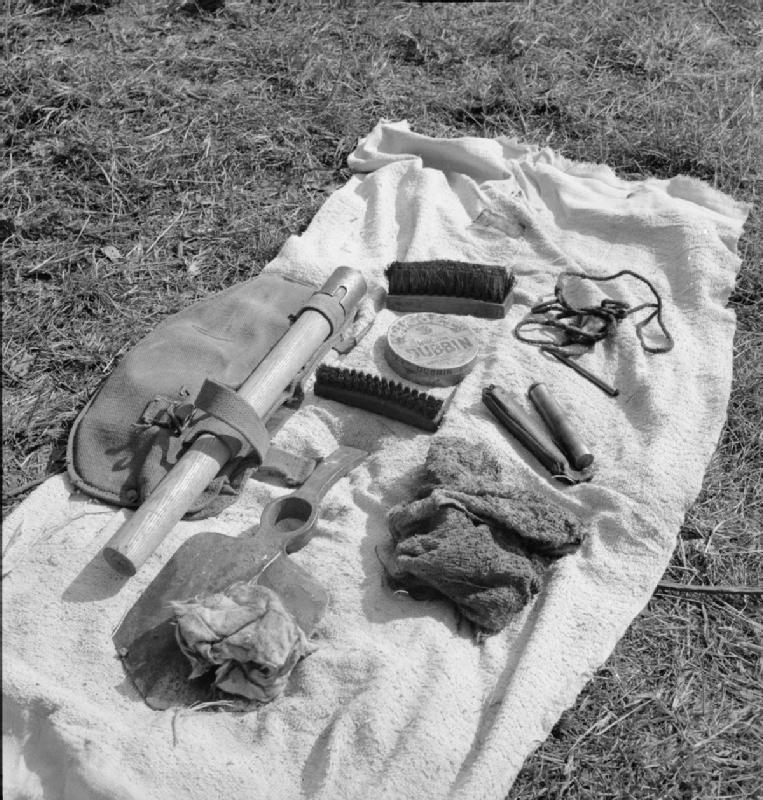
Entrenching Tool
The entrenching tool is the soldier's personal shovel, a compact spade or pick carried on the belt or pack so that an infantryman can dig… Continued…
-
French 75
The French 75, the Canon de 75 modèle 1897, was the first modern quick-firing field gun. A hydraulic and air recoil system let the barrel… Continued…
-
Hotchkiss M1914
The Hotchkiss M1914 was the standard heavy machine gun of the French army in the First World War. Made by the Hotchkiss company near Paris… Continued…
-
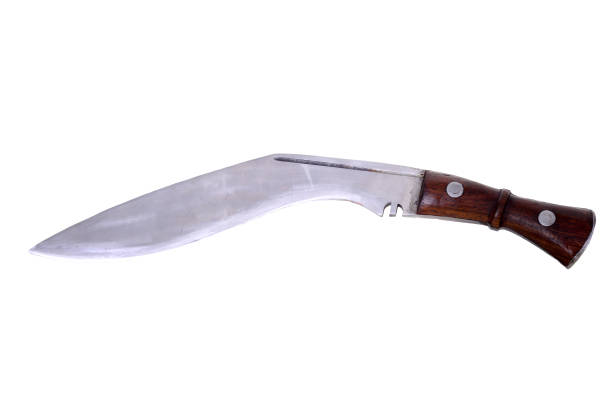
Kukri
The kukri is the forward-curved knife of Nepal: a broad, downward-angled blade that concentrates a blow like a hatchet while handling like… Continued…
-
Lebel Model 1886
The Lebel Model 1886 was the first military rifle to fire smokeless powder, and it made every other army's rifle obsolete overnight. Its… Continued…
-
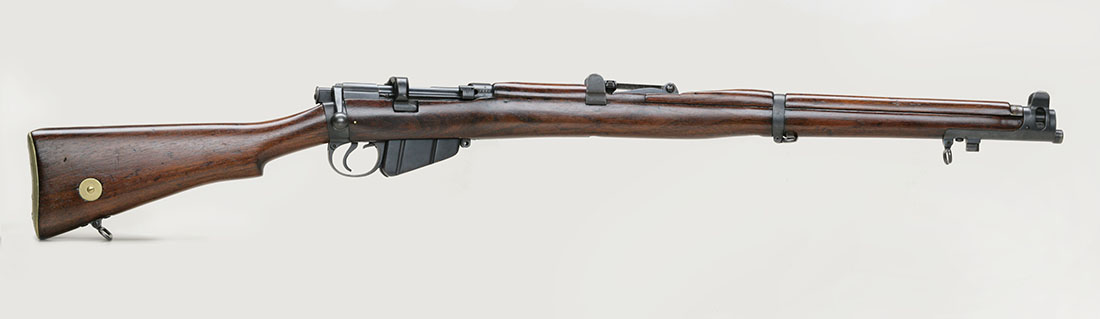
Lee-Enfield Rifle
The Lee-Enfield was the British Empire's rifle for over half a century: a bolt-action .303 whose rear-locking action and ten-round magazine… Continued…
-
Lewis Gun
The Lewis gun was the British Empire's light machine gun of the First World War: an air-cooled, gas-operated gun with a distinctive fat… Continued…
-
Luger P08
The Luger P08 is the toggle-locked semi-automatic pistol of the German military through both World Wars, and for many the most recognizable… Continued…
-
M1903 Springfield
The M1903 Springfield was the United States' service rifle from 1903 until the M1 Garand replaced it in the late 1930s, and a sniper's and… Continued…
-
M1911 Pistol
The M1911 is John Browning's masterpiece: a short-recoil, single-action semi-automatic in .45 ACP that served as the standard American… Continued…
-
M1917 Enfield
The M1917 Enfield, officially the United States Rifle, cal .30, Model of 1917, was the bolt-action rifle carried by most American soldiers… Continued…
-
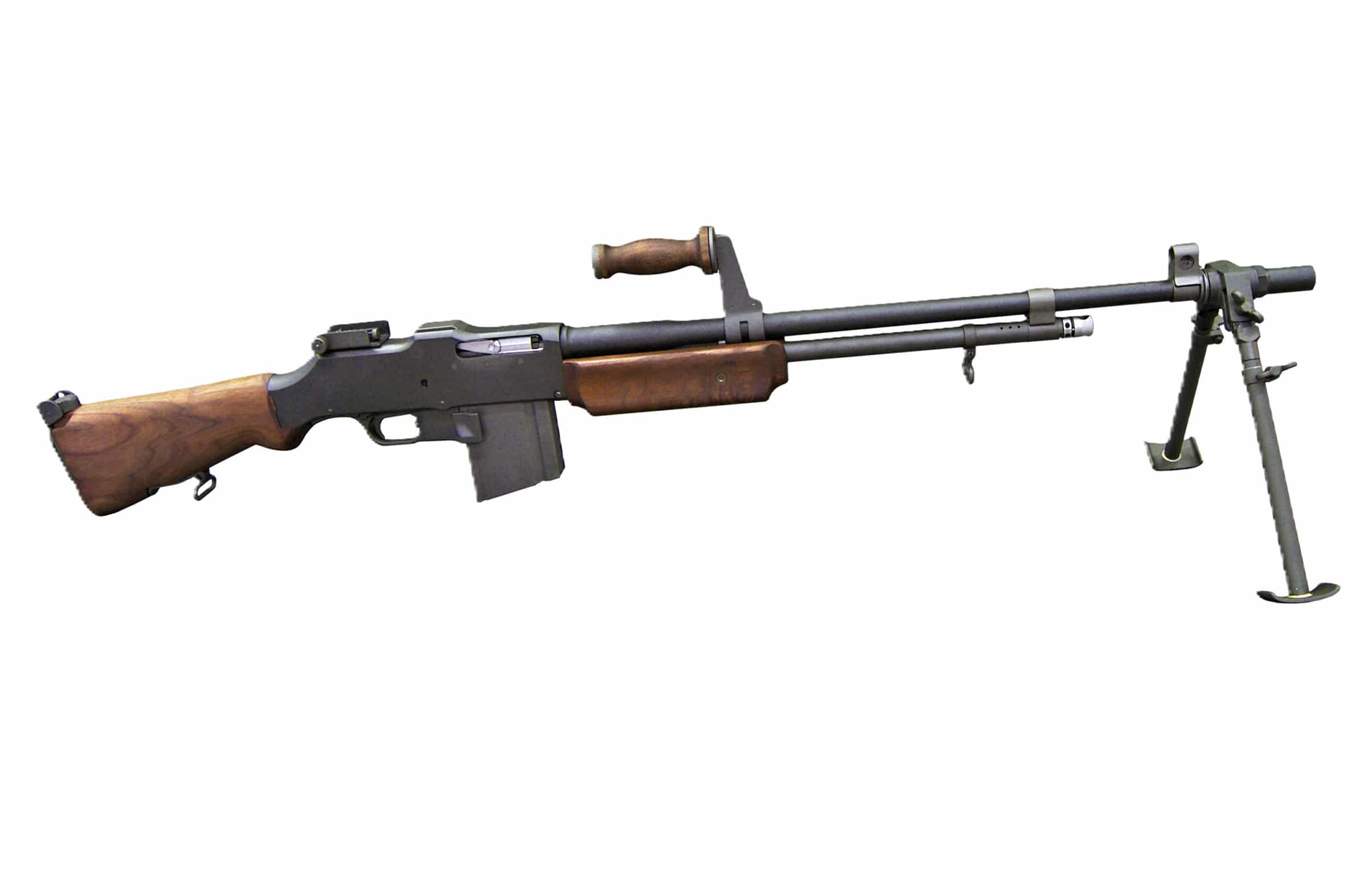
M1918 BAR
The Browning Automatic Rifle was John Moses Browning's shoulder-fired automatic weapon, adopted by the United States Army in 1918 and the… Continued…
-
MP 18
The MP 18 was the first practical submachine gun to go into service: a light automatic weapon firing pistol cartridges, designed by Hugo… Continued…
-
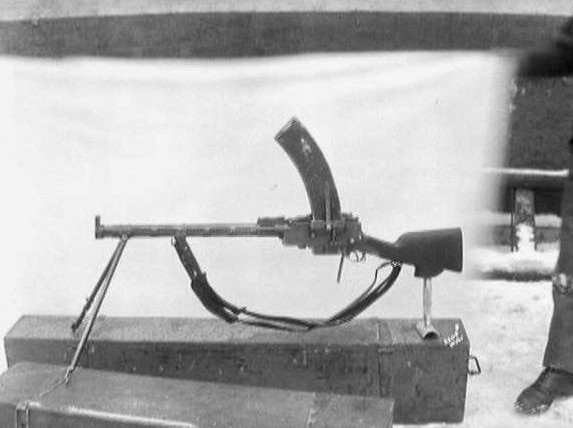
Madsen Machine Gun
The Madsen was a Danish light machine gun and the first weapon of its kind to be mass-produced, entering service in 1902. Light enough for… Continued…
-
Mark I Trench Knife
The Mark I trench knife of 1918 is the most recognizable close-combat weapon of the Great War: a double-edged dagger blade beneath a cast… Continued…
-
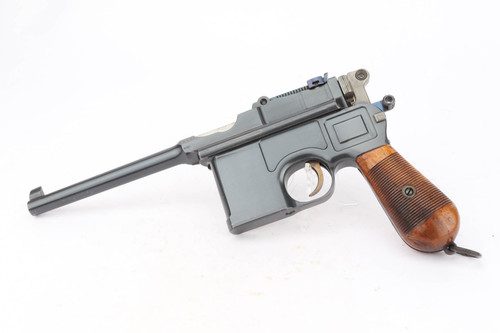
Mauser C96
The Mauser C96 is a German semi-automatic pistol that entered service in 1896, designed by the Feederle brothers at Mauser's Oberndorf… Continued…
-
Mauser Gewehr 98
The Gewehr 98 is the definitive Mauser: the 1898 pattern bolt-action whose controlled-round feed, dual front locking lugs, and massive claw… Continued…
-
Maxim Gun
The Maxim gun was the first true machine gun: a weapon that used the energy of each shot to load and fire the next, and would keep firing… Continued…
-
Mills Bomb
The Mills bomb was the British Army's standard hand grenade from 1915 until the 1970s. Designed by the Birmingham engineer William Mills… Continued…
-
Model 24 Stielhandgranate
The Model 24 Stielhandgranate was the standard German hand grenade of the Second World War, the 'potato masher' of Allied soldiers. It had… Continued…
-
Mondragón Rifle
The Mondragón rifle was the first semi-automatic rifle adopted as the standard service arm of any army. Designed by the Mexican general… Continued…
-
Mosin-Nagant M1891
The Mosin-Nagant was Russia's service rifle for over sixty years: a five-shot bolt action in the powerful rimmed 7.62x54R cartridge… Continued…
-
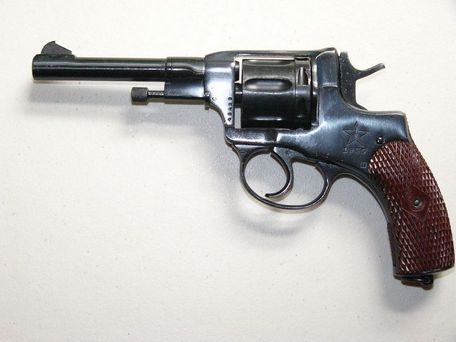
Nagant M1895 Pistol
The Nagant M1895 is the seven-shot Belgian-designed service revolver of Imperial Russia and the Soviet Union, unique among military… Continued…
-
Pattern 1907 Bayonet
The Pattern 1907 was the British Army's sword bayonet for the Short Magazine Lee-Enfield rifle through both world wars. Its 17-inch blade… Continued…
-
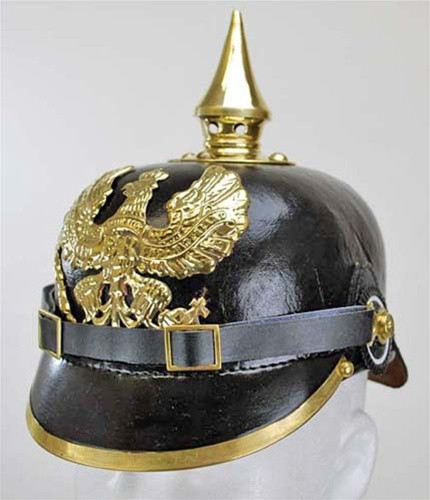
Pickelhaube
The Pickelhaube is the spiked leather helmet of the Prussian and Imperial German armies, adopted by King Frederick William IV in 1842 and… Continued…
-
Schwarzlose Machine Gun
The Schwarzlose was the standard heavy machine gun of the Austro-Hungarian army in the First World War. Designed by the German engineer… Continued…
-
Spetsnaz Trench Shovel
The Russian small infantry spade, the MPL-50, is a short, all-steel-bladed entrenching tool of nineteenth-century design that became a… Continued…
-
Steyr-Mannlicher M1895
The Steyr-Mannlicher M1895 was the service rifle of the Austro-Hungarian army through the First World War. Designed by Ferdinand… Continued…
-
Vetterli Rifle
The Vetterli rifle was the Italian army's first bolt-action rifle for metallic cartridges, adopted in 1870 and based on a design by the… Continued…
-
Vickers Machine Gun
The Vickers was the British Army's medium machine gun for more than fifty years. Adopted in 1912, it was a lighter, improved version of the… Continued…
-
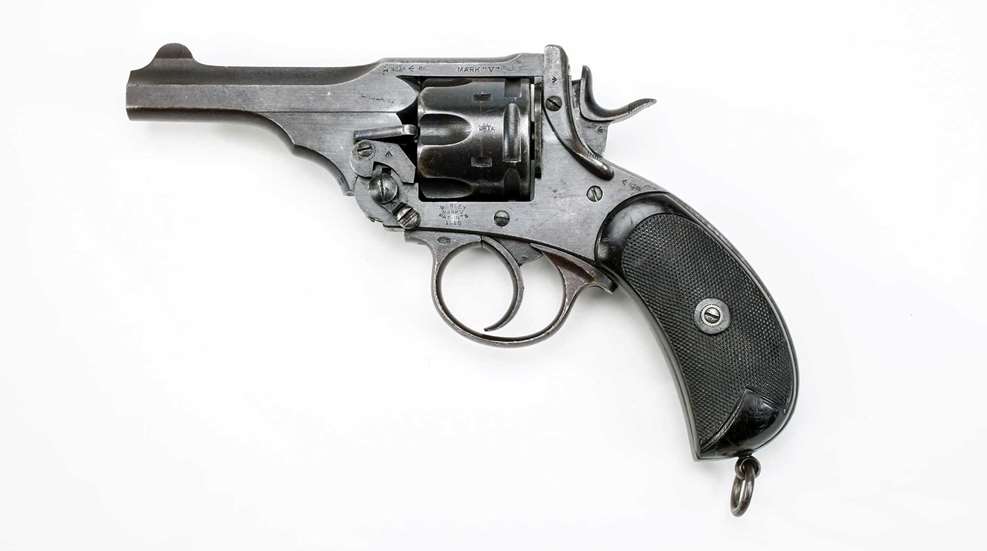
Webley Revolver
The Webley revolver was the British service sidearm from 1887 until after the Second World War. A top-break revolver made by Webley & Scott… Continued…
-
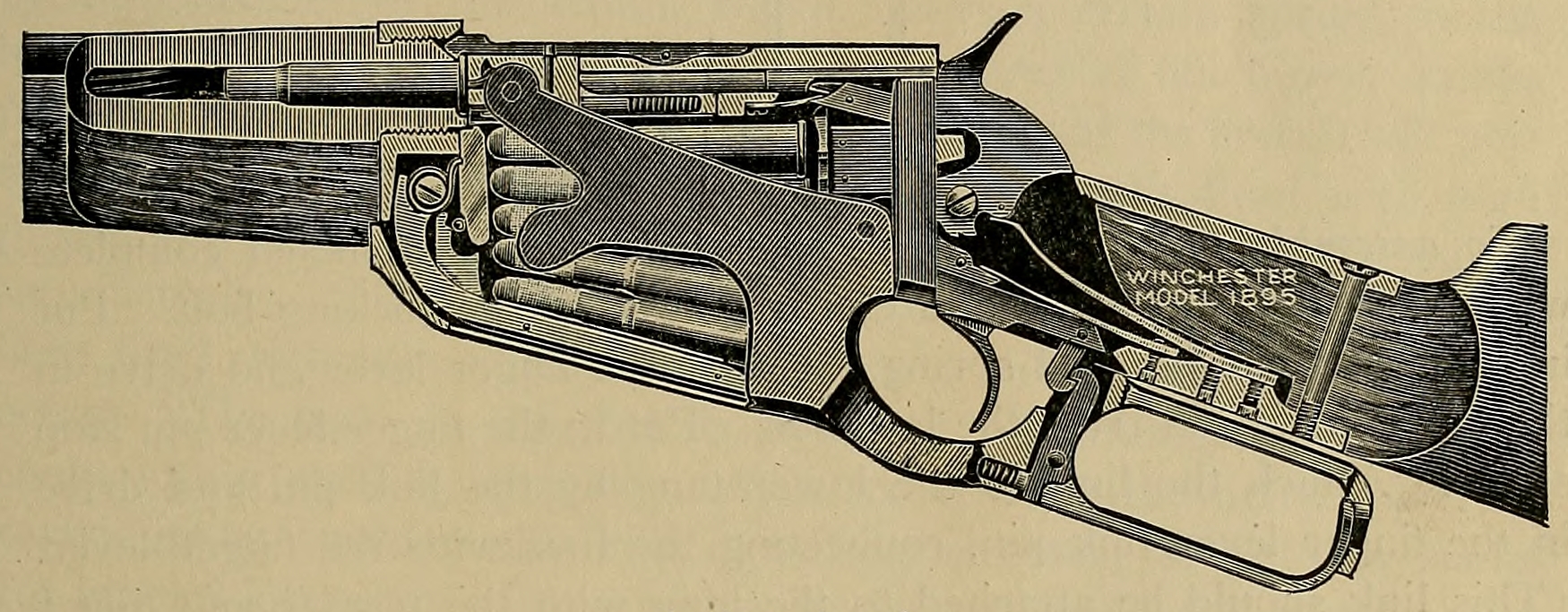
Winchester Model 1895
The Winchester Model 1895 was the first lever-action rifle built around a box magazine instead of a tube. That let it safely fire the… Continued…
-
Winchester Model 1897
The Winchester Model 1897 is a pump-action shotgun designed by John Moses Browning and made by Winchester from 1897 to 1957. An improved… Continued…