Search
Search the Armory
11 results
-
Battle of Waterloo
The Battle of Waterloo, fought on Sunday 18 June 1815 near the village of Waterloo in present-day Belgium, ended the Napoleonic Wars.… Continued…
-
Light Dragoon Pistol
The Light Dragoon pistol was the British Army's flintlock cavalry pistol of the later eighteenth century. Introduced around 1759 for the… Continued…
-
Spontoon
The spontoon, or espontoon, was a short pike of about six to seven feet carried by infantry officers, and later by sergeants, in European… Continued…
-
Rifles
The rifle — a long arm with spiral grooves in the barrel that impart spin to the bullet for accuracy — is the dominant infantry weapon from… Continued…
-
Siege Mortar
A siege mortar was a short, wide-mouthed cannon that fired at a high angle, so that its projectile rose over walls and earthworks and fell… Continued…
-
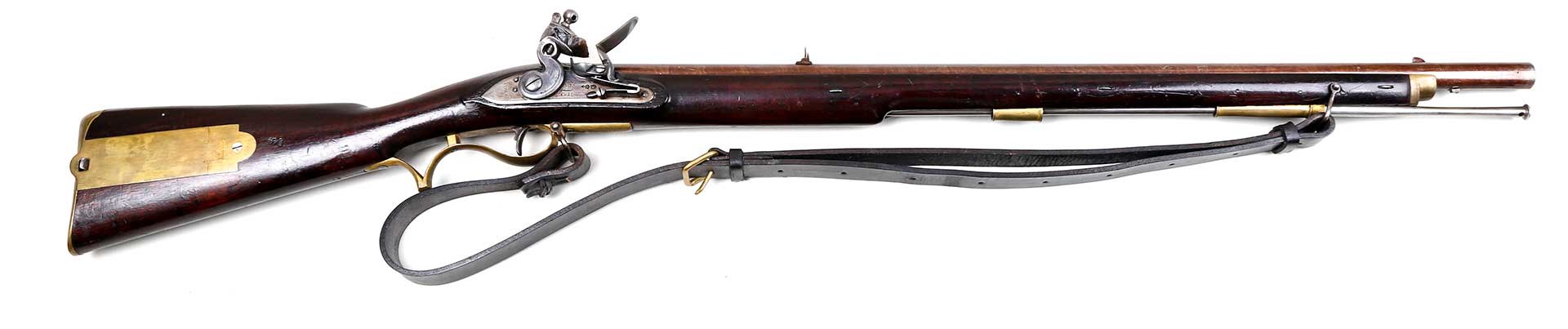
Baker Rifle
The Baker rifle was the first rifle officially adopted by the British Army, the weapon of the green-jacketed 95th Rifles and the rifle… Continued…
-
Napoleon 12-Pounder
The 12-pounder Napoleon was the most common field gun of the American Civil War: a bronze smoothbore gun-howitzer of 4.62-inch bore… Continued…
-
Charleville Musket
'Charleville' is the collector's name — taken from the great arsenal in the Ardennes — for the French service flintlock muskets of the… Continued…
-
Brown Bess Musket
Brown Bess is the affectionate name for the British Land Pattern flintlock musket, the longest-serving firearm in British history. A .75… Continued…
-
Napoleonic Era
The Napoleonic Era refined the flintlock musket and field artillery to their peak effectiveness, producing standardized military arms… Continued…
-
Muskets
The flintlock musket was the universal infantry firearm from the 1680s through the 1840s — the Brown Bess, Charleville, and Potemkin musket… Continued…