Origin
Roman Empire
Rome built its military dominance on the legionary system and its signature weapons: the pilum (heavy javelin), gladius (short stabbing sword), and scutum (rectangular shield). Roman engineers also pioneered siege weapons including the ballista, onager, and battering rams of extraordinary scale.
Overview
Rome's military power rested on one of history's most effective combinations of weapons and tactics — the pilum, gladius, and scutum (heavy javelin, short sword, large shield) used by disciplined professional legionaries in close formation. This system defeated nearly every opponent it encountered over five centuries of expansion, and the Roman military simultaneously developed artillery and siege engineering to levels not surpassed until the early modern period.
The Legionary's Weapons
Pilum (Heavy Javelin)
The pilum was thrown at 10–15 meters before the lines met. Its design was deliberately engineered:
- A soft iron shank attached to a wooden shaft bent or broke on impact, preventing the enemy from throwing it back
- The weight made the throw penetrating enough to go through a shield before reaching the man behind it
- A shield impaled by a pilum became heavy and awkward, forcing the enemy to discard it before melee
Gladius (Short Sword)
The Roman gladius was a double-edged thrusting sword 60–85 cm long, worn on the right hip for quick draw. In the close press of the shield wall (where slashing swords had no room to swing), the gladius's short thrusting blade was devastatingly effective.
Two main types:
- Mainz type — Longer, waisted blade with a longer point
- Pompeii type — Shorter, parallel-sided blade; the later pattern
Scutum
The large rectangular curved shield (later oval) protected most of the body. In the testudo (tortoise) formation, legionaries locked shields overhead and on all sides to advance under missile fire.
Spatha
As Rome faced cavalry threats and recruited more auxiliary cavalry, the longer spatha (80–100 cm) cavalry sword replaced the gladius in many units by the 3rd century CE.
Artillery
- Ballista — A large crossbow-like torsion weapon firing heavy bolts accurately at long range; used in sieges and as field artillery
- Scorpio — A lighter version of the ballista; one per century; used as an anti-personnel weapon
- Onager — A single-arm torsion catapult firing stones; siege weapon
- Corvus — A boarding device — a spiked grapnel on a pole — used to pin enemy ships for boarding; used in the First Punic War
Armor
- Lorica Segmentata — The iconic articulated plate armor of the Imperial period; actually used for only ~200 years; earlier and later legionaries wore mail
- Lorica Hamata — Roman chainmail; the most common Roman armor across the Republic and Empire
- Lorica Squamata — Scale armor; used by cavalry and some infantry
- Galea — The Roman helmet; many types across the centuries; typically iron with cheek guards and neck guard
This article is a stub.
Battles & Operations
-
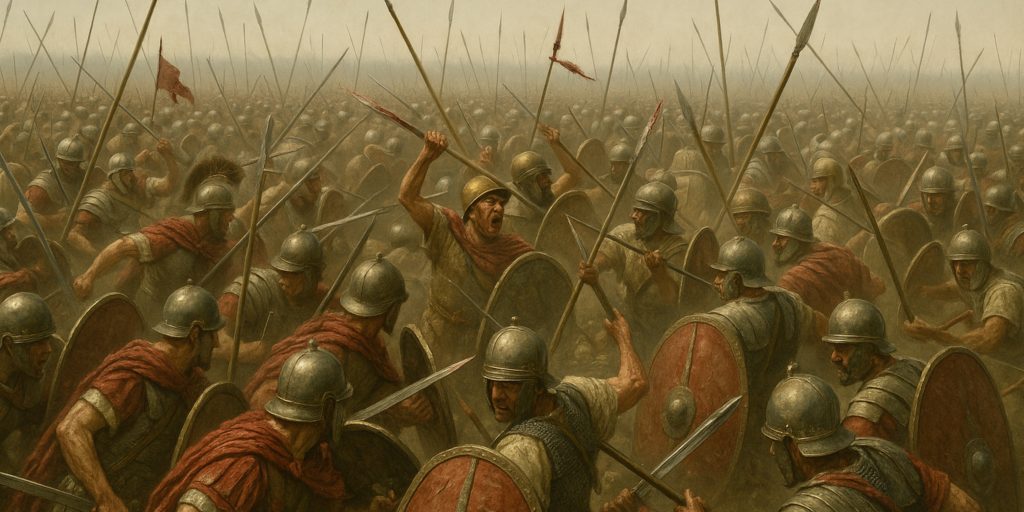
Battle of Cannae (2 August 216 BC)
The Battle of Cannae, fought on 2 August 216 BC in Apulia in southern Italy, was Hannibal's masterpiece and one of the worst defeats in… Continued…
-
Battle of Zama (October 202 BC)
The Battle of Zama, fought in North Africa in 202 BC, ended the Second Punic War. The Roman general Publius Cornelius Scipio, with the help… Continued…
-
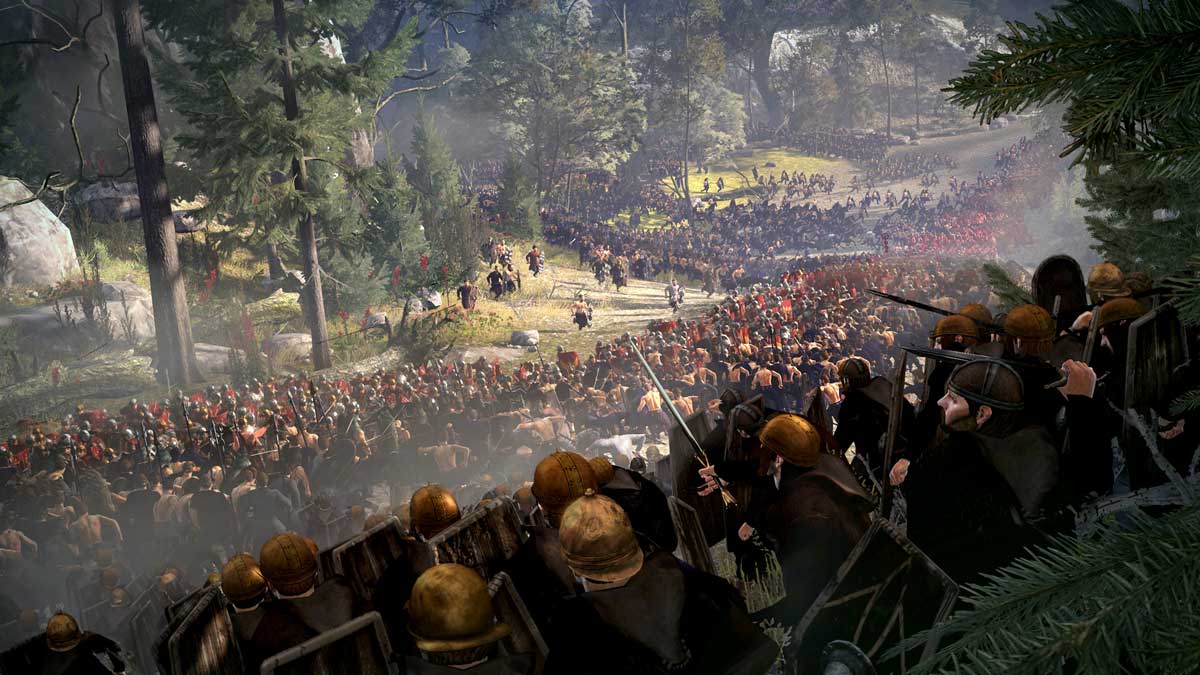
Battle of Teutoburg Forest (September 9 AD)
The Battle of the Teutoburg Forest was the destruction of three Roman legions — the XVII, XVIII and XIX — with their auxiliaries by an… Continued…
Weapons
-
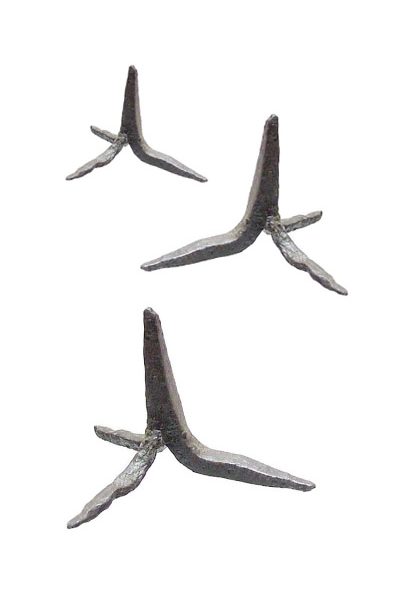
Caltrops
A caltrop is a small iron device of four spikes joined at the center so that however it lands, one spike always points up. Scattered on the… Continued…
-
Montefortino Helmet
The Montefortino helmet was the most common helmet of the Roman Republic, worn by legionaries from the fourth century BC into the first… Continued…
-
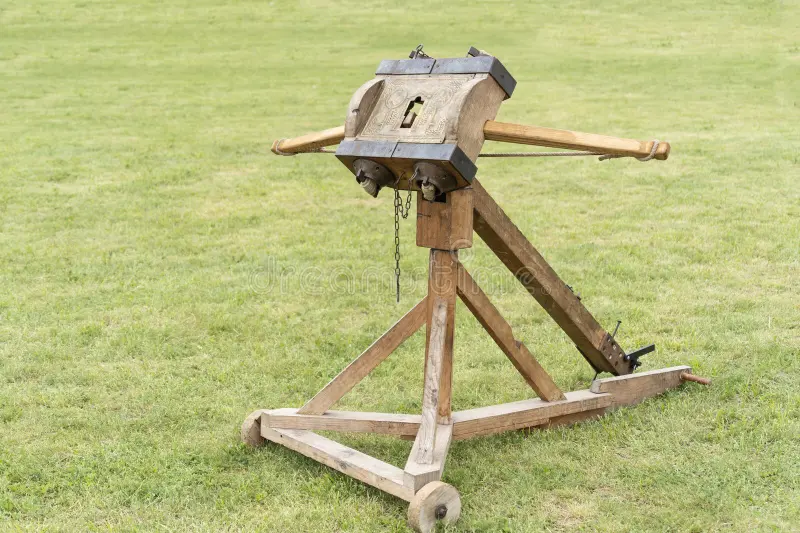
Roman Ballista
The ballista was the torsion artillery of the ancient world: a two-armed engine powered by twisted skeins of sinew or hair, shooting heavy… Continued…
-
Roman Gladius
The gladius was the short sword of the Roman legionary and the weapon that conquered the Mediterranean world. Adopted from Iberian patterns… Continued…
-
Roman Hasta
The hasta was the thrusting spear of the early Roman army. In the manipular legion of the Punic Wars it was the weapon of the triarii, the… Continued…
-
Roman Lorica Segmentata
The lorica segmentata is the articulated iron plate cuirass that has come to define the Roman legionary in the modern imagination… Continued…
-
Roman Pilum
The pilum was the Roman legionary's heavy javelin: a barbed iron head on a long, thin iron shank socketed into a wooden shaft, thrown in a… Continued…
-
Roman Pugio
The pugio was the dagger of the Roman soldier, worn on the left hip opposite the gladius. Its broad, leaf-shaped double-edged blade, often… Continued…
-
Roman Scutum
The scutum was the large shield of the Roman legionary: an oval, and later rectangular, shield curved to wrap around the body, made of… Continued…
-
Roman Spatha
The spatha was the long, straight, double-edged sword of the Roman Empire. First carried by auxiliary cavalry in the first century AD… Continued…