Battle of the Alamo
The Battle of the Alamo was the thirteen-day siege and final assault, from 23 February to 6 March 1836, in which a Mexican army under General Antonio López de Santa Anna took the fortified Alamo mission at San Antonio de Béxar during the Texas Revolution. All of the roughly 180 to 250 defenders were killed, among them William Barret Travis, James Bowie and David Crockett. The loss became a rallying cry for the Texian army, which defeated Santa Anna at San Jacinto six weeks later.
Also known as The Alamo, Siege of the Alamo, Fall of the Alamo, Alamo 1836, Batalla de El Álamo, Batalla del Alamo, Remember the Alamo, Mission San Antonio de Valero, The Alamo 1960, The Alamo 2004, John Wayne Alamo, Alamo movie
Background
In 1835 the American settlers of Mexican Texas, known as Texians, and many of their Tejano neighbors rose against the centralist government of General Antonio López de Santa Anna. In December a volunteer army took San Antonio de Béxar, the main town of Texas, and sent its Mexican garrison south under parole. The Texians inherited the Alamo, a former Spanish mission across the river from the town that the Mexican army had turned into a rough fort. Its walls enclosed about three acres and mounted roughly twenty cannon, far more than the small garrison could properly serve.
Santa Anna resolved to crush the rebellion himself and marched north through the winter. He reached Béxar on 23 February 1836, earlier than the Texians expected. The garrison withdrew into the Alamo. It was jointly commanded by William Barret Travis, a 26-year-old lieutenant colonel of the regular Texian cavalry, and James Bowie, who led the volunteers. Bowie collapsed with illness on the second day, and Travis took sole command. The former Tennessee congressman David Crockett had arrived a few weeks earlier with a small party of volunteers.
The Battle
Santa Anna raised a red flag signaling no quarter, and Travis answered with a cannon shot. For twelve days Mexican batteries worked closer to the walls while Travis sent out riders with appeals for help. His letter of 24 February, addressed to the people of Texas and all Americans in the world, promised that he would never surrender or retreat. On 1 March thirty-two men from Gonzales slipped through the lines to join him. No larger relief came. Estimates of the final garrison range from about 180 to about 250. The well-known story that Travis drew a line in the dirt with his sword was first printed decades later and cannot be confirmed.
Santa Anna ordered an assault for the early hours of 6 March. Four columns, perhaps 1,400 to 1,800 men including reserves, approached in the dark before dawn. Cavalry waited outside to cut down anyone who fled. The defenders' cannon and small arms drove back the first rushes with heavy loss, and the columns bunched together under the north wall. Travis was killed there early in the fight. The attackers then climbed over the north wall, while another column took the south-west corner and its 18-pounder. The Texians fell back into the barracks rooms and the chapel. Mexican soldiers turned the captured guns on the doors and cleared the rooms one by one. Bowie was killed in his bed. The fighting was over in roughly ninety minutes.
How Crockett died is disputed. Some accounts have him killed in the fighting. Others, including the narrative of the Mexican officer José Enrique de la Peña, say that he was one of a handful of men taken alive and executed on Santa Anna's order.
Weapons
The defenders had a mixture of arms. Many volunteers carried their own long rifles of the type described under Kentucky Long Rifle, and there were shotguns, pistols and military muskets, including weapons taken from the Mexican garrison in December. Knives were common, and James Bowie's name was already attached to the Bowie Knife. The Mexican infantry carried the Brown Bess Musket in its India Pattern form, bought from British surplus stocks after independence, with the Socket Bayonet. Light companies had the Baker Rifle. The assault troops also brought ladders, axes and crowbars. Santa Anna's siege artillery consisted of light field guns and howitzers; his heavier guns had not yet arrived when he attacked.
Aftermath
All of the defending combatants died. Santa Anna spared a number of women and children, among them Susanna Dickinson and her infant daughter, and Travis's slave Joe. The defenders' bodies were burned. Mexican losses are uncertain. Santa Anna admitted to about 70 killed and 300 wounded, and many historians put the total at 400 to 600 killed and wounded.
Texian delegates had declared independence on 2 March, while the siege was still in progress. On 27 March several hundred Texian prisoners were shot at Goliad on Santa Anna's orders. On 21 April Sam Houston's army surprised Santa Anna at San Jacinto, shouting "Remember the Alamo!", and destroyed his force in a few minutes of fighting. Santa Anna was captured the next day, and Texas became in practice independent of Mexico.
On Screen
The Alamo (1960) was directed by John Wayne, who also plays Crockett, with Richard Widmark as Bowie and Laurence Harvey as Travis. It stages the final assault in full daylight rather than before dawn, has Bowie learn during the siege of the death of his wife, who had in fact died in 1833, and shows Crockett blowing up the powder magazine as he dies, which did not happen. The Alamo (2004), directed by John Lee Hancock, has Billy Bob Thornton as Crockett, Jason Patric as Bowie, Patrick Wilson as Travis and Dennis Quaid as Sam Houston. It follows the record more closely. The attack comes in darkness, Bowie is killed in his sickbed, and Crockett is executed after the fighting, as in the de la Peña account. It ends with the battle of San Jacinto.
Weapons used
-
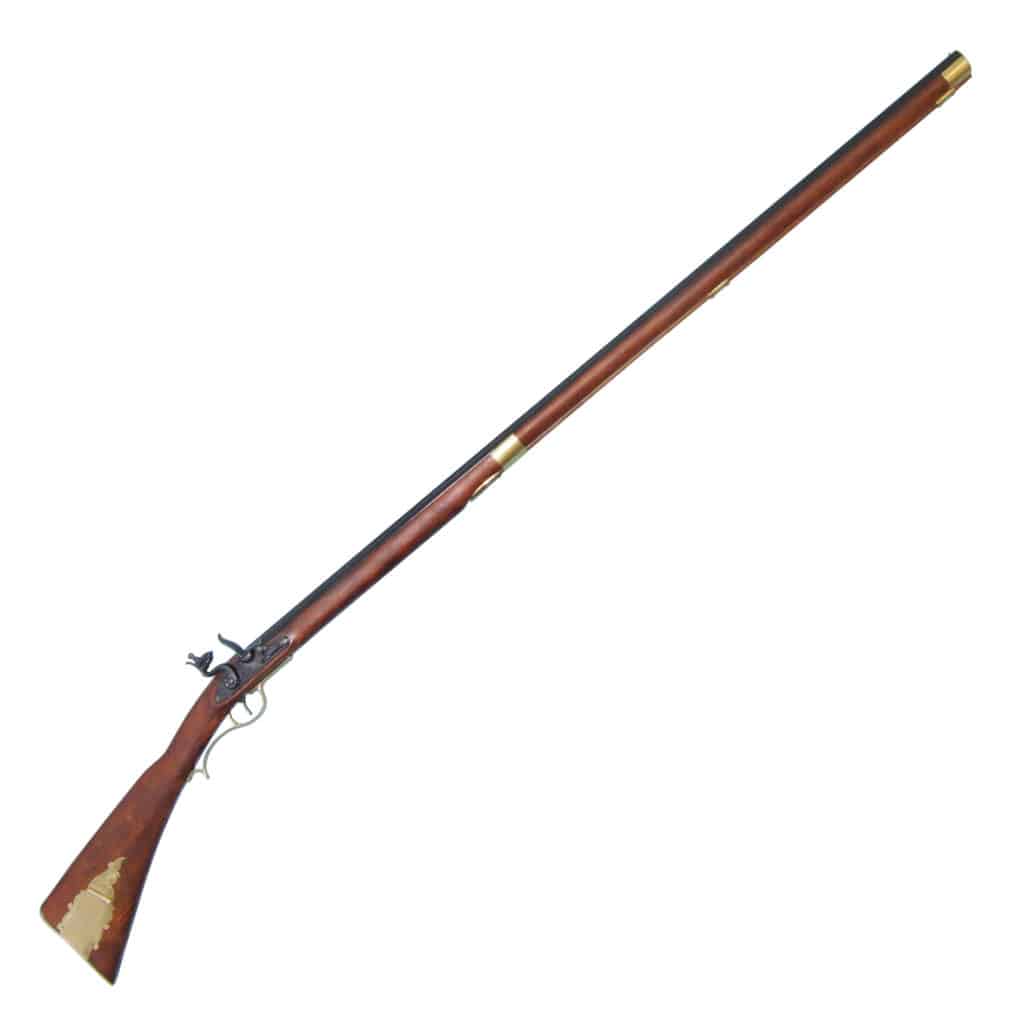
Kentucky Long RifleFor sale
American long rifles were the favored arm of many of the volunteers who manned the walls, David Crockett among them. Continued…
-
Brown Bess Musket
British-made India Pattern muskets armed most of Santa Anna's infantry, and captured ones were also used by the defenders. Continued…
-
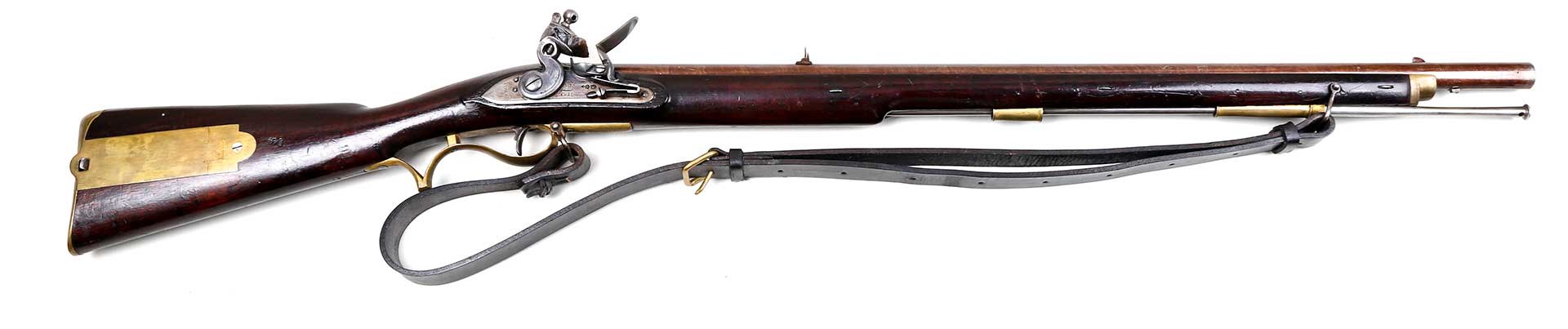
Baker Rifle
Mexican light infantry companies carried British Baker rifles bought as surplus in the 1820s. Continued…
-
Bowie KnifeFor sale
The big fighting knife made famous by James Bowie, who died in his sickbed when the mission fell. Continued…
-
Socket Bayonet
Once the Mexican columns were over the walls, the fighting in the barracks rooms was finished with the bayonet. Continued…
Sources
Hardin, Stephen L. Texian Iliad: A Military History of the Texas Revolution, 1835-1836. University of Texas Press, 1994.
Lord, Walter. A Time to Stand. Harper & Brothers, 1961.
Davis, William C. Three Roads to the Alamo: The Lives and Fortunes of David Crockett, James Bowie, and William Barret Travis. HarperCollins, 1998.
de la Peña, José Enrique. With Santa Anna in Texas: A Personal Narrative of the Revolution. Translated and edited by Carmen Perry. Texas A&M University Press, 1975.
Suggest an edit · account required · reviewed before publishing · how it works