Historical Context
Texas Revolution
The revolt of the settlers of Mexican Texas against the centralist government of Antonio López de Santa Anna. It began at Gonzales in October 1835, passed through the fall of the Alamo and the Goliad massacre in March 1836, and ended with Sam Houston's victory at San Jacinto on 21 April 1836.
1835 – 1836
Overview
Mexico won its independence from Spain in 1821 and inherited the thinly settled province of Texas. To populate it, the Mexican government granted land to colonists from the United States through agents such as Stephen F. Austin. By the early 1830s these settlers, who called themselves Texians, greatly outnumbered the Spanish-speaking Tejanos. Disputes grew over immigration, customs duties, slavery and the place of Texas within the Mexican federation. When President Antonio López de Santa Anna set aside the federal constitution of 1824 and began to concentrate power in Mexico City, several Mexican states resisted, and Texas was one of them.
Fighting began on 2 October 1835 at Gonzales, where settlers refused to hand back a small cannon and flew a flag reading "Come and Take It". A volunteer army then besieged San Antonio de Béxar and took it in December, forcing General Martín Perfecto de Cos to leave Texas. Santa Anna led an army north in person during the winter. He reached Béxar on 23 February 1836 and stormed the mission fort there on 6 March, in the Battle of the Alamo. Texian delegates meeting at Washington-on-the-Brazos had declared independence four days earlier.
A second Mexican column under General José de Urrea advanced along the coast. It defeated several small Texian parties and on 19 and 20 March caught Colonel James Fannin's command on open prairie at Coleto Creek. Fannin surrendered, and on 27 March he and several hundred of his men were shot at Goliad on Santa Anna's orders. Sam Houston, commanding what remained of the Texian army, retreated eastward for weeks while settlers fled before the Mexican advance. On 21 April 1836 he turned on Santa Anna's detached force beside the San Jacinto River. The attack was over in about twenty minutes. Several hundred Mexican soldiers were killed and most of the rest captured, at a cost of fewer than a dozen Texian dead. Santa Anna was taken the next day and signed the Treaties of Velasco in May, ordering his armies out of Texas.
Arms of the Texas Revolution
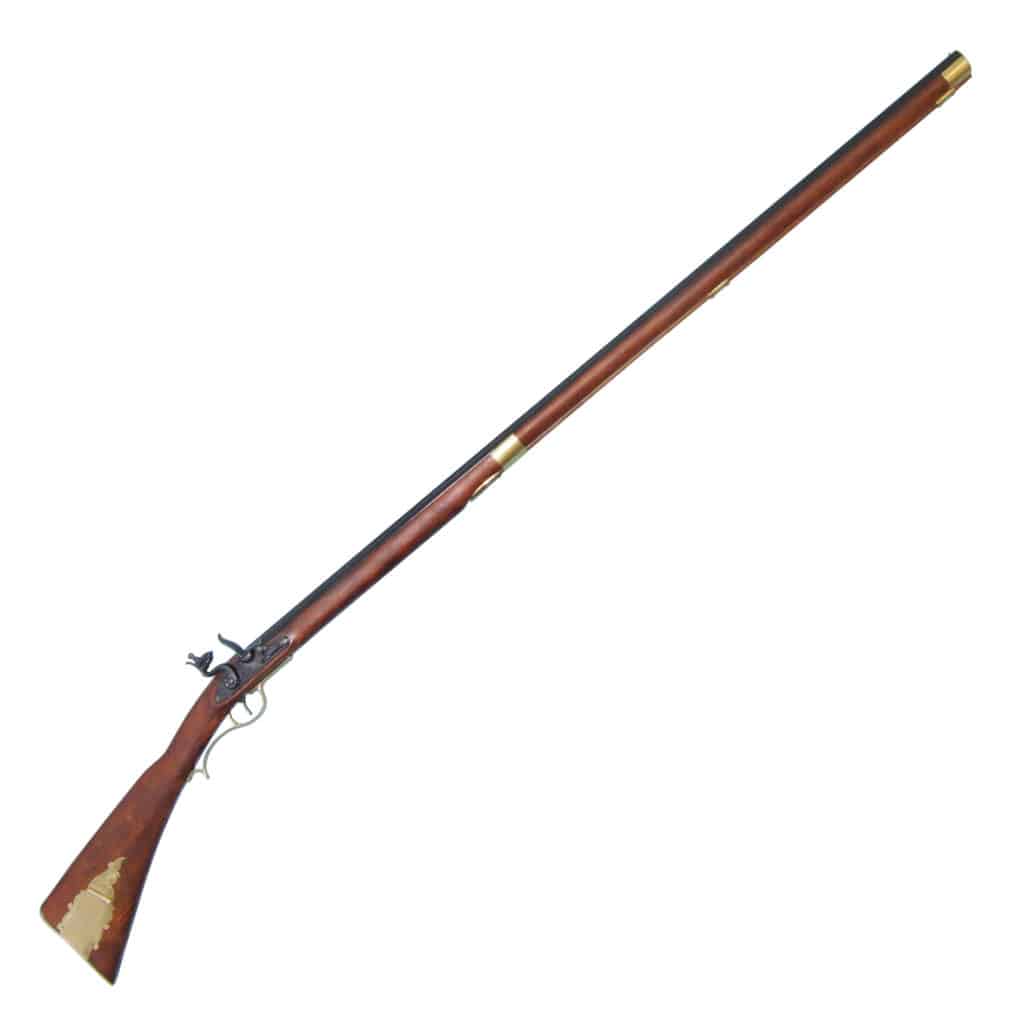
The Texian forces were volunteers who mostly brought their own weapons. Many carried American long rifles of the kind described under Kentucky Long Rifle, which were accurate but slow to load and had no bayonet. Others had shotguns, pistols such as the Kentucky Pistol, and muskets captured from Mexican garrisons. The Bowie Knife and similar large knives served in place of bayonets. Texian artillery was a mixture of captured pieces, and at San Jacinto it consisted of two small guns known as the Twin Sisters, a gift from citizens of Cincinnati.
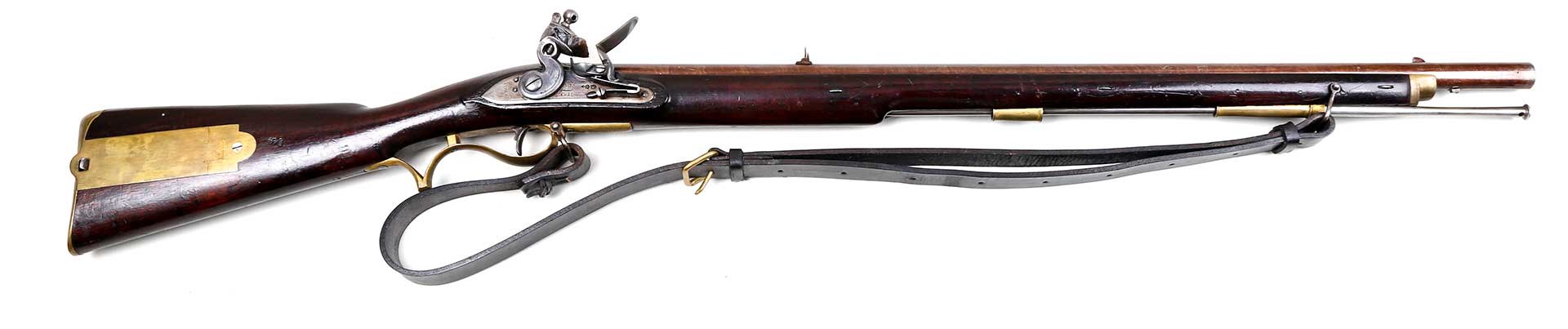
The Mexican army was organized and drilled on European lines. Its infantry carried the British India Pattern Brown Bess Musket with the Socket Bayonet, bought from surplus stocks in the 1820s, and its light companies had the Baker Rifle. Mexican cavalry, including lancers, was superior to anything the Texians could field and proved deadly on open ground, as at Coleto.
Why It Mattered
The war created the Republic of Texas, which Mexico never formally recognized. The republic lasted until 1845, when it was annexed by the United States. The annexation and a dispute over the border led directly to the Mexican–American War of 1846 to 1848, in which Mexico lost its northern territories from Texas to California. The Alamo, Goliad and San Jacinto became central to Texan identity. The revolution's legacy is also argued over, because the defense of slavery was among the settlers' motives and because Tejanos who had fought for independence were often pushed aside afterward.
Battles & Operations
Weapons
-
Baker Rifle
The Baker rifle was the first rifle officially adopted by the British Army, the weapon of the green-jacketed 95th Rifles and the rifle… Continued…
-
Bowie Knife
The Bowie knife is the great American fighting blade of the nineteenth century: a heavy sheath knife, typically with a clipped point and a… Continued…
-
Brown Bess Musket
Brown Bess is the affectionate name for the British Land Pattern flintlock musket, the longest-serving firearm in British history. A .75… Continued…
-
Kentucky Long Rifle
The Kentucky long rifle was the long-barreled, small-caliber flintlock rifle developed by German gunsmiths in Pennsylvania in the… Continued…
-
Socket Bayonet
The socket bayonet is a blade fixed to the side of a metal tube that slides over the muzzle of a musket and locks in place. Unlike the… Continued…