Force
Varangian Guard
Elite unit of Norse Vikings from the 10th to the 14th century who served as personal bodyguards to the Byzantine emperors.
Origins
Norsemen reached the Byzantine Empire by the river roads of Eastern Europe, down the Dnieper and across the Black Sea. The Byzantines called them Varangians, from the Old Norse væringjar. Many served the emperors as mercenaries in the ninth and tenth centuries. The Guard proper is traced to about 988, when Prince Vladimir of Kiev sent Emperor Basil II a force of Rus warriors, traditionally six thousand strong, to help him defeat a rebellion. Vladimir was rewarded with the emperor's sister in marriage and accepted Christianity. Basil kept the northerners as his personal troops. The logic was simple: foreigners with no family in Constantinople and no stake in its endless palace conspiracies made the most trustworthy bodyguards in the empire.
Organization & Training
The Varangians formed a unit of the imperial guard, commanded by an officer called the akolouthos. They guarded the emperor in the palace and on campaign and also fought as elite heavy infantry. Recruits came from Scandinavia and from Kievan Rus, and after the Norman victory at the Battle of Hastings in 1066 increasingly from England, as Anglo-Saxons displaced by the Norman Conquest sought service abroad. Pay was lavish, and Norse sagas claim that when an emperor died the guardsmen were allowed to take what they could carry from the treasury. A tour in the Guard was a recognized path to wealth. Runic stones in Sweden remember men who died "in Greece", as the Norse called the empire.
Weapons & Equipment
The Varangians fought in the northern manner, which the Byzantines found gloriously barbaric. Their signature weapon was the Dane Axe, the long two-handed axe that made "axe-bearing barbarians", Anna Komnene's phrase, the Guard's standard description in the sources. They wore the Mail Hauberk and helmets and carried the Viking Round Shield, and in later periods the long kite-shaped shields common in the empire. Swords were also carried, and in Byzantine service guardsmen could be equipped from imperial arsenals with the Byzantine Spathion.
Notable Actions
The Guard's record runs from Basil II's long wars against the Bulgarians through the disasters and recoveries of the eleventh and twelfth centuries. Harald Hardrada served in the 1030s and early 1040s, fighting in Sicily and against the Bulgarians, and banked a fortune before going home to become king of Norway; he later died at Stamford Bridge in 1066. At Dyrrachium in 1081, English Varangians charged the Normans of Robert Guiscard, pursued too far and were cut down, many of them burned in a church where they had taken refuge. At Beroia in 1122 the Guard broke the Pecheneg wagon fort and won the day for Emperor John II. The Varangians fought hard at Constantinople's walls in 1203 and 1204, when the Fourth Crusade stormed the city.
Legacy
The Guard survived in some form after 1204, and it is still mentioned in the fourteenth century, though by then it was mainly ceremonial. Its most personal monument is runic graffiti scratched into a marble balustrade of Hagia Sophia, including the name Halfdan: a Norseman was here, in the greatest church of Christendom, on guard. The Guard is the link between the Vikings and Byzantium, and between the Viking Age and medieval Greek history.
-
Byzantine Spathion
The spathion was the straight, double-edged long sword of the Eastern Roman, or Byzantine, army — the direct descendant of the late Roman… Continued…
-
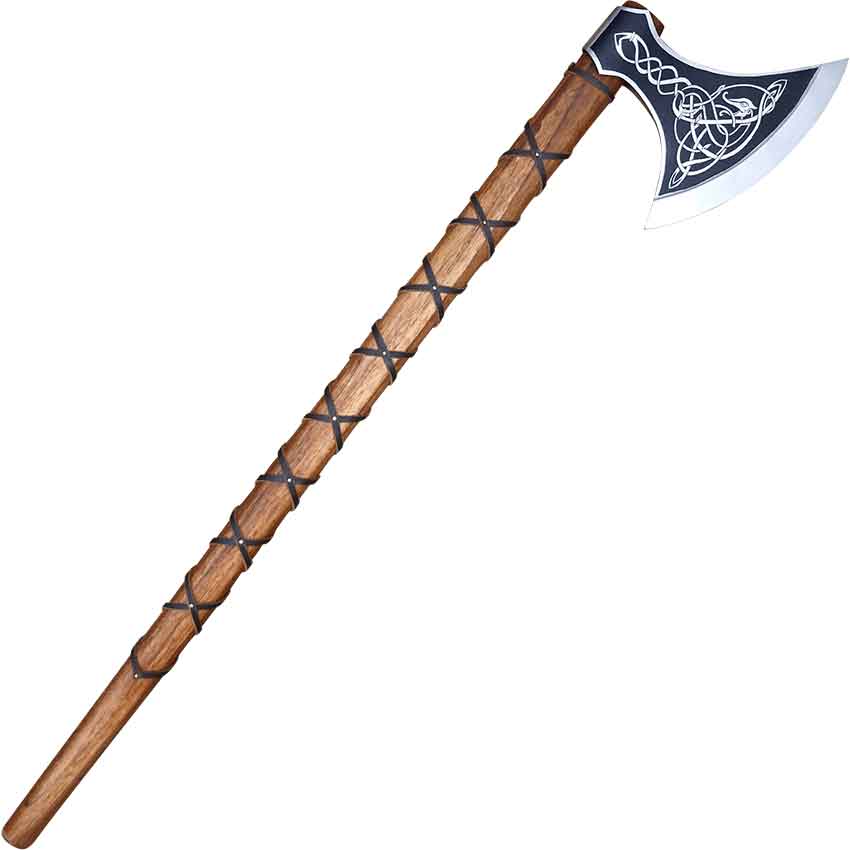
Dane Axe
The Dane axe is the great two-handed axe of the Viking Age and its aftermath: a thin, broad, crescent-edged head on a haft about a meter… Continued…
-
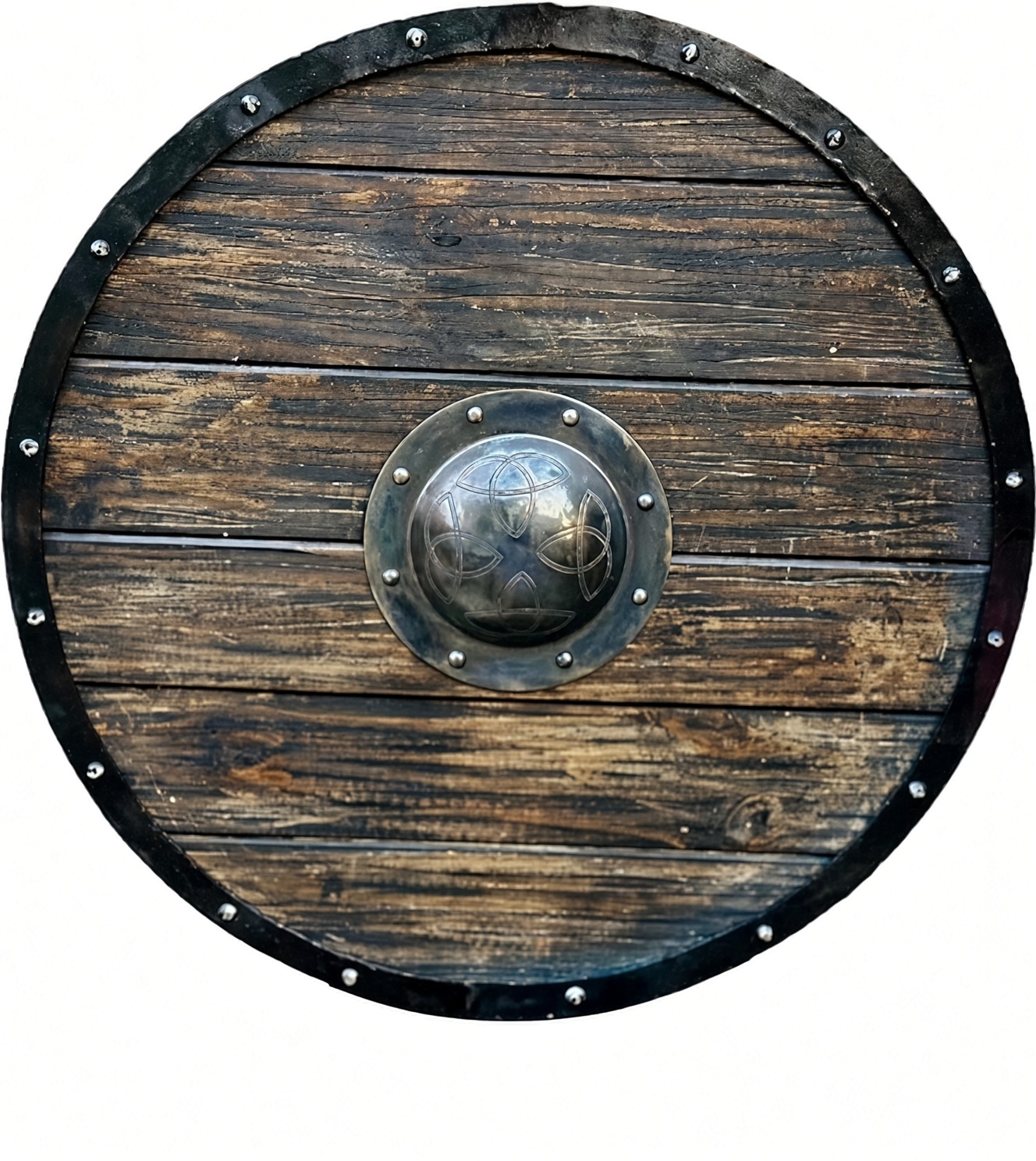
Viking Round Shield
The round shield was the main defense of the Viking warrior: a disc of wooden boards, usually about 80 to 95 centimeters across, with an… Continued…