Weapon Type
Machine Guns
Automatic or semi-automatic crew-served weapons.
Firearms — Subcategory
Overview
A machine gun is an automatic firearm capable of sustained fire — cycling through load, fire, and eject automatically as long as the trigger is depressed and ammunition is fed. Machine guns transformed 20th-century warfare by creating a firepower density impossible with bolt-action rifles: a single machine gun could cover a wide sector with accurate, sustained fire that required dozens or hundreds of riflemen to match. The machine gun was the defining weapon of World War I and remained central through World War II and beyond.
Early Development
Mitrailleuse (1866)
The French mitrailleuse was a multi-barrel volley gun — 25 barrels fired simultaneously or in sequence by turning a crank:
- 150 rounds per minute; devastating in theory
- Squandered in the Franco-Prussian War due to tactical ignorance — deployed as artillery rather than infantry support
- The lesson: technology alone doesn't determine effectiveness
Gatling Gun (1861)
Richard Gatling's rotating-barrel design was the first practical rapid-fire weapon:
- 6 rotating barrels; each cycled through loading, firing, and ejecting in turn
- Hand-cranked; 200+ rounds per minute
- Used in limited numbers in the American Civil War and Indian Wars
- The concept returned in the 20th century as the electrically-driven minigun
Maxim Gun (1884)
Hiram Maxim's recoil-operated machine gun was the first fully automatic weapon:
- Recoil operation — The force of each fired round cycles the action automatically
- Water-cooled — A water jacket around the barrel allowed sustained fire without overheating
- .303 British or 7.92mm depending on user nation
- 400–600 rounds per minute; belt-fed
- Colonial warfare — The Maxim gun was the decisive factor in European colonial conquest; Hilaire Belloc's line: "Whatever happens, we have got the Maxim gun, and they have not"
- WWI — The Maxim and its derivatives (MG 08, Vickers) produced the Western Front stalemate
World War I Machine Guns
German MG 08
- Maxim derivative; water-cooled; 400 rounds/minute; on a heavy sled mount
- One MG 08 could cover 100 meters of front effectively; the primary cause of Day 1 Somme casualties (57,000 British in one day)
British Vickers
- Maxim derivative; water-cooled; extremely reliable; .303 British
- Fired 1 million rounds in 12 hours at the Battle of High Wood (1916) — requiring barrel cooling changes every 2 hours
Lewis Gun (1914)
The first practical light machine gun:
- Air-cooled; 47-round drum magazine; 500–600 rounds/minute
- Carried by infantry; the first truly portable automatic weapon
- Used on aircraft as well as infantry
World War II Machine Guns
German MG 34 / MG 42
The German MG 42 was the most influential machine gun design in history:
- 1,200 rounds per minute — the fastest military machine gun; the tearing sound earned it "Hitler's buzzsaw" and "Bonesaw" from Allied soldiers
- Quick-change barrel (in 6 seconds) for sustained fire without overheating
- Belt-fed; could use tripod (sustained fire) or bipod (assault)
- Influenced virtually every post-war machine gun design; the Bundeswehr MG3 is a direct derivative still in service
American Browning M1919 and M2
- M1919 — .30-06; air-cooled; the US squad machine gun through Korea
- M2 .50 BMG — The "Ma Deuce"; .50 caliber; 450–600 rounds/minute; vehicle-mounted, aircraft-mounted, and on tripod; in continuous US military service since 1933
Modern Machine Gun Categories
- GPMG (General Purpose Machine Gun) — FN MAG, M240; 7.62×51mm; vehicle and infantry use
- LMG (Light Machine Gun) — M249 SAW, Minimi; 5.56mm; squad automatic weapon
- HMG (Heavy Machine Gun) — M2 .50 BMG; vehicle-mounted; anti-materiel and anti-aircraft
This article is a stub. Contributions covering specific machine gun models, tactics, and battles are welcome.
-
Bren
The Bren was the light machine gun of the British and Commonwealth armies from 1938 until the 1990s: a Czech design from Brno… Continued…
-
Chauchat
The Chauchat, officially the Fusil Mitrailleur Modèle 1915 CSRG, was the French army's light automatic weapon of the First World War. It… Continued…
-
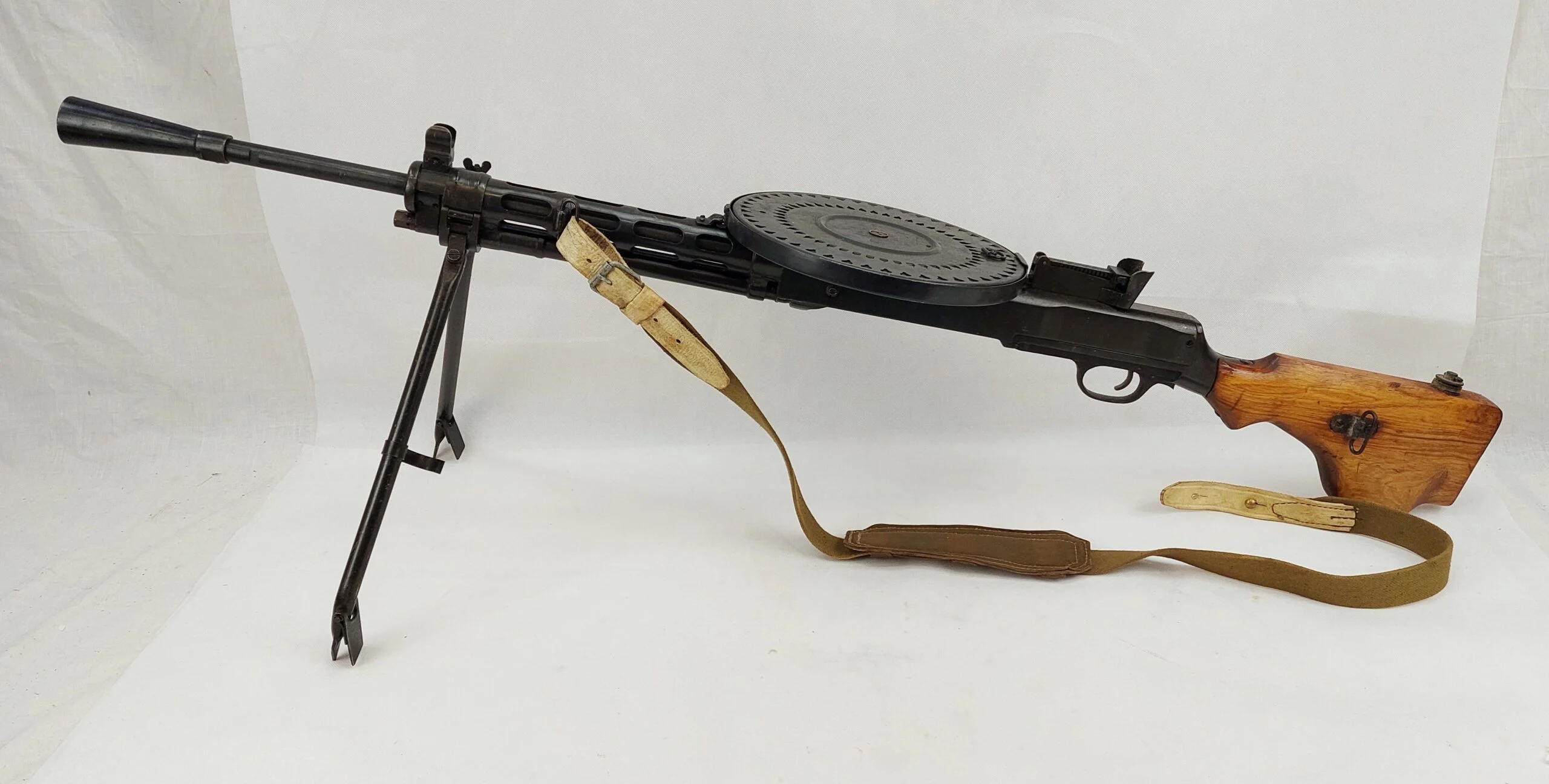
Degtyaryov DP-27
The DP-27 was the standard light machine gun of the Soviet Army from the late 1920s through the Second World War. Designed by Vasily… Continued…
-
FN MAG
The FN MAG is a Belgian general-purpose machine gun designed by Ernest Vervier at Fabrique Nationale and introduced in 1958. It fires… Continued…
-
Gatling gun
The Gatling gun was the first practical machine gun, a hand-cranked weapon with six to ten barrels rotating around a central shaft, each… Continued…
-
Hotchkiss M1914
The Hotchkiss M1914 was the standard heavy machine gun of the French army in the First World War. Made by the Hotchkiss company near Paris… Continued…
-
Lewis Gun
The Lewis gun was the British Empire's light machine gun of the First World War: an air-cooled, gas-operated gun with a distinctive fat… Continued…
-
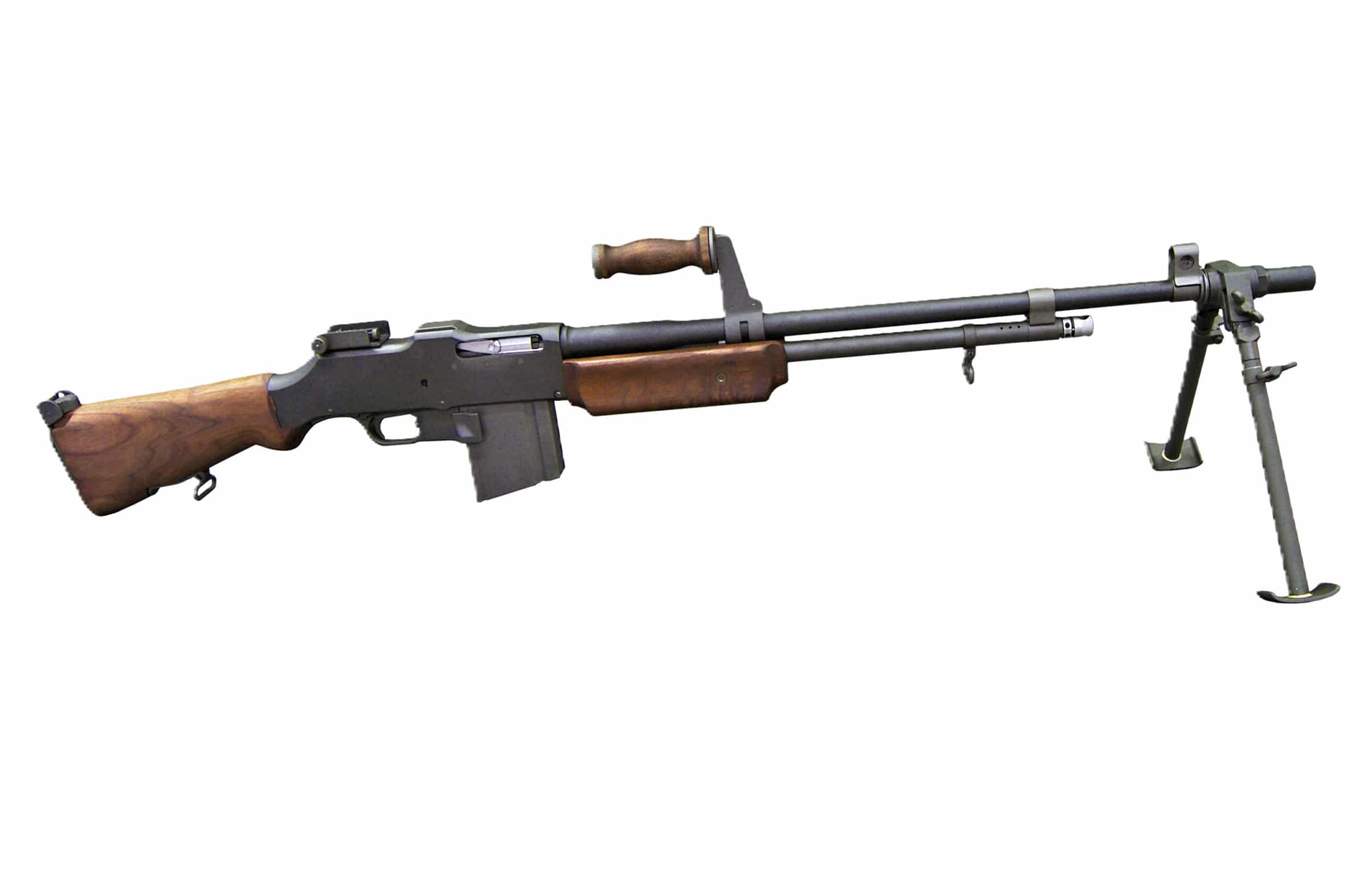
M1918 BAR
The Browning Automatic Rifle was John Moses Browning's shoulder-fired automatic weapon, adopted by the United States Army in 1918 and the… Continued…
-
M1919 Browning Machine Gun
The M1919 Browning is John Browning's water-cooled M1917 machine gun made air-cooled: a short-recoil, belt-fed .30-06 weapon that armed… Continued…
-
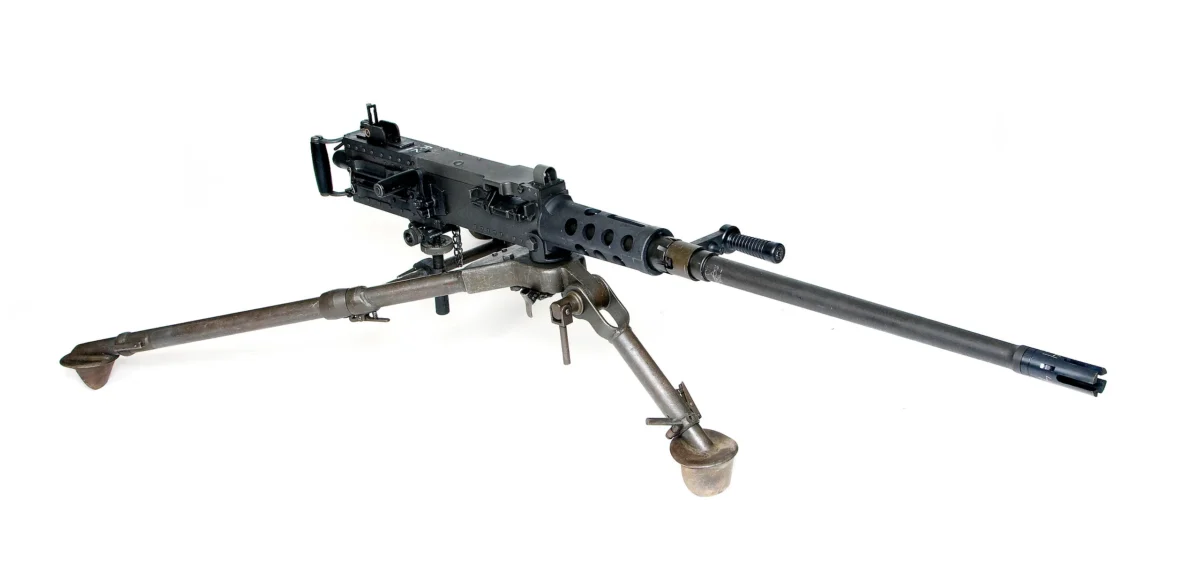
M2 Browning Machine Gun
The M2 is the American heavy machine gun of .50 caliber, designed by John Browning at the end of the First World War and adopted in its… Continued…
-
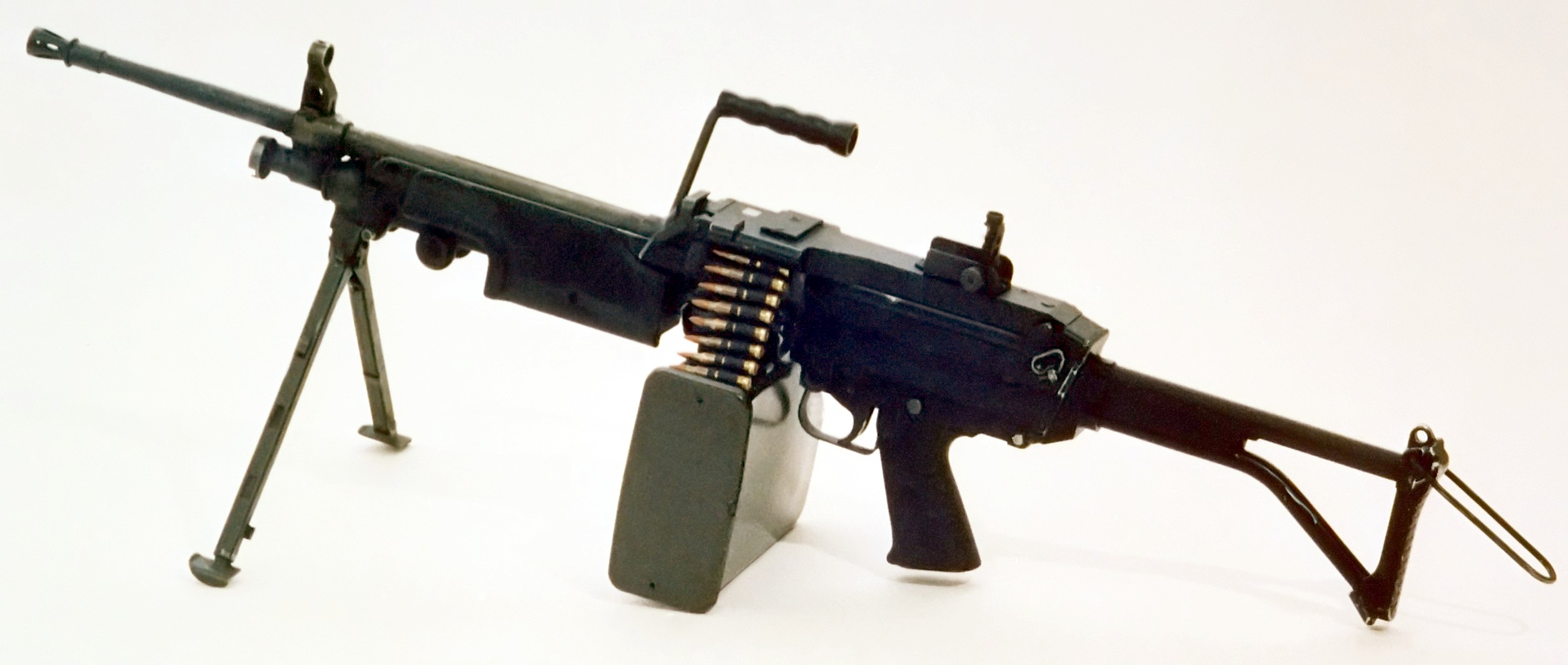
M249 Squad Automatic Weapon
The M249 Squad Automatic Weapon is the American version of the Belgian FN Minimi: a gas-operated, belt-fed 5.56mm light machine gun light… Continued…
-
M60 Machine Gun
The M60 was the United States' first general-purpose machine gun: a belt-fed 7.62mm weapon light enough for one soldier to carry on the… Continued…
-
MG 42
The MG 42 was the German general-purpose machine gun of the Second World War and the most influential machine gun of the twentieth century.… Continued…
-
MG FF Cannon
The MG FF was a 20 mm aircraft cannon used by the German Luftwaffe from the late 1930s. It was a licensed version of the Swiss Oerlikon FF… Continued…
-
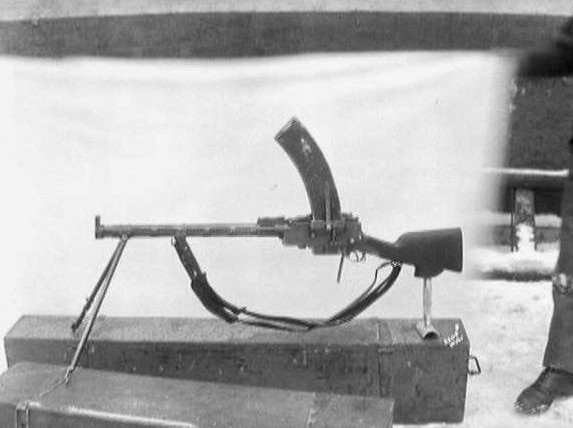
Madsen Machine Gun
The Madsen was a Danish light machine gun and the first weapon of its kind to be mass-produced, entering service in 1902. Light enough for… Continued…
-
Maxim Gun
The Maxim gun was the first true machine gun: a weapon that used the energy of each shot to load and fire the next, and would keep firing… Continued…
-
PK Machine Gun
The PK is a Soviet belt-fed general-purpose machine gun designed by Mikhail Kalashnikov's team and adopted in 1961. It fires the old rimmed… Continued…
-
RPD Machine Gun
The RPD was the Soviet Union's first light machine gun for the 7.62x39 mm intermediate cartridge. Designed by Vasily Degtyaryov in 1944 and… Continued…
-
Reffye Mitrailleuse
The Reffye mitrailleuse was a French volley gun of the 1860s with 25 barrels in a single bronze-jacketed cluster. Loaded with a steel plate… Continued…
-
Schwarzlose Machine Gun
The Schwarzlose was the standard heavy machine gun of the Austro-Hungarian army in the First World War. Designed by the German engineer… Continued…
-
Type 92 Heavy Machine Gun
The Type 92 was the standard heavy machine gun of the Imperial Japanese Army from the early 1930s to 1945. An air-cooled, gas-operated gun… Continued…
-
Type 96 Light Machine Gun
The Type 96 was the standard light machine gun of the Imperial Japanese Army in the early years of the Second World War. Designed by Kijirō… Continued…
-
Vickers Machine Gun
The Vickers was the British Army's medium machine gun for more than fifty years. Adopted in 1912, it was a lighter, improved version of the… Continued…