Operation Neptune Spear
Operation Neptune Spear was the United States raid of 2 May 2011 that killed Osama bin Laden, the founder of al-Qaeda, at a walled compound in Abbottabad, Pakistan. Twenty-three operators of the Naval Special Warfare Development Group, flown from Afghanistan in two specially modified Black Hawk helicopters of the 160th Special Operations Aviation Regiment, assaulted the compound in a forty-minute action, lost one helicopter to a hard landing, and withdrew with bin Laden's body and a trove of intelligence. It was the culmination of a ten-year manhunt and the defining special operation of the Global War on Terror.
Also known as Bin Laden Raid, Abbottabad raid, Osama bin Laden raid, Neptune Spear, Operation Neptune's Spear
Background
Osama bin Laden had been the most wanted man in the world since the attacks of 11 September 2001, and after his escape from Tora Bora in December of that year his trail went cold for the better part of a decade. The Central Intelligence Agency's break came through a courier: by tracing a man known as Abu Ahmed al-Kuwaiti, analysts in August 2010 located an unusual compound in the garrison town of Abbottabad, thirty-five miles north of Islamabad and less than a mile from the Pakistan Military Academy. Its walls were twelve to eighteen feet high, its residents burned their trash, the three-story house had no telephone or internet, and a tall man walked its courtyard daily without ever leaving. Months of surveillance never produced a photograph of the "pacer," and President Obama ordered the raid on 29 April 2011 on the strength of a circumstantial case the agency put at between forty and ninety percent.
The Raid
The mission fell to the Naval Special Warfare Development Group — DEVGRU, popularly SEAL Team Six — of the US Navy SEALs, under the Joint Special Operations Command. Twenty-three SEALs of Red Squadron, a CIA interpreter and a Belgian Malinois named Cairo lifted off from Jalalabad, Afghanistan, on the night of 1-2 May in two Black Hawks modified for radar and noise reduction and flown by the 160th Special Operations Aviation Regiment, with Chinooks in reserve. One helicopter, caught by the compound's walls in a vortex of its own downwash, made a hard landing in the courtyard; its crew and passengers were unhurt. The assault teams breached the guesthouse, killing the courier, and then the main house, killing his brother and bin Laden's son Khalid on the stairs. On the third floor, at about 1:00 a.m. local time, bin Laden was shot and killed. The SEALs spent the rest of the roughly forty minutes on the ground gathering computers, drives and documents, destroyed the crashed helicopter with explosives, and flew out on the surviving Black Hawk and a Chinook. Pakistan was informed only after the aircraft had cleared its airspace. Bin Laden's body was identified, flown to the carrier USS Carl Vinson and buried at sea within twenty-four hours.
Weapons
The assault element carried the suppressed HK416 carbine in its short-barreled D10RS form, the standard DEVGRU weapon of the period, fitted with EOTech holographic sights, infrared lasers and night vision. Several operators carried the HK MP7, suppressed, for the confined stairwells of the house. Sidearms were the Sig Sauer P226 in the Navy's Mk 25 configuration. Explosive breaching charges opened the doors. The choice of weapons — compact, suppressed, matched to night-vision equipment — reflected a raid planned for close quarters in darkness against a small number of defenders, and the operators fired only a few dozen rounds.
Aftermath
President Obama announced bin Laden's death at 11:35 p.m. Washington time on 1 May, and crowds gathered at the White House and at Ground Zero. Pakistan protested the violation of its sovereignty and its own failure to find bin Laden a mile from its military academy became a lasting embarrassment. The intelligence recovered from the compound shaped operations against al-Qaeda for years. Neptune Spear, publicly credited to the SEALs, made DEVGRU a household name, generated books by participants, a film, and disputes over who fired the fatal shots, and stands as the single most consequential special operation of the Global War on Terror.
Weapons used
-
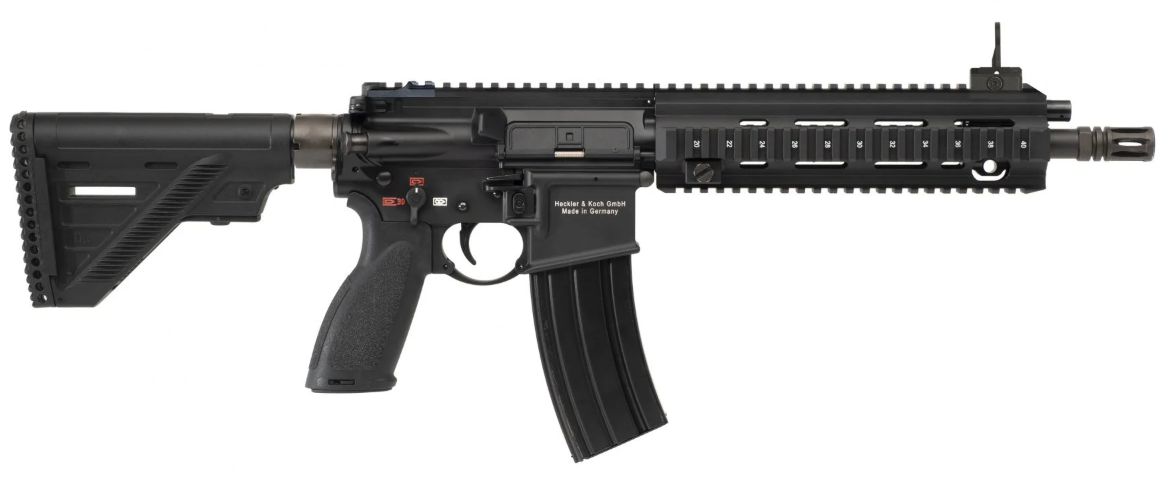
HK416
Primary weapon of the assault element: suppressed HK416 D10RS carbines with 10.4-inch barrels and night-vision-compatible optics. Continued…
-
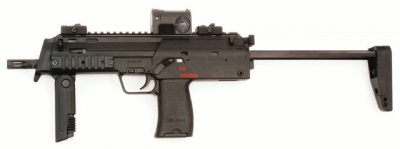
HK MP7
Carried suppressed by several operators as a compact personal defense weapon for the confined stairwells and rooms of the compound. Continued…
-
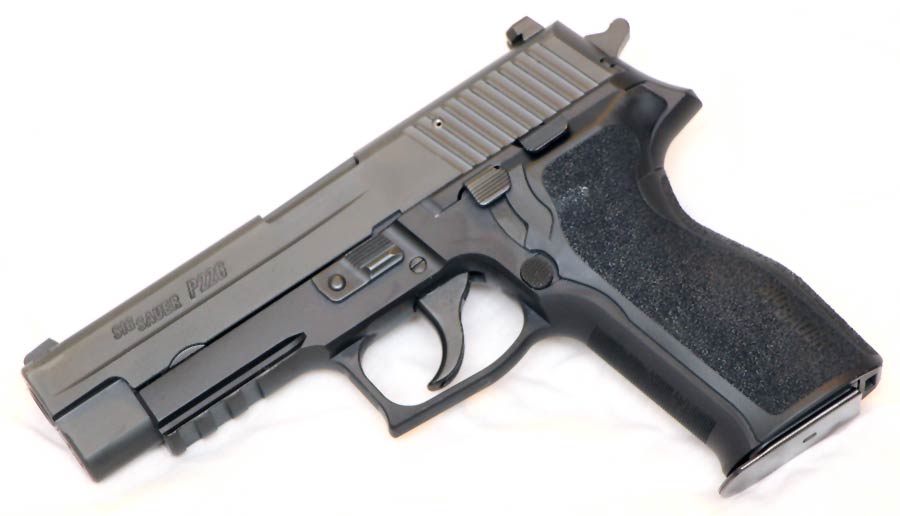
Sig Sauer P226For sale
Standard SEAL sidearm (Navy Mk 25 configuration), carried as a secondary weapon by every operator. Continued…
-
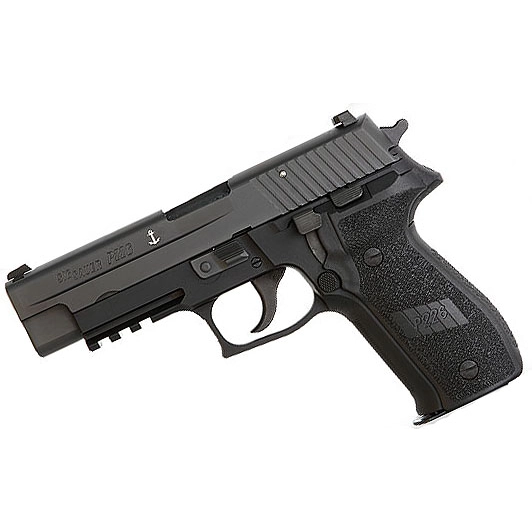
Mk 25
The Navy-designated P226: phosphate internals, anchor-engraved slide, night sights. Continued…
Sources
Bergen, Peter L. Manhunt: The Ten-Year Search for Bin Laden from 9/11 to Abbottabad. Crown, 2012.
Owen, Mark, with Kevin Maurer. No Easy Day: The Firsthand Account of the Mission That Killed Osama bin Laden. Dutton, 2012.
Bowden, Mark. The Finish: The Killing of Osama bin Laden. Atlantic Monthly Press, 2012.
The White House. Remarks by the President on Osama bin Laden, 2 May 2011.
Suggest an edit · account required · reviewed before publishing · how it works