Force
US Navy SEALs
The Navy's sea, air, and land teams, descended from WWII frogmen and UDT swimmers.
Origins
The SEALs, for Sea, Air, Land, were commissioned in January 1962 after President John F. Kennedy pushed the services to build unconventional warfare forces. Their bloodline is older. In 1943 the Navy formed Naval Combat Demolition Units, and later Underwater Demolition Teams, to clear obstacles from invasion beaches. At Omaha and Utah beaches during the Normandy Landings, demolition men blew gaps in the German obstacles under heavy fire and took severe losses. In the Pacific, UDT swimmers scouted and cleared beaches from Saipan and Guam to the Battle of Iwo Jima and Okinawa, often under fire and nearly naked, armed with swim fins, a knife and explosives. The first two SEAL teams, One and Two, were built largely from UDT men.
Organization & Training
SEALs belong to Naval Special Warfare Command, which since 1987 has been part of US Special Operations Command. The teams are divided into platoons, and a platoon can be split into small squads for patrols and raids. Special boat crews carry them on many missions. The selection course, Basic Underwater Demolition/SEAL training, or BUD/S, at Coronado, California, is the most famous ordeal in the American military. Its Hell Week of cold water, running and almost no sleep ends many candidates' hopes, and anyone who wants to quit rings a brass bell. Only a minority of each class graduates. After BUD/S come parachute school and months of further training before a new man joins a team. In 1980, after the failed Iran hostage rescue, the Navy formed a dedicated counterterrorist unit, SEAL Team Six, today's DEVGRU.
Weapons & Equipment
In Vietnam SEALs were given unusual freedom to choose their weapons. They carried the Swedish Carl Gustaf m/45 submachine gun, the M16 Rifle and its short versions, the Ithaca 37 pump shotgun for point men, the M60 Machine Gun and the M79 Grenade Launcher. From the 1980s the HK MP5 served for close work, and in 1989 the SEALs adopted the SIG P226 as the Mk 25. In the wars after 2001 the HK416 became a standard rifle of the teams.
Notable Actions
Vietnam built the SEAL reputation in the Mekong Delta's mud. Small direct-action squads ambushed, snatched prisoners and hunted Viet Cong leaders at night, so effectively that the enemy reportedly called them "the men with green faces", after their camouflage paint. (See Vietnam War.) SEALs lost men in Grenada in 1983 and at Paitilla airfield in Panama in 1989, and served in the Gulf War. In Afghanistan in 2005, during Operation Red Wings, three men of a four-man SEAL reconnaissance team were killed, and a helicopter bringing SEALs and Army aviators to rescue them was shot down, killing all sixteen aboard. In 2009 SEAL snipers rescued Captain Richard Phillips from Somali pirates. On 2 May 2011, during Operation Neptune Spear, SEALs killed Osama bin Laden in Abbottabad, Pakistan.
Legacy
The bin Laden raid made the SEALs the most publicly famous special operations force on earth, a mixed blessing the community itself debates, as memoirs and films followed. The core remains the UDT inheritance: comfort in the water that no other force matches, and the standing conviction that "the only easy day was yesterday." (See Global War on Terror.)
Battles & Operations
-
Battle of Mogadishu (3-4 October 1993)
The Battle of Mogadishu was fought on 3 and 4 October 1993 in the Somali capital between the American special operations force Task Force… Continued…
-
Operation Red Wings (27 June - mid-July 2005)
Operation Red Wings was an American operation in Kunar Province, Afghanistan, in June and July 2005, aimed at the militant leader Ahmad… Continued…
-
Operation Neptune Spear (2 May 2011)
Operation Neptune Spear was the United States raid of 2 May 2011 that killed Osama bin Laden, the founder of al-Qaeda, at a walled compound… Continued…
Weapons
-
AK-47
The AK-47 is the most produced firearm in human history: Mikhail Kalashnikov's gas-operated assault rifle in 7.62x39mm, built around loose… Continued…
-
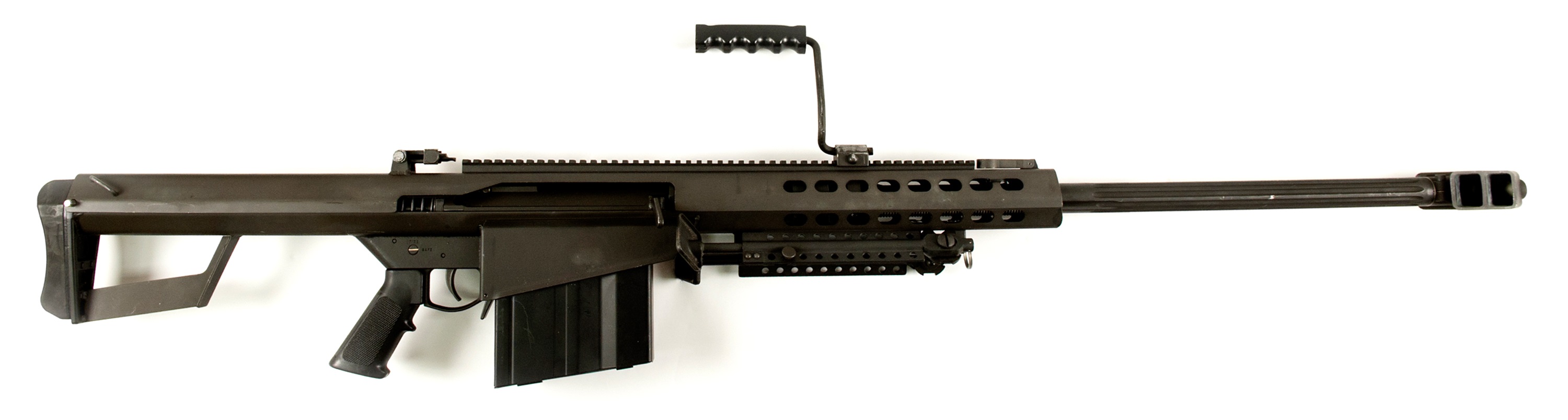
Barrett M82
The Barrett M82 is a semi-automatic rifle chambered for the .50 BMG machine-gun cartridge, designed by Ronnie Barrett in Tennessee in the… Continued…
-
Beretta M9
The Beretta M9 is the 9 mm semi-automatic pistol adopted by the United States armed forces in 1985 to replace the .45 caliber M1911A1. It… Continued…
-
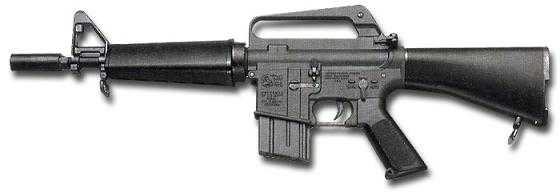
CAR-15
CAR-15 was Colt's name, from the mid-1960s, for a family of weapons built on the AR-15 and M16 rifle, and soldiers came to use it for the… Continued…
-
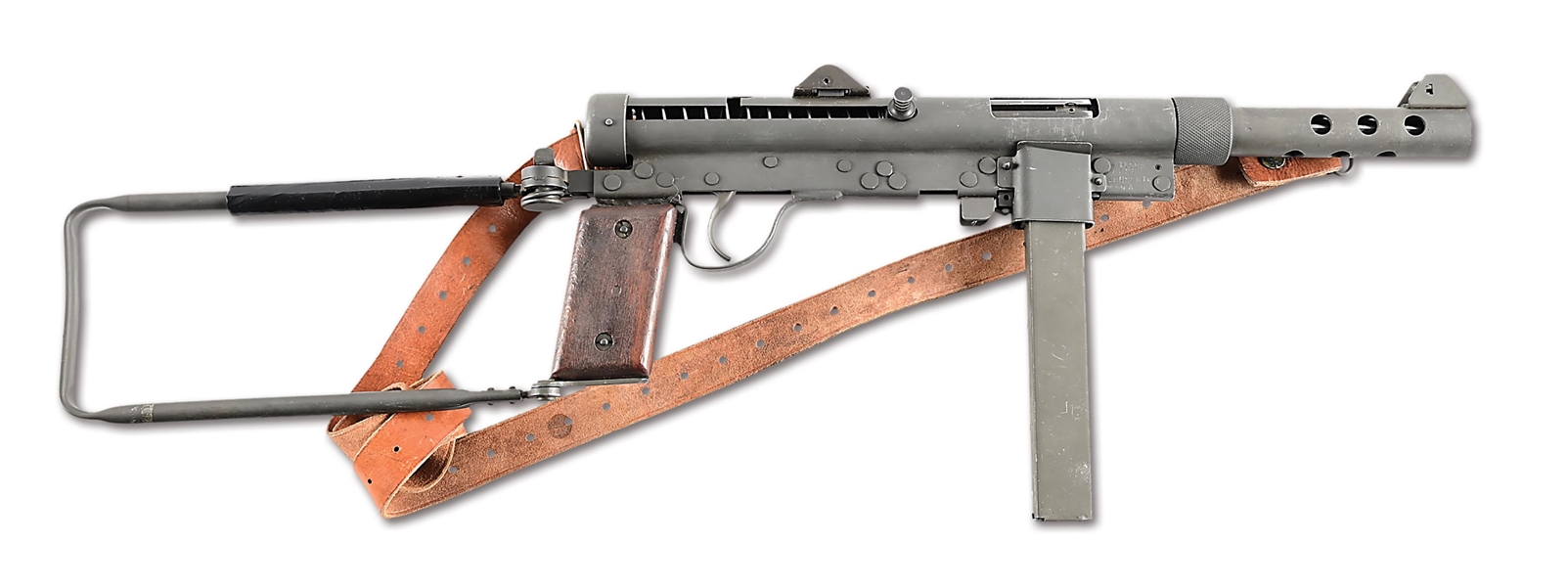
Carl Gustaf m/45
The Carl Gustaf m/45 is a Swedish 9mm submachine gun adopted in 1945 and made at the Carl Gustafs Stads Gevärsfaktori in Eskilstuna.… Continued…
-
FN SCAR
The FN SCAR is a modular rifle made by FN Herstal of Belgium for US Special Operations Command, which chose it in 2004. It came in two main… Continued…
-
HK MP5
The Heckler & Koch MP5 is the submachine gun by which every other has been judged since the 1970s. It shrank the roller-delayed blowback… Continued…
-
HK MP7
The Heckler & Koch MP7 is a personal defense weapon: a machine pistol the size of a large handgun that fires a small, very fast 4.6x30mm… Continued…
-
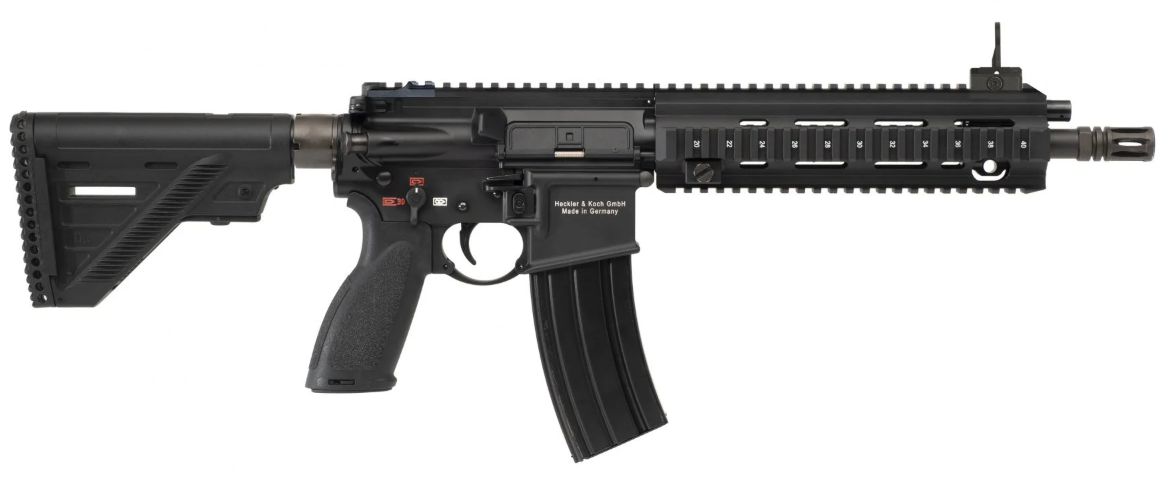
HK416
The Heckler & Koch HK416 is a 5.56mm assault rifle and carbine that keeps the ergonomics, magazines and accessories of the American M4 but… Continued…
-
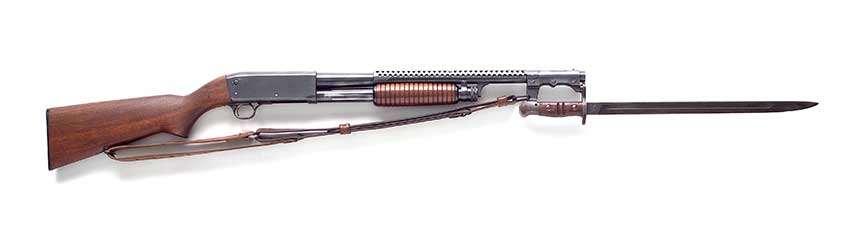
Ithaca 37
The Ithaca 37 is an American pump-action shotgun made by the Ithaca Gun Company of Ithaca, New York, from 1937. Based on a John Browning… Continued…
-
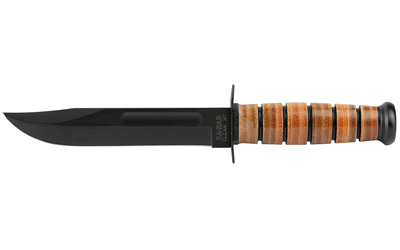
KA-BAR Knife
The KA-BAR is the fighting and utility knife of the United States Marine Corps: a seven-inch clip-point blade of carbon steel with a blood… Continued…
-
M14 Rifle
The M14 was the United States' last wooden-stocked battle rifle: a select-fire development of the M1 Garand chambered for the new 7.62mm… Continued…
-
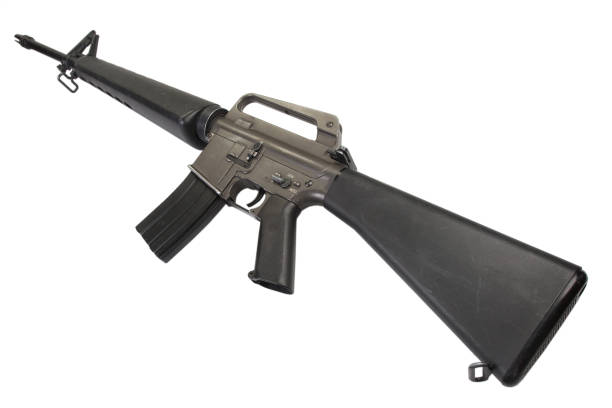
M16 Rifle
The M16 brought the assault rifle to the West: Eugene Stoner's AR-15 design in 5.56mm, built of aluminum forgings and polymer around a… Continued…
-
M18 Claymore Mine
The M18A1 Claymore is an American directional anti-personnel mine. Its curved plastic case holds a layer of C-4 explosive behind about 700… Continued…
-
M203 Grenade Launcher
The M203 is a single-shot 40 mm grenade launcher that clips under the barrel of an M16 rifle or M4 carbine. Developed by the AAI… Continued…
-
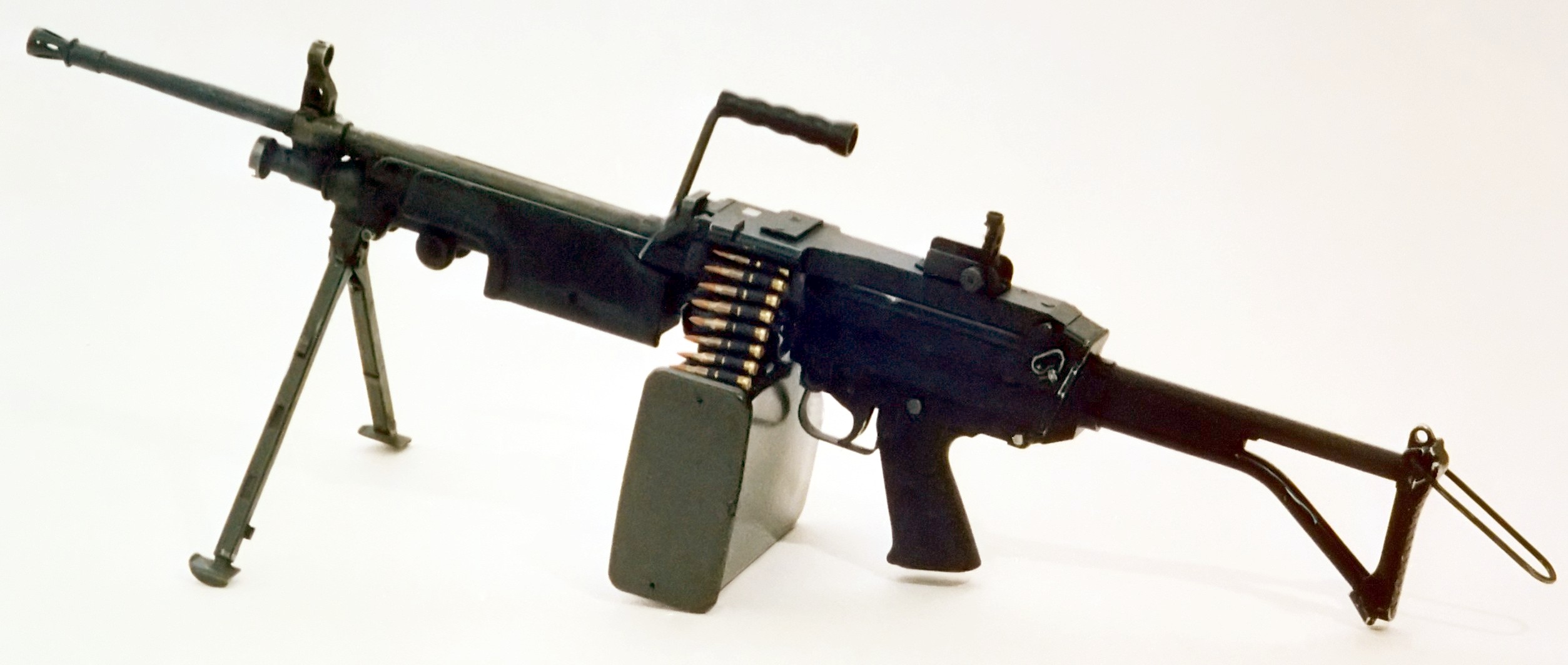
M249 Squad Automatic Weapon
The M249 Squad Automatic Weapon is the American version of the Belgian FN Minimi: a gas-operated, belt-fed 5.56mm light machine gun light… Continued…
-
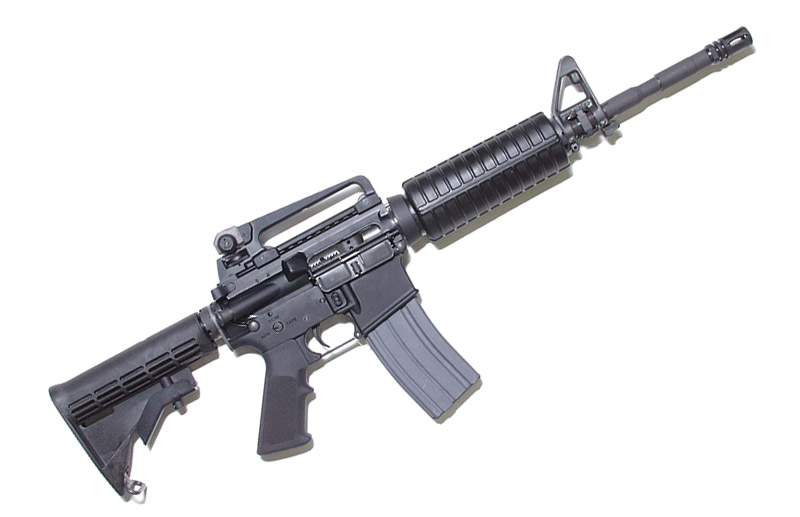
M4 Carbine
The M4 carbine is a shortened, lighter version of the M16 rifle, made by Colt and adopted by the US Army in 1994. It has a 14.5-inch… Continued…
-
M60 Machine Gun
The M60 was the United States' first general-purpose machine gun: a belt-fed 7.62mm weapon light enough for one soldier to carry on the… Continued…
-
M67 Grenade
The M67 is the standard fragmentation hand grenade of the United States armed forces. Adopted in the late 1960s, it is a smooth steel… Continued…
-
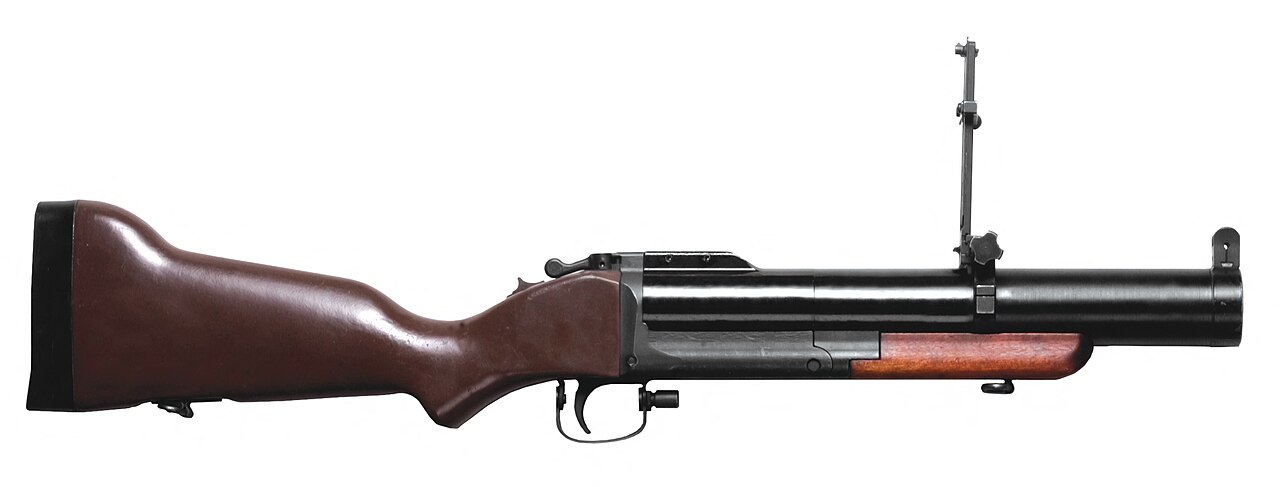
M79 Grenade Launcher
The M79 is a single-shot, break-open, shoulder-fired grenade launcher that fires a 40x46mm low-velocity grenade to about 400 meters… Continued…
-
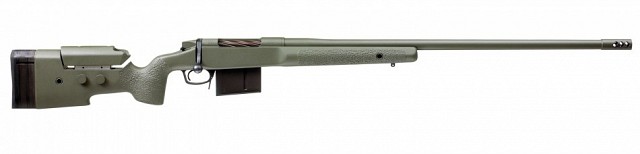
McMillan TAC-338
The McMillan TAC-338 is a bolt action sniper rifle built by McMillan Firearms of Phoenix, Arizona, and chambered for the powerful .338… Continued…
-
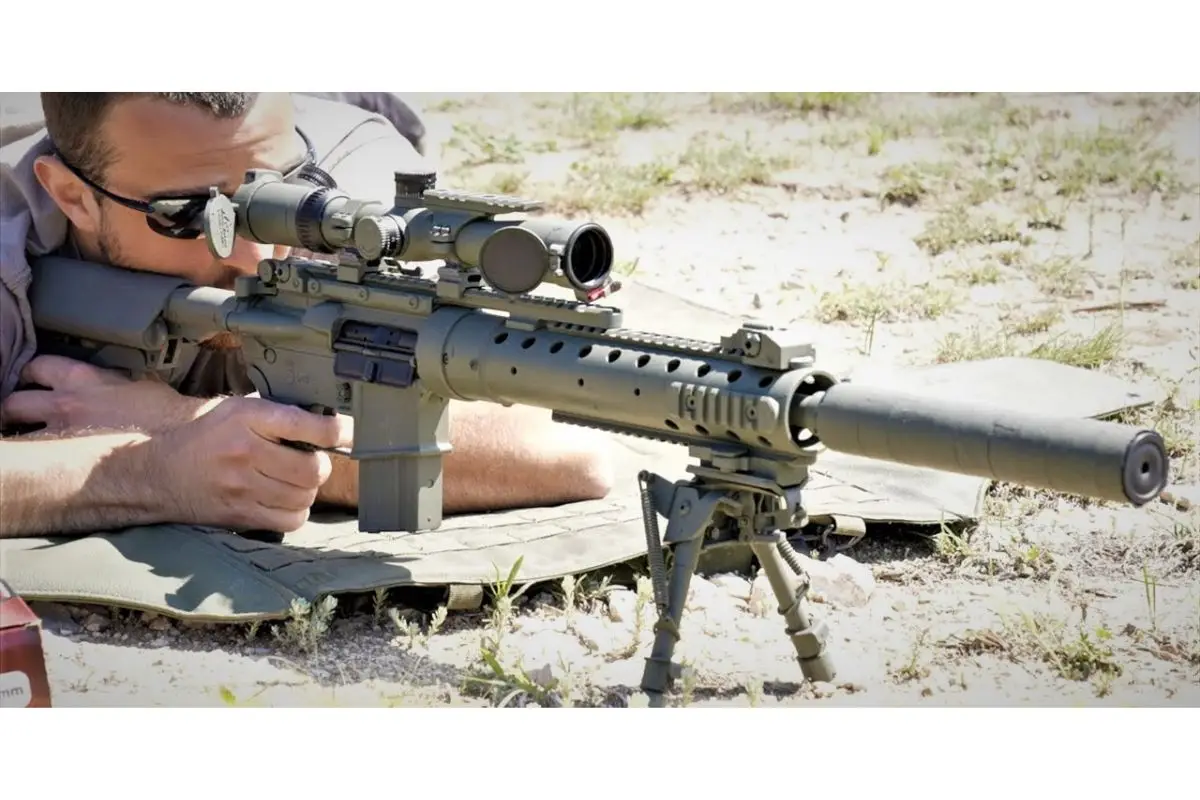
Mk 12 Special Purpose Rifle
The Mk 12 Special Purpose Rifle (SPR) was a precision rifle built on the M16/AR-15 pattern for US special operations forces. Developed in… Continued…
-
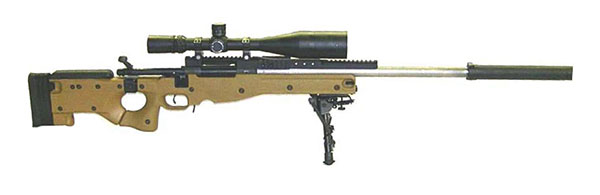
Mk 13 Rifle
The Mk 13 is an American bolt-action sniper rifle chambered for .300 Winchester Magnum, built by the Naval Surface Warfare Center at Crane… Continued…
-
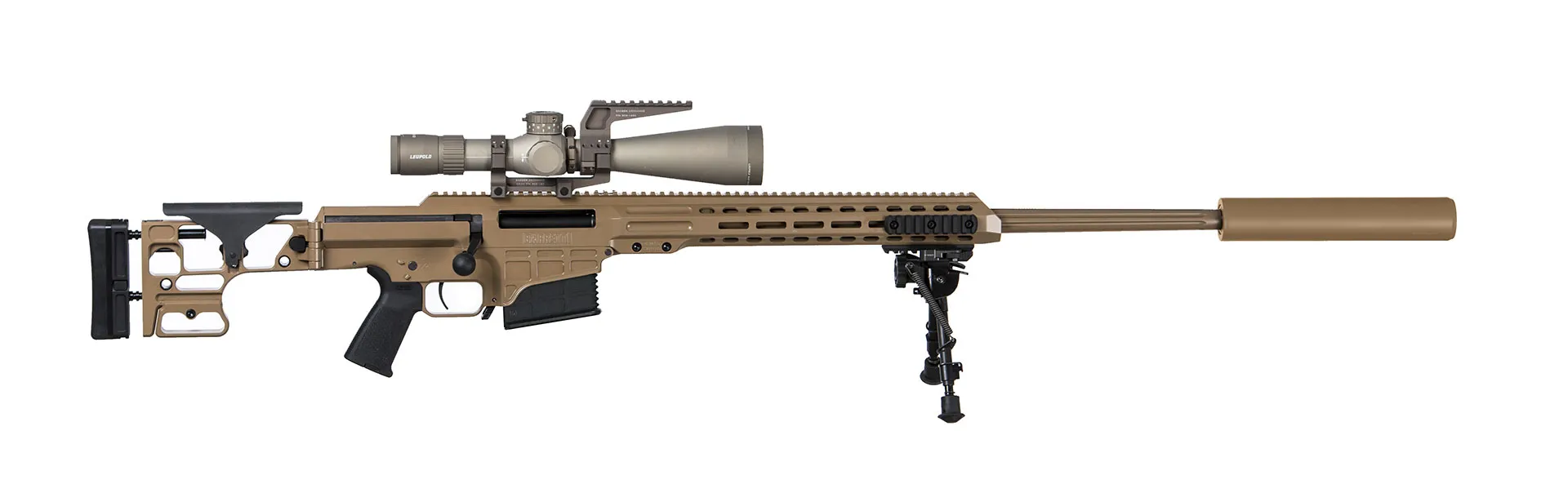
Mk 22 Advanced Sniper Rifle
The Mk22 Advanced Sniper Rifle is a multi-caliber bolt-action sniper rifle based on the Barrett MRAD, chosen by US Special Operations… Continued…
-
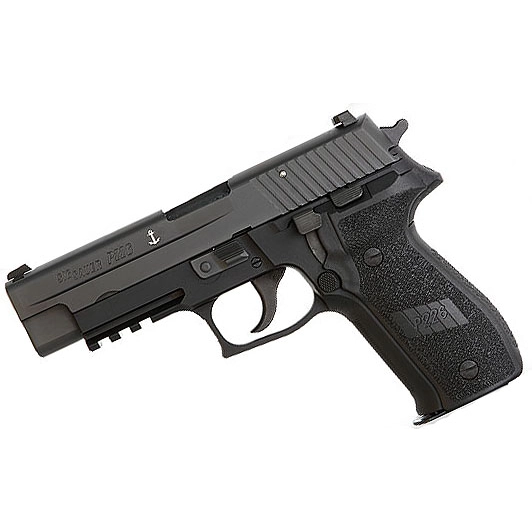
Mk 25
The Mk 25 is the United States Navy's designation for the SIG Sauer P226 as carried by the Navy SEALs: a standard P226 in 9mm with a… Continued…
-
PASGT Helmet
The PASGT helmet was the standard combat helmet of the United States armed forces from the early 1980s until the mid-2000s. Its name stands… Continued…
-
PK Machine Gun
The PK is a Soviet belt-fed general-purpose machine gun designed by Mikhail Kalashnikov's team and adopted in 1961. It fires the old rimmed… Continued…
-
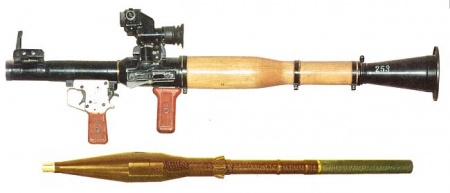
RPG-7
The RPG-7 is a Soviet shoulder-fired, reusable anti-tank grenade launcher adopted in 1961 and the most widely used weapon of its kind in… Continued…
-
Remington 870
The Remington 870 is a pump-action shotgun made by Remington Arms since 1950. With a steel receiver machined from a solid block and twin… Continued…
-
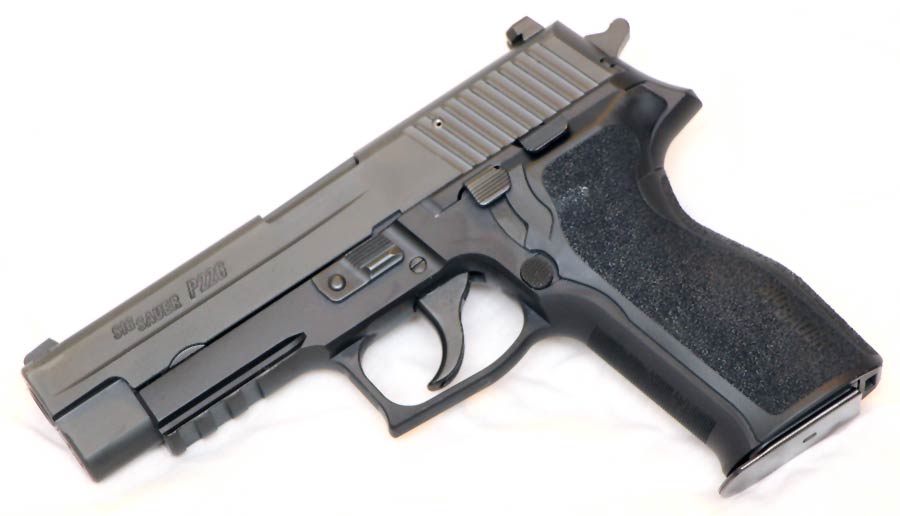
Sig Sauer P226
The SIG Sauer P226 is a full-size double-action service pistol introduced in 1984 for the United States Army's XM9 trials, which it lost to… Continued…