Operation Red Wings
Operation Red Wings was an American operation in Kunar Province, Afghanistan, in June and July 2005, aimed at the militant leader Ahmad Shah. On 28 June a four-man Navy SEAL reconnaissance team was ambushed on the mountain Sawtalo Sar and three of its men were killed. A helicopter bringing a rescue force was then shot down with the loss of all sixteen aboard. The nineteen deaths made it one of the costliest days for American special operations forces in the war.
Also known as Lone Survivor, Operation Redwing, Operation Red Wing, Red Wings 2005, Battle of Sawtalo Sar, Sawtalo Sar ambush, Operation Red Wings II, Turbine 33, Lone Survivor mission, Murphy's Medal of Honor action
Background
Kunar Province lies in eastern Afghanistan along the Pakistani border, a region of steep, forested mountains. In 2005 the 2nd Battalion, 3rd Marine Regiment was responsible for the area and wanted to reduce attacks before the Afghan parliamentary elections due that September. Its staff singled out Ahmad Shah, the leader of a small militant band aligned with the Taliban that operated around the Korangal valley and the mountain called Sawtalo Sar.
The battalion planned an operation in stages. A small reconnaissance team would find Shah, a raiding force would capture or kill him, and Marines would then sweep the valleys. The operation was named Red Wings after the Detroit ice hockey team; it is often miscalled "Redwing". The Marines wanted the specialist night-flying helicopters of the Army's 160th Special Operations Aviation Regiment, and that brought naval special operations forces into the opening phases. The reconnaissance task went to four men of the US Navy SEALs: Lieutenant Michael P. Murphy and Petty Officers Matthew Axelson, Danny Dietz and Marcus Luttrell.
The Battle
An MH-47 Chinook put the team down on the high ground near Sawtalo Sar on the night of 27 June 2005, and the men walked to a position overlooking villages where Shah was thought to be. On 28 June local goatherds stumbled on their hiding place. The SEALs held them briefly, could not raise their headquarters by radio, and let them go. Luttrell's memoir says the decision followed a vote among the four men, a detail that others have questioned.
The team moved, but soon afterward Shah's men attacked from higher ground with rifles, machine-gun fire and rocket-propelled grenades. The SEALs were driven down a steep ravine, falling from ledge to ledge, and all four were wounded. Murphy climbed into the open to get a signal on a satellite telephone, reported the contact and asked for help, and was shot as he did so. He, Dietz and Axelson were killed. Luttrell, thrown down the slope by an explosion, was badly hurt but got away.
A rescue force set out that afternoon. As one of its MH-47 helicopters came in to land troops on the mountain, a rocket-propelled grenade struck it and it crashed, killing all sixteen men aboard: eight SEALs and eight Army aviators of the 160th. Among them were Lieutenant Commander Erik Kristensen, who commanded the SEAL task unit, and Major Stephen Reich.
Luttrell walked and crawled for several kilometers. Villagers from Sabray found him, and one of them, Mohammad Gulab, took him in under the Pashtun custom that obliges a host to protect a guest. The villagers refused demands to hand him over and sent word to a Marine base. American forces reached him on 2 July. Searchers recovered the bodies of Murphy and Dietz on 4 July and that of Axelson on 10 July. The search and the Marine sweep of the valleys continued into the middle of July.
Weapons
Murphy and Dietz carried the M4 Carbine fitted with the M203 Grenade Launcher. Luttrell and Axelson, the team's snipers, carried the Mk 12 Special Purpose Rifle. The SEAL sidearm was the Sig Sauer P226, and the standard American hand grenade of the period was the M67 Grenade.
Shah's men had the AK-47, a belt-fed gun of the PK Machine Gun type and the RPG-7, the weapon that brought down the Chinook. The attackers' advantage lay in the high ground, their knowledge of the mountain and the failure of the team's communications rather than in superior arms. They carried off the dead SEALs' weapons and equipment and showed them in a propaganda video.
Aftermath
Nineteen Americans died, at that time the heaviest loss in a single day for American naval special warfare since the Second World War. In August 2005 the Marines of the same battalion returned in Operation Whalers, which wounded Shah and broke up his group. He was killed in Pakistan in 2008.
How many men attacked the team is disputed. Luttrell's memoir speaks of 80 to 200 fighters, and the Navy's award documents give figures between 30 and more than 50. Ed Darack, who worked with the Marine officers who planned the operation and studied the intelligence reporting and two videos made by Shah's men, concluded that the ambush party numbered about eight to ten. Claims that the SEALs killed dozens of their attackers have likewise not been confirmed.
Murphy was awarded the Medal of Honor posthumously in October 2007. Dietz, Axelson and Luttrell received the Navy Cross.
On Screen
Lone Survivor (2013), directed by Peter Berg from Marcus Luttrell's 2007 memoir written with Patrick Robinson, follows the team from the insertion to Luttrell's rescue. Mark Wahlberg plays Luttrell, Taylor Kitsch plays Murphy, Emile Hirsch plays Dietz, Ben Foster plays Axelson, Eric Bana plays Kristensen and Ali Suliman plays Gulab. The meeting with the goatherds, the fall down the mountain, Murphy's satellite call and the loss of the Chinook are shown broadly as Luttrell describes them. The film follows the memoir rather than later research on the size of the enemy, showing the SEALs fighting dozens of men. Its ending departs from the record: there was no pitched battle in the village with American aircraft arriving in the middle of it, Luttrell's heart did not stop during the rescue, and his five days in hiding are compressed. Shah is presented as a major Taliban commander rather than the leader of a small local band.
Weapons used
-
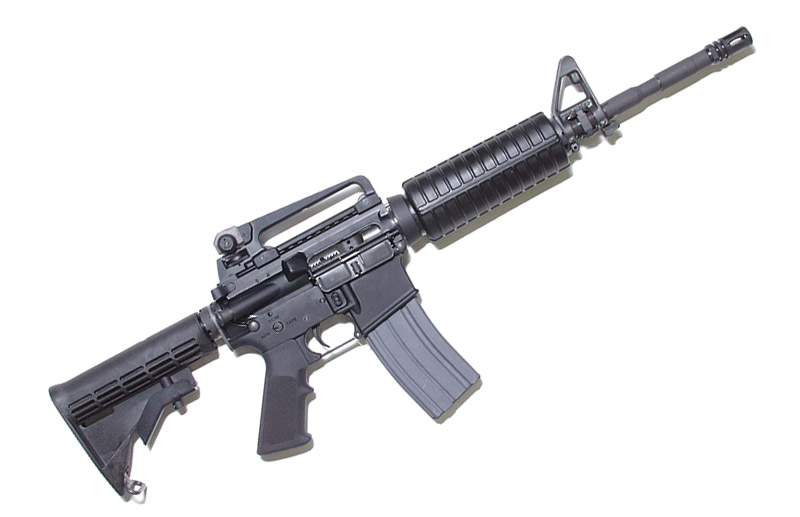
M4 Carbine
Lieutenant Michael Murphy and Danny Dietz carried M4A1 carbines fitted with grenade launchers. Continued…
-
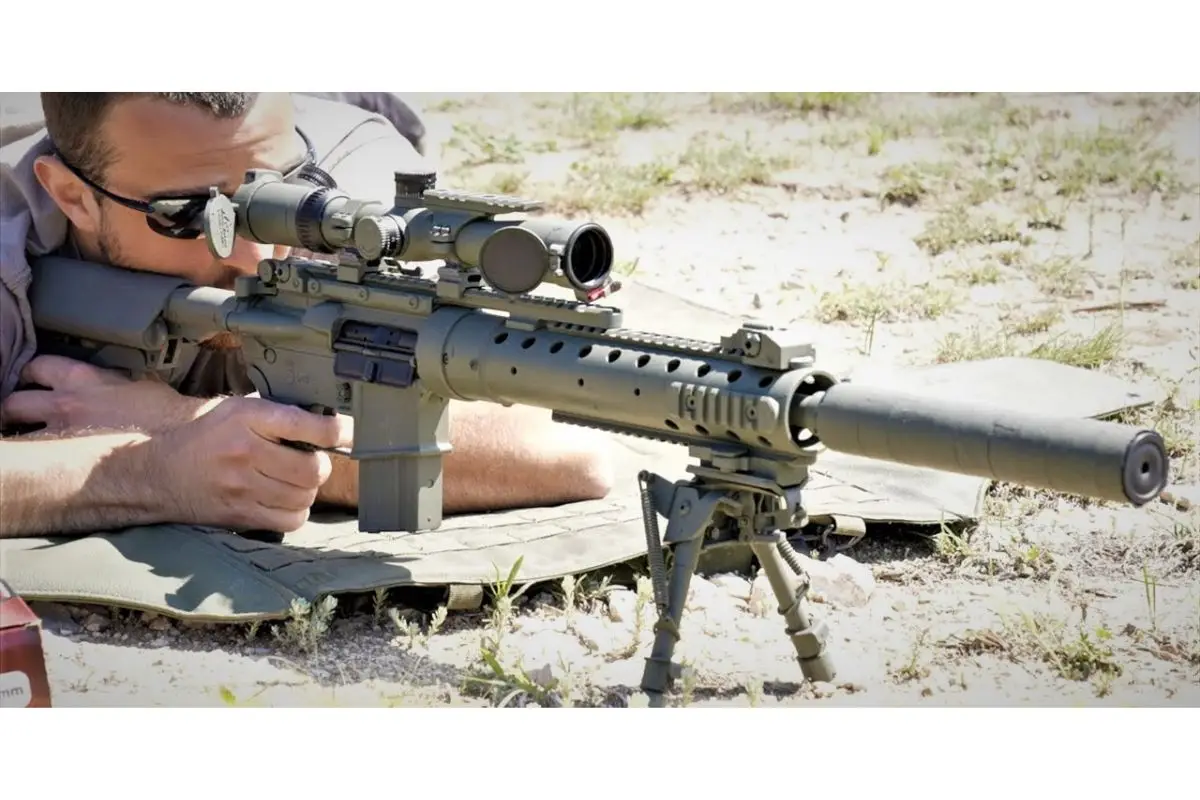
Mk 12 Special Purpose Rifle
Marcus Luttrell and Matthew Axelson, the team's snipers, carried the Mk 12 Special Purpose Rifle. Continued…
-
AK-47
Kalashnikov rifles were the basic weapon of Ahmad Shah's fighters. Continued…
-
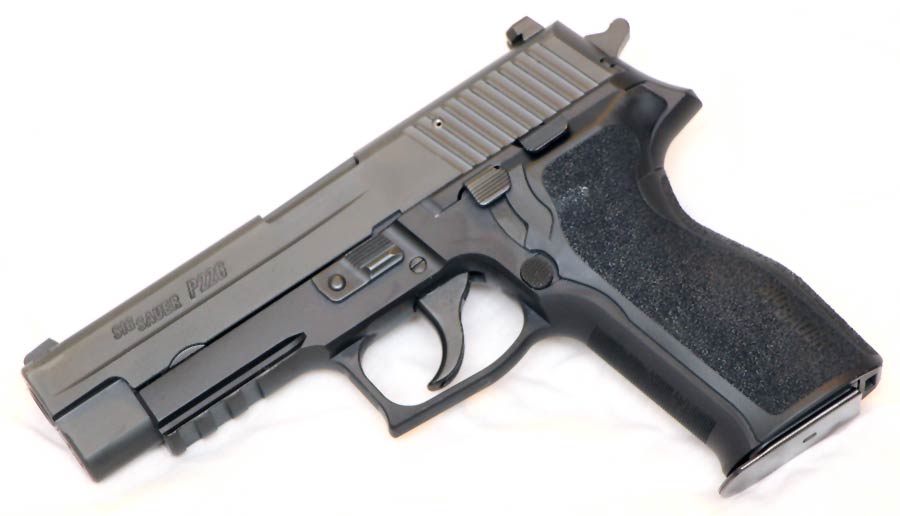
Sig Sauer P226For sale
The P226 was the standard sidearm of the Navy SEALs at the time. Continued…
-
M203 Grenade Launcher
The 40 mm launchers under the two M4A1 carbines were the team's heaviest weapons. Continued…
-
PK Machine Gun
Shah's men are reported to have used a belt-fed PK-type machine gun in the ambush. Continued…
-
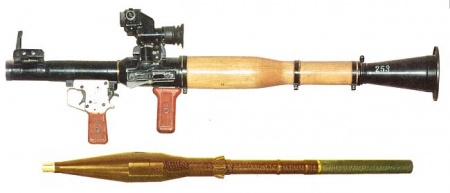
RPG-7
A rocket-propelled grenade brought down the MH-47 Chinook carrying the rescue force, killing all sixteen men aboard. Continued…
Sources
Darack, Ed. Victory Point: Operations Red Wings and Whalers - the Marine Corps' Battle for Freedom in Afghanistan. Berkley Caliber, 2009.
Luttrell, Marcus, with Patrick Robinson. Lone Survivor: The Eyewitness Account of Operation Redwing and the Lost Heroes of SEAL Team 10. Little, Brown, 2007.
Williams, Gary. SEAL of Honor: Operation Red Wings and the Life of LT Michael P. Murphy, USN. Naval Institute Press, 2010.
Suggest an edit · account required · reviewed before publishing · how it works