Origin
Spain
Spain built a global empire from the 16th century onward on the strength of its tercios infantry formations, Toledo steel swords, and early adoption of firearms. The Spanish rapier tradition influenced European fencing, and Spanish metallurgy in Toledo produced blades prized across the world.
Overview
Spain was a dominant military power from the late 15th through early 17th centuries — the tercios infantry formations that combined pike and shot with discipline and experience were the finest infantry in Europe for nearly a century. Spain's global empire required weapons and soldiers on every continent, and Spanish arms design — particularly Toledo steel blades — was among the most respected in the world.
Toledo Steel
Toledo, Spain has been a center of blade production since the Roman period. Toledo swords were renowned for the quality of their steel and the skill of their smiths. The Tajo River's water was considered ideal for quenching blades. Toledo blades were exported across Europe and are still produced today, though modern examples are primarily decorative.
The Tercios
The Spanish tercios were combined-arms infantry units of roughly 3,000 men combining pikemen, arquebusiers, and later musketeers in proportions that evolved over time. At their height (Battle of Pavia, 1525; Battle of Mühlberg, 1547), tercios were essentially unbeatable in the field. Their weapons:
- Pike — 16–18 feet; used by roughly half the formation
- Arquebus/musket — Firing in rotating sections to maintain continuous firepower
- Espada (sword) — Musketeers carried swords for close combat when firearms were exhausted
The Rapier
The espada ropera ("dress sword") evolved in Spain and spread across Europe as the dominant civilian dueling and self-defense weapon. Spanish rapier masters:
- Destreza — The Spanish school of fencing; more geometric and mathematical in approach than the Italian school; emphasized stepping and controlling the measure (distance)
- Jerónimo de Carranza — De la Filosofía de las Armas (1582); founding text of Destreza
- Luis Pacheco de Narváez — Prominent Destreza master; 17th century
Conquistador Arms
Spanish conquistadors in the Americas carried steel swords, crossbows, arquebuses, and artillery — all entirely outside the experience of indigenous peoples. Spanish steel cut obsidian and copper weapons that couldn't damage it in return.
This article is a stub.
Battles & Operations
-
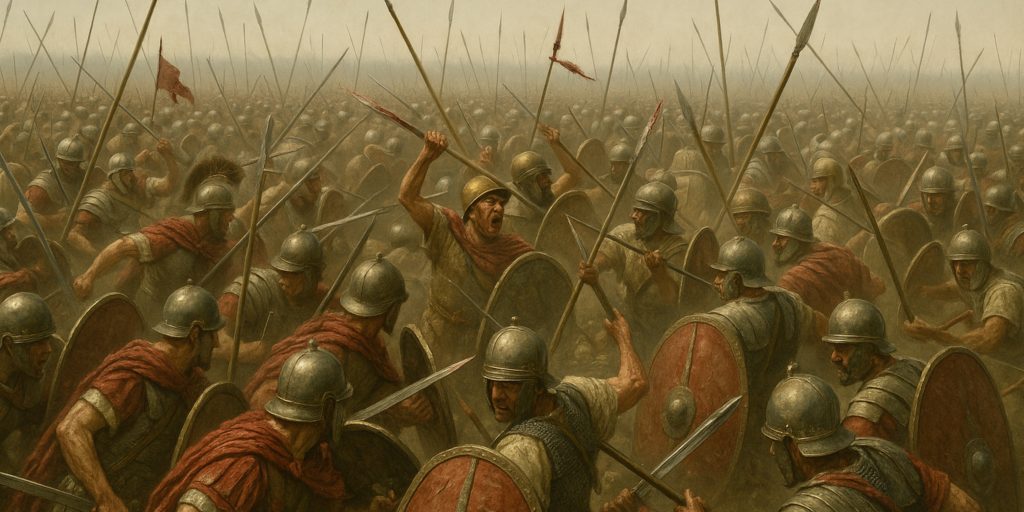
Battle of Cannae (2 August 216 BC)
The Battle of Cannae, fought on 2 August 216 BC in Apulia in southern Italy, was Hannibal's masterpiece and one of the worst defeats in… Continued…
-
Fall of Tenochtitlan (26 May - 13 August 1521)
The Fall of Tenochtitlan was the siege and capture of the Mexica capital by Hernán Cortés between May and August 1521. Fewer than a… Continued…
-
Battle of Lepanto (7 October 1571)
The Battle of Lepanto, fought on 7 October 1571 off western Greece, was the largest galley battle of the age. The fleet of the Holy League… Continued…
-
Spanish Armada (29 July - 8 August 1588)
The Spanish Armada was the fleet of about 130 ships that Philip II of Spain sent against England in 1588. It was meant to sail up the… Continued…
-
Battle of Trafalgar (21 October 1805)
The Battle of Trafalgar was fought on 21 October 1805 off Cape Trafalgar in southern Spain. A British fleet of 27 ships of the line under… Continued…
Weapons
-
Arquebus
The arquebus was the first practical infantry firearm, a matchlock long gun light enough to be fired from the shoulder or chest without a… Continued…
-
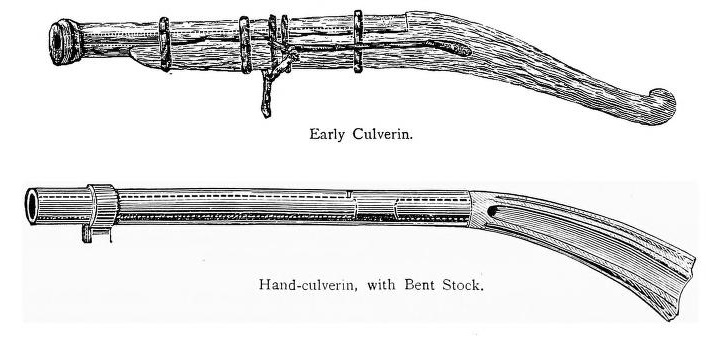
Culverin
The culverin was a long-barreled muzzle-loading gun of the sixteenth and seventeenth centuries. Compared with the heavier 'cannon' class it… Continued…
-
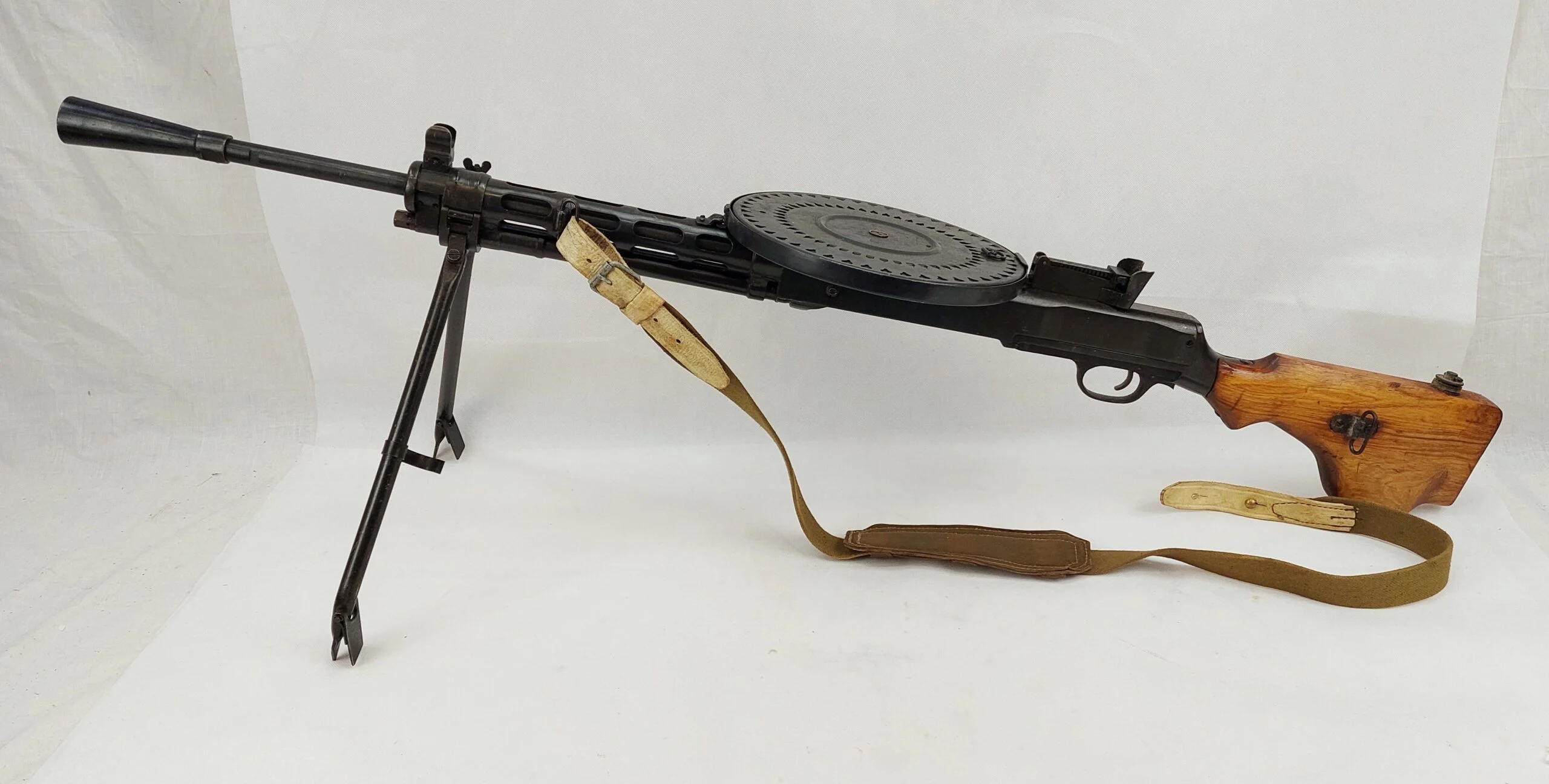
Degtyaryov DP-27
The DP-27 was the standard light machine gun of the Soviet Army from the late 1920s through the Second World War. Designed by Vasily… Continued…
-
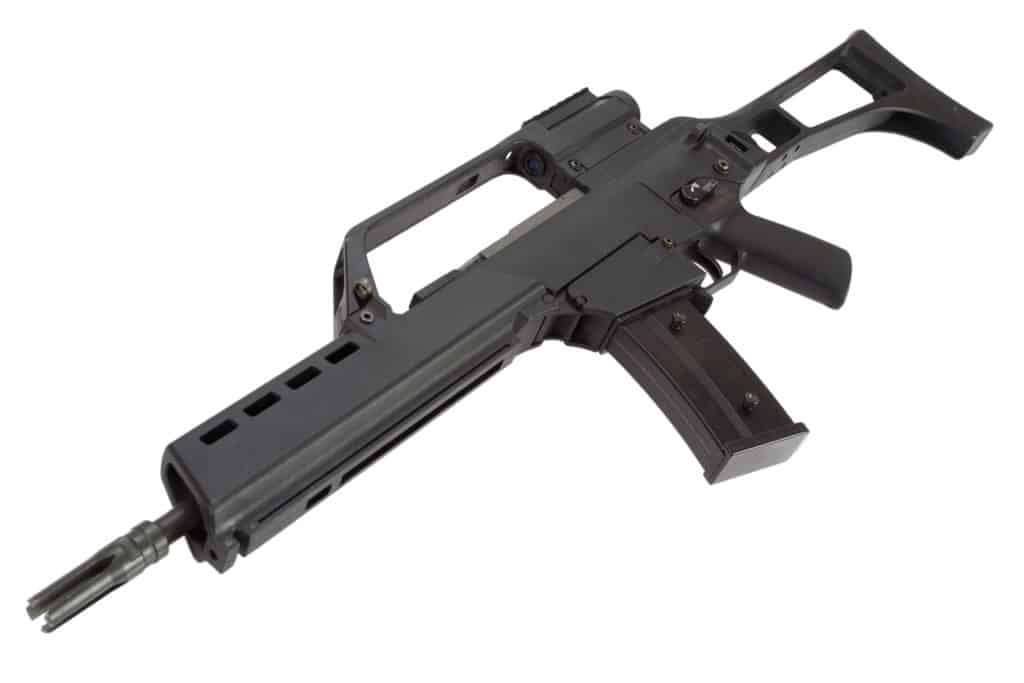
G36 Rifle
The Heckler & Koch G36 is a 5.56x45 mm NATO assault rifle adopted by the German Bundeswehr in 1997 to replace the G3. It uses a… Continued…
-
Galleon
The galleon was the large ocean-going sailing ship of the sixteenth and early seventeenth centuries, used both as a warship and as an armed… Continued…
-
Iberian Falcata
The falcata is the curved, single-edged sword of the Iberians of pre-Roman Spain, used from about the fifth to the first century BC. Its… Continued…
-
Ichcahuipilli
The ichcahuipilli was the quilted cotton armor of the Aztecs and other peoples of central Mexico. Made of layers of cotton packed between… Continued…
-
Molotov Cocktail
A Molotov cocktail is a glass bottle filled with gasoline or another flammable liquid, lit by a burning rag or a chemical igniter and… Continued…
-
Morion Helmet
The morion is the open steel helmet with a tall comb and a brim swept up to points at front and back that armed pikemen and arquebusiers… Continued…
-
Pike
The pike is the longest infantry weapon ever carried in formation: an ash shaft of 16 to 22 feet tipped with a small steel head, used by… Continued…
-
Remington Rolling Block
The Remington rolling block was a single-shot breech-loading rifle made by E. Remington and Sons of Ilion, New York, from the mid-1860s.… Continued…
-
Ship of the Line
The ship of the line was the main battleship of the age of sail, a large wooden warship with two or three decks of heavy guns along its… Continued…
-
Swept-Hilt Rapier
The swept-hilt rapier was the civilian sword of the late Renaissance: a long, narrow thrusting blade defended by a basket of gracefully… Continued…
-
Swivel Gun
The swivel gun was a small cannon mounted on a forked iron yoke that pivoted in a socket on a ship's rail, fighting top or boat bow, so… Continued…
-
Venetian Galleass
The galleass was a large, heavily gunned warship of the sixteenth-century Mediterranean, built by Venice from its great merchant galleys.… Continued…