Force
Jomsvikings
Legendary band of Viking mercenaries.
Origins
The Jomsvikings are the most famous warrior brotherhood of the Viking Age, and among the hardest to pin down. Almost everything told about them comes from Icelandic writing of around 1200 and later, above all the Jómsvíkinga saga and the kings' sagas such as Snorri Sturluson's Heimskringla. According to the saga, a Danish chieftain named Pálnatóki founded a fortress called Jomsborg on the southern coast of the Baltic, in the land of the Wends, the Slavs of what is now northern Germany and Poland, in the later tenth century. Its warriors fought for pay and plunder and took part in the power struggles of the Danish kings Harald Bluetooth and Svein Forkbeard.
Historians disagree over how much of this is true. Some see the saga as largely a literary creation, a good story built around a few real names. Others think it preserves the memory of a real band of Scandinavian warriors based at a Baltic trading town. This article separates what the saga says from what other evidence supports.
Organization & Training
The saga gives the Jomsvikings a famous set of laws. Only men between eighteen and fifty could join, and each had to prove himself. No women were allowed in the fortress. A Jomsviking must not flee from an enemy as strong or as well armed as himself, must avenge his brothers, must share all plunder, and must not spread news without the leader's permission. Quarrels were settled by the leaders. These rules make a good picture of a warrior brotherhood, but there is no independent evidence that they existed. They may reflect later Icelandic ideas of what such a band ought to be.
Weapons & Equipment
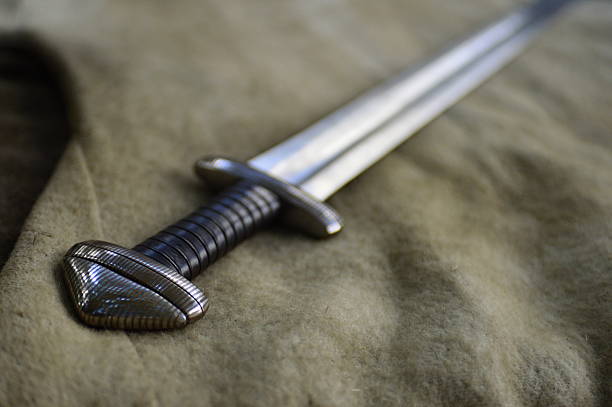
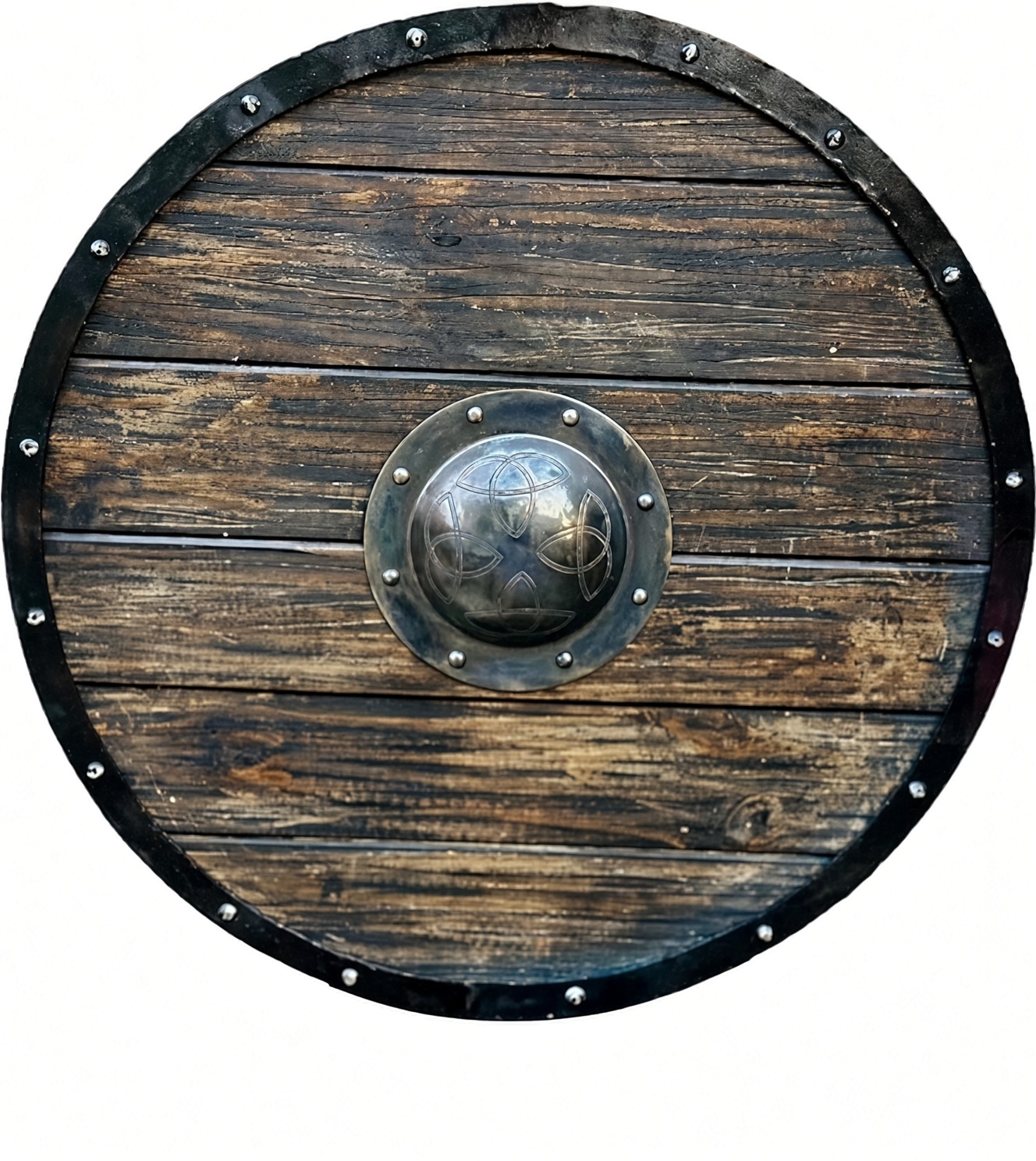
No find can be tied to the Jomsvikings themselves, so their equipment can only be described from the general picture of Scandinavian warriors of the late tenth century. They would have carried the Viking Spear and the Viking Round Shield, with the Viking Battle Axe or the larger Dane Axe. Leaders and wealthy warriors had swords, the best of them imported blades like the Ulfberht Sword, and wore the Mail Hauberk and an iron helmet like the Gjermundbu Helmet.
Notable Actions
The best-supported event is the sea battle of Hjörungavágr, off the coast of western Norway, usually dated to about 986, though estimates range more widely. A fleet led by Danish-backed chieftains attacked Earl Hákon, the ruler of Norway, and was heavily defeated. The battle is mentioned in skaldic poems attributed to poets of Hákon's own court, which gives it a firmer basis than most of the story. The saga adds a famous scene in which captured Jomsvikings joke as they are beheaded one by one, until the young Vagn Ákason is spared. That scene is almost certainly literary. Later sagas also make Thorkell the Tall, who led a large Viking army in England between 1009 and 1012, a Jomsviking.
The location of Jomsborg is also debated. It is usually placed at or near Wolin, an important trading town at the mouth of the Oder in modern Poland. Adam of Bremen, writing about 1075, described a great town there, called Jumne, but he does not mention the Jomsvikings. Excavations at Wolin have found Scandinavian objects, but no fortress matching the saga's description. According to Heimskringla, King Magnus the Good of Norway destroyed Jomsborg in 1043.
Legacy
Whatever their history, the Jomsvikings became one of the great legends of the Norse world. The saga was widely read in medieval Iceland, and today Wolin hosts a large annual Slavs and Vikings festival. They appear in novels, music and games as the ideal of the Viking warrior band, alongside the Vikings and the Varangian Guard.
-
Ulfberht Sword
The Ulfberht swords are a group of about 170 early medieval sword blades inscribed with the name +VLFBERH+T, made between the ninth and… Continued…
-
Viking Round Shield
The round shield was the main defense of the Viking warrior: a disc of wooden boards, usually about 80 to 95 centimeters across, with an… Continued…