Weapon Type
Naval Weapons
Weapons designed for or primarily used in naval combat.
Category Overview
Overview
Naval weapons are weapons systems designed for or primarily employed in maritime warfare. The constraints of the naval environment — salt water, limited space, the need to project force at sea — have driven distinctive weapons development separate from land warfare, though many technologies cross over. Naval weapons development is closely linked to warship design: the weapons a ship carries determine its function, and the need to carry specific weapons shapes the ship.
Historical Development
Ancient Naval Warfare (Bronze Age – Roman era)
- Ram (embolon) — The primary naval weapon of the Mediterranean; a bronze projection from the waterline of the galley; rowed at speed into the hull of an enemy ship; the trireme was optimized as a ram platform
- Marines and boarding — Soldiers aboard ships fought hand-to-hand after ramming or grappling; catapults and ballistae adapted for ship mounting
Medieval and Early Modern (500–1600)
- Greek fire — Byzantine incendiary weapon; pumped onto enemy ships; burned on water; decisive in several naval battles
- Crossbow and longbow — Naval archery; aimed at rowers and crew
- Grappling hook — Iron hook on rope; pulled ships together for boarding
The Age of Sail (1500–1850)
- Ship-mounted cannon — The defining naval weapon; arranged in broadside batteries along the ship's sides; a first-rate ship of the line carried 100+ guns
- Round shot, chain shot, bar shot — Solid ball for hull penetration; chain/bar shot for cutting rigging
- Carronade — Short-barreled, large-bore; fired heavy balls at short range; devastating in close action
- Mortar (bomb vessel) — Specially built ships carrying mortars for shore bombardment
Industrial Era (1850–1945)
- Naval gun — Steel breech-loading rifled guns; range extended to 20+ miles on WWI/WWII battleships
- Torpedo — Self-propelled underwater projectile; invented 1866; transformed naval warfare by threatening every warship regardless of armor
- Naval mine — Anchored explosive; denied sea areas; both world wars saw extensive mine warfare
- Depth charge — Anti-submarine weapon; barrel of explosive dropped or launched from surface ships
- Aircraft and carrier aviation — Rendered the battleship obsolete; the aircraft carrier became the dominant naval weapons platform
This article is a stub. Contributions covering specific naval weapons, battles, and warship types are welcome.
-
32-Pounder Naval Long Gun
The 32-pounder long gun was the heaviest standard cannon of the Royal Navy's ships of the line in the age of sail: a cast-iron… Continued…
-
Boarding Axe
The boarding axe was the short-handled naval axe of the age of sail, with a cutting blade on one side and a spike on the other. It was a… Continued…
-
Boarding Cutlass
The cutlass was the sailor's sword of the Age of Sail: short, broad-bladed, and basket-guarded, built for the crowded chaos of a boarding… Continued…
-
Boarding Pike
The boarding pike was a short spear carried on sailing warships to defend the ship against boarders and to arm boarding parties. It was… Continued…
-
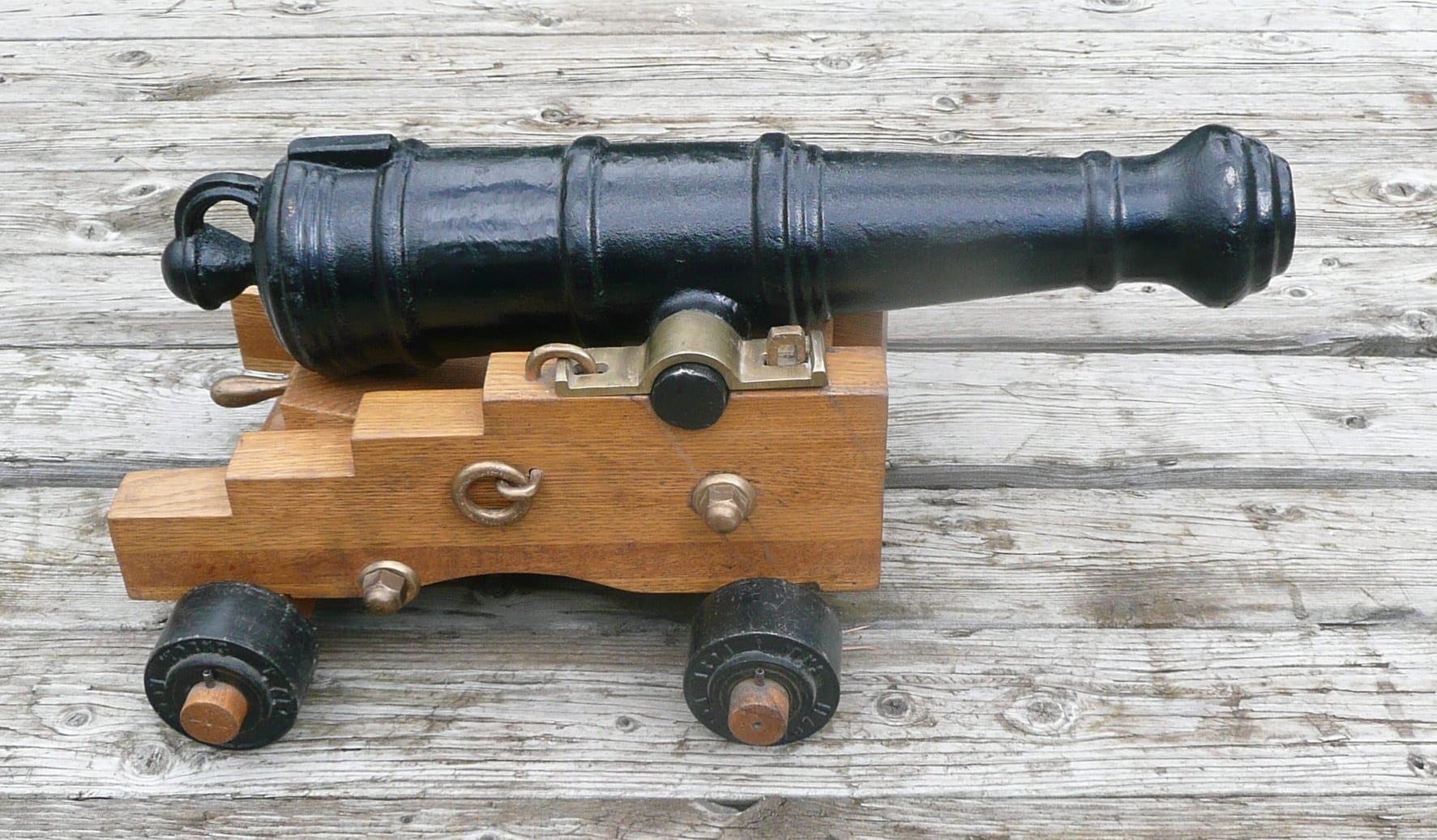
Carronade
The carronade was a short, light, large-bore naval gun first cast by the Carron Company of Falkirk, Scotland, in 1778. It fired a heavy… Continued…
-
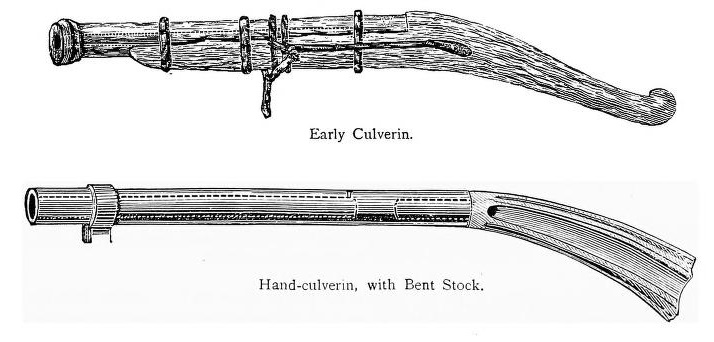
Culverin
The culverin was a long-barreled muzzle-loading gun of the sixteenth and seventeenth centuries. Compared with the heavier 'cannon' class it… Continued…
-
Fire Ship
A fire ship was a vessel filled with flammable material, set alight and sent drifting or sailing into an enemy fleet. Wooden ships with… Continued…
-
Galleon
The galleon was the large ocean-going sailing ship of the sixteenth and early seventeenth centuries, used both as a warship and as an armed… Continued…
-
Greek Fire
Greek fire was the Byzantine Empire's incendiary weapon: a liquid that burned fiercely, could not easily be put out, and was projected from… Continued…
-
Greek Trireme
The trireme was the main warship of the eastern Mediterranean from the late sixth century BC to the fourth century BC. It was a long… Continued…
-
Mark 13 Torpedo
The Mark 13 was the standard aerial torpedo of the United States Navy in the Second World War, carried by the TBD Devastator and TBF… Continued…
-
Ship of the Line
The ship of the line was the main battleship of the age of sail, a large wooden warship with two or three decks of heavy guns along its… Continued…
-
Swivel Gun
The swivel gun was a small cannon mounted on a forked iron yoke that pivoted in a socket on a ship's rail, fighting top or boat bow, so… Continued…
-
Type 91 Torpedo
The Type 91 was the aerial torpedo of the Imperial Japanese Navy in the Second World War. Adopted in 1931, it was smaller and faster than… Continued…
-
Venetian Galleass
The galleass was a large, heavily gunned warship of the sixteenth-century Mediterranean, built by Venice from its great merchant galleys.… Continued…