Historical Context
Hundred Years War
A prolonged conflict between England and France over the French throne. The war saw the devastating effectiveness of the English longbow at Crécy and Agincourt, the rise of plate armor to counter it, and early experiments with artillery that foreshadowed the end of medieval siege warfare.
1337 – 1453
Overview
The Hundred Years War was a series of conflicts between England and France over the French crown and English territorial claims in France. It is one of the most weapons-significant conflicts in medieval history — the English longbow devastated French chivalry in multiple battles before plate armor and early artillery ultimately ended English dominance and drove the French to develop the first standing professional army in Western Europe.
The English Longbow at Its Peak
The early phases of the Hundred Years War produced three of the longbow's greatest victories:
Crécy (1346)
Edward III's English and Welsh longbowmen destroyed a much larger French army. French crossbowmen (Genoese mercenaries) were outranged and outpaced by English archers firing 10–12 arrows per minute. French knights charging into massed arrow fire suffered catastrophic losses. The Genoese crossbows, with wet bowstrings from rain, were unable to respond effectively.
Weapons lesson: Rate of fire and range defeated superior numbers and heavier armament.
Poitiers (1356)
The Black Prince's forces defeated and captured the French King John II. English longbowmen again destroyed French cavalry attacks, while dismounted English men-at-arms held the defensive line.
Agincourt (1415)
Henry V's heavily outnumbered army destroyed a much larger French force. Stakes planted by the archers prevented French cavalry from overrunning the longbow line. French knights in full plate armor, exhausted from crossing muddy ground, were cut down by archers and men-at-arms.
Weapons lesson: Even full plate armor could not protect against massed longbow fire at the flanks, legs, and horses.
The French Response: Plate Armor and Artillery
Plate Armor Improvement
French knights responded to the longbow with increasingly complete plate armor — reducing the vulnerable areas between mail sections. By the mid-15th century, full plate armor was common enough that Agincourt-style longbow dominance became less reliable.
Artillery and Siege Warfare
French Bureau brothers (Jean and Gaspard) developed highly effective artillery in the 1440s, using cannon to rapidly reduce English-held fortifications across France. The same artillery defeated the last English field army at Castillon (1453) — the first major battle in Western history decided primarily by artillery fire. An English counterattack into prepared French gun positions was devastated.
Joan of Arc and the Transition
Joan of Arc's campaigns (1429–1431) broke the English siege of Orléans partly through aggressive use of French artillery alongside infantry assaults — a combined-arms approach that foreshadowed later doctrine.
Weapons Summary
| Period | Dominant Weapons | Victor | |--------|-----------------|--------| | 1337–1360 | English longbow | England | | 1360–1415 | Consolidated plate armor | Stalemate | | 1415 | Longbow + defensive stakes | England (Agincourt) | | 1429–1453 | French artillery | France |
This article is a stub. Contributions covering specific battles, weapons, and commanders are welcome.
Battles & Operations
-
Battle of Crécy (26 August 1346)
The Battle of Crécy, fought on 26 August 1346 in Ponthieu in northern France, was the first great English victory of the Hundred Years War.… Continued…
-
Battle of Agincourt (25 October 1415)
The Battle of Agincourt was fought on 25 October 1415, St Crispin's Day, in northern France during the Hundred Years War. King Henry V's… Continued…
Weapons
-
Arbalest
The arbalest was the heavy crossbow of the late Middle Ages, with a bow of steel or thick composite so powerful it had to be drawn with a… Continued…
-
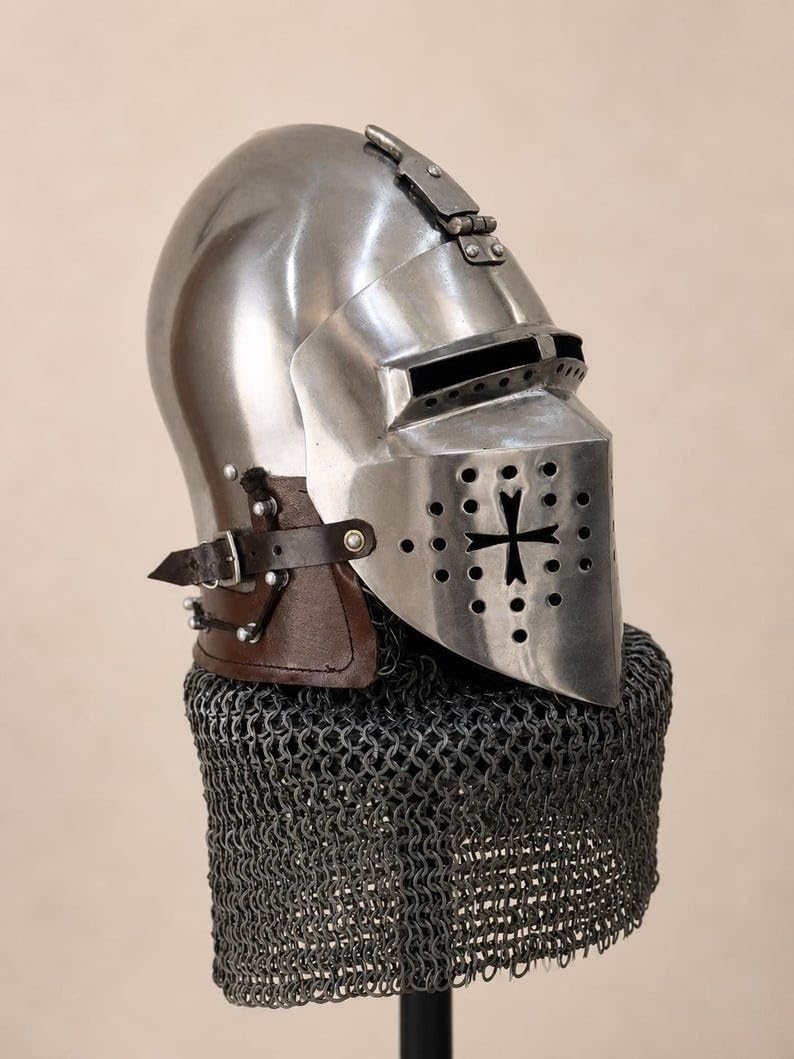
Bascinet
The bascinet was the most widely worn helmet of fourteenth-century Europe: an iron skull cap drawn up into a point, with a curtain of mail… Continued…
-
Bombard
A bombard was a large, short-ranged cannon of the fourteenth to sixteenth centuries that fired heavy stone balls against castle and town… Continued…
-
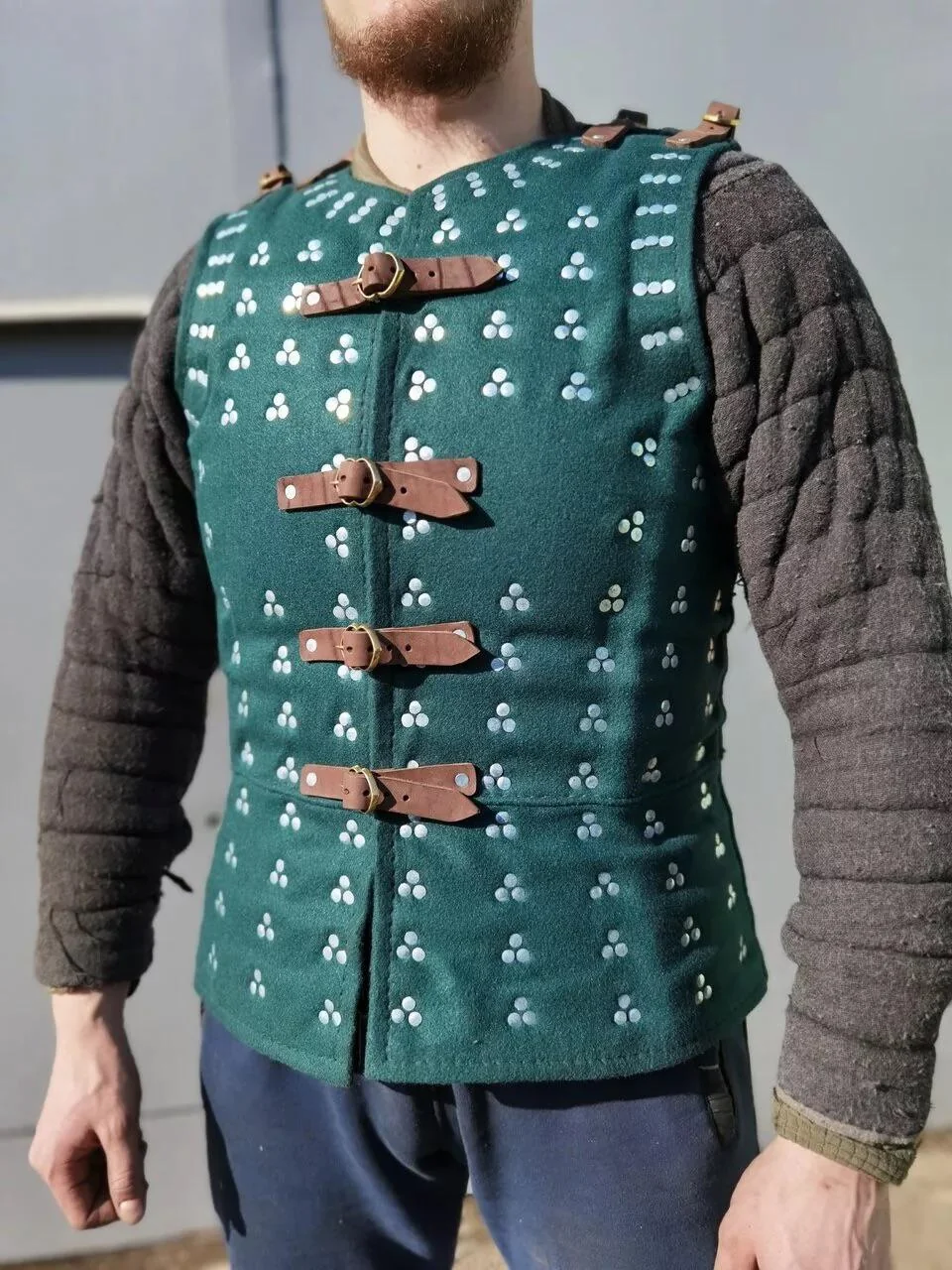
Brigandine
The brigandine was a body armor made of many small iron or steel plates riveted to the inside of a fabric or leather covering, so that only… Continued…
-
Crossbow
The crossbow put a bow on a stock, held its own draw, and released on a trigger — trading the archer's lifetime of training for a weapon… Continued…
-
English Bill
The English bill was the characteristic pole arm of the English foot soldier from the fourteenth century to the late sixteenth: a hooked… Continued…
-
English Longbow
The English longbow was the great ranged weapon of the later Middle Ages: a self bow of yew, as tall as its archer or taller, drawing well… Continued…
-
Estoc
The estoc was a sword made to defeat plate armor: a long, stiff blade with no real cutting edge, triangular, square or diamond in section… Continued…
-
Falchion
The falchion was a single-edged medieval sword with a broad blade, heavier toward the point, that combined the chopping power of an axe… Continued…
-
Glaive
The glaive is a European pole arm made of a single-edged blade, shaped like a large knife or cleaver, mounted on a shaft of about six to… Continued…
-
Gothic Plate Armor
Gothic armor is the name collectors give to the full plate harnesses made in the German lands of the Holy Roman Empire from roughly 1460 to… Continued…
-
Great Helm
The great helm was the fully enclosed, flat-topped or sugarloaf helmet of the high medieval knight, worn from around 1220 until the mid… Continued…
-
Kettle Hat
The kettle hat was an open-faced iron or steel helmet with a wide brim, known in French as the chapel de fer, the iron hat. It appeared in… Continued…
-
Knight's Lance
The knight's lance was the defining weapon of medieval European heavy cavalry: a long wooden shaft with an iron head, held tight under the… Continued…
-
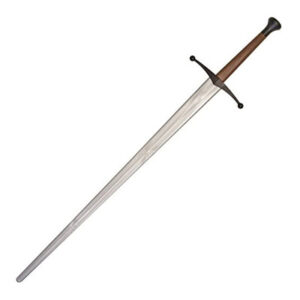
Longsword
The longsword is the two-handed knightly sword of the late Middle Ages and Renaissance: a straight, double-edged blade of roughly 33 to 43… Continued…
-
Poleaxe
The poleaxe was the knight's weapon for fighting on foot in full plate armor during the fifteenth century. About five to six feet long, it… Continued…
-
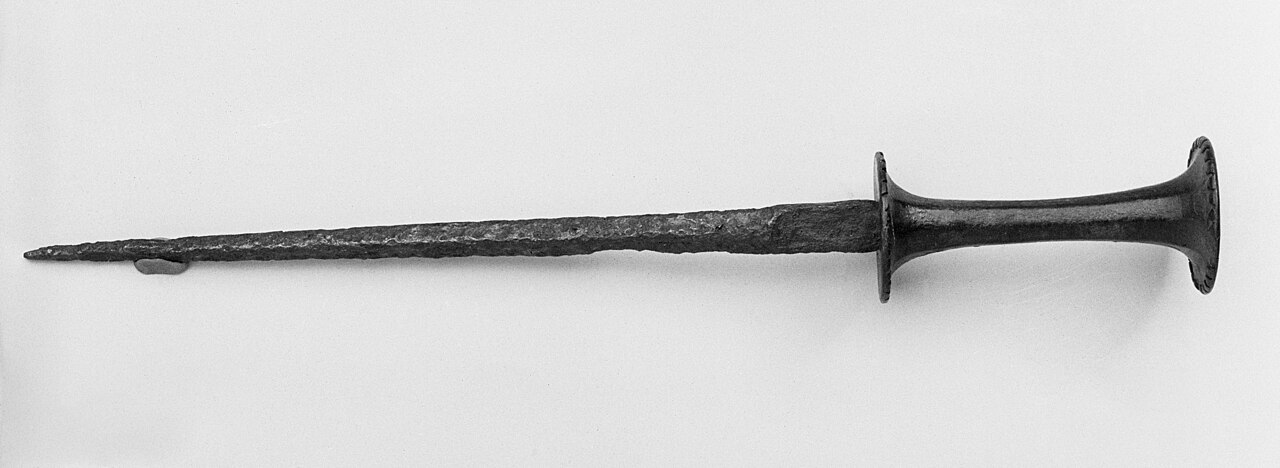
Rondel Dagger
The rondel dagger was the stiff, needle-pointed dagger of the late medieval knight, named for the disc-shaped guard and pommel that framed… Continued…
-
War Hammer
The war hammer is the late medieval answer to plate armor: a steel head with a blunt, often toothed hammer face on one side and a stout… Continued…