Weapon Type
Ranged Weapons
Weapons that project a missile or projectile.
Category Overview
Overview
Ranged weapons attack at a distance, giving the user a fundamental tactical advantage: the ability to inflict casualties before the enemy can respond in kind. The development of ranged weapons is one of the central threads of military history, from the first thrown stone to modern guided missiles.
This category covers human-powered ranged weapons — bows, crossbows, slings, and thrown weapons — and early firearms before the matchlock musket's maturation. Modern firearms are covered under the Firearms category.
Evolutionary Timeline
| Period | Primary Ranged Weapon | Range | Rate | |--------|----------------------|-------|------| | Prehistoric | Thrown stone, spear | 20–30m | Low | | Prehistoric+ | Atlatl (spear-thrower) | 40–70m | Low | | Neolithic onward | Self bow | 50–150m | Moderate | | 2000 BCE onward | Composite bow | 100–200m | Moderate | | Medieval | Crossbow | 100–200m | Very low | | Medieval | Longbow | 200–350m | High | | 1300s onward | Early firearms | 50–75m | Very low |
Major Subcategories
- Bows — Self bows, composite bows, longbows; the dominant ranged weapon from Neolithic times through the 16th century. See: Bows.
- Crossbows — Mechanical bow with trigger; slower than the longbow but requiring less training. See: Crossbows.
- Slings & Thrown — Slings, javelins, atlatls, throwing axes. See: Slings & Thrown.
- Early Firearms (pre-1600) — Hand cannon, arquebus; the transition from human-powered to chemically-powered ranged weapons. See: Early Firearms (pre-1600).
This article is a stub. Contributions covering specific weapons, tactics, and historical development are welcome.
Battles & Operations
Weapons
-
Arbalest
The arbalest was the heavy crossbow of the late Middle Ages, with a bow of steel or thick composite so powerful it had to be drawn with a… Continued…
-
Arquebus
The arquebus was the first practical infantry firearm, a matchlock long gun light enough to be fired from the shoulder or chest without a… Continued…
-
Assyrian Composite Bow
The composite bow of the Neo-Assyrian Empire, built of wood, horn and sinew bonded with glue, was the principal weapon of the most… Continued…
-
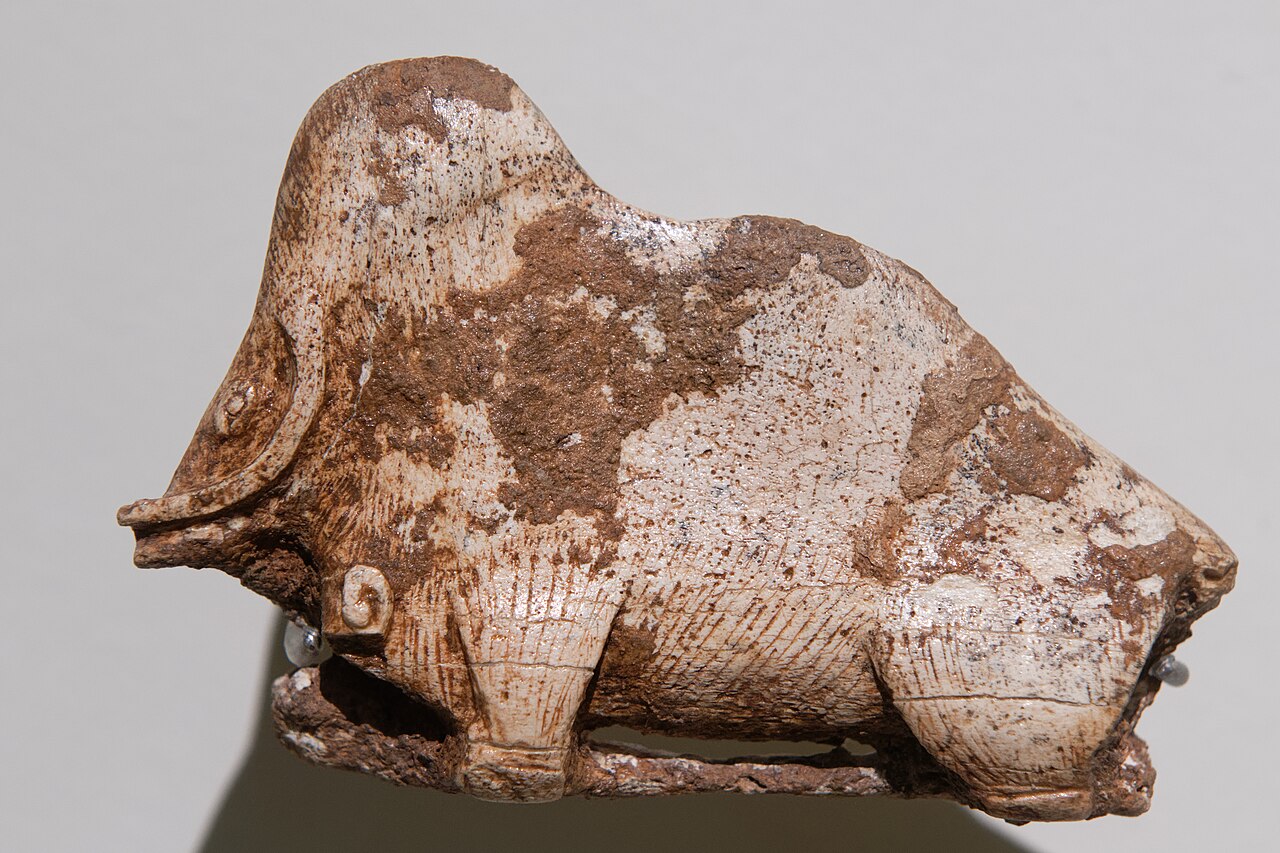
Atlatl
The atlatl is a hand-held lever that launches a long dart far faster than an arm alone can throw it. One of humanity's oldest mechanical… Continued…
-
Bone Harpoon
The bone harpoon is a barbed point of bone or antler, made to be hafted on a spear or dart and to hold fast in its prey. Barbed bone points… Continued…
-
Boomerang
The boomerang is a curved throwing stick, and the returning kind is only one small branch of a very old family. A boomerang carved from… Continued…
-
Chakram
The chakram is the flat steel throwing ring of the Indian subcontinent, a sharpened hoop flung edge-first at an enemy. Best known as the… Continued…
-
Chu-ko-nu
The chu-ko-nu, or zhuge nu, is the Chinese repeating crossbow. A box magazine on top of the stock held a stack of bolts, and a single lever… Continued…
-
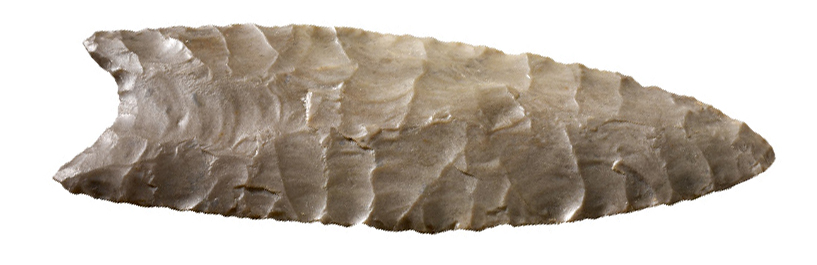
Clovis Point
The Clovis point is the signature stone weapon of the first widespread culture in North America, produced for a few centuries around 13,000… Continued…
-
Congreve Rocket
The Congreve rocket was a British military rocket developed by William Congreve at the Royal Arsenal, Woolwich, from 1804, based on the… Continued…
-
Crossbow
The crossbow put a bow on a stock, held its own draw, and released on a trigger — trading the archer's lifetime of training for a weapon… Continued…
-
English Longbow
The English longbow was the great ranged weapon of the later Middle Ages: a self bow of yew, as tall as its archer or taller, drawing well… Continued…
-
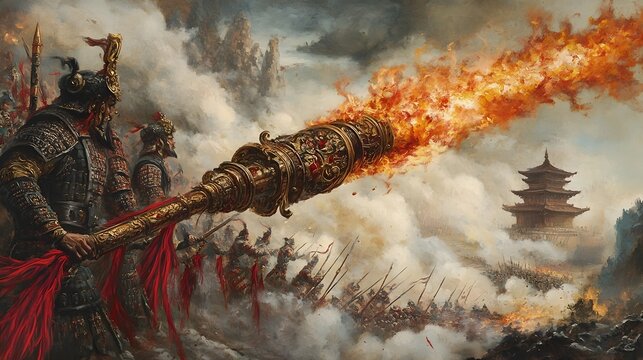
Fire Lance
The fire lance was the first gunpowder weapon to be held in the hand: a tube of bamboo or paper, packed with gunpowder and tied to a spear… Continued…
-
Frankish Francisca
The francisca is the throwing axe of the early Franks, the Germanic people who overran Roman Gaul in the fifth century and gave France its… Continued…
-
Han Crossbow
The Han crossbow was the mass-issue missile weapon of Chinese armies from the Warring States period through the Han dynasty, more than a… Continued…
-
Hand Cannon
The hand cannon is the first true firearm: a small bronze or iron barrel on a pole or stock, loaded with powder and ball and touched off by… Continued…
-
Holmegaard Bow
The Holmegaard bows are among the oldest complete bows in the world: self bows of elm, about 9,000 years old, recovered from the Holmegaard… Continued…
-
Katyusha Rocket Launcher
The Katyusha was a Soviet multiple rocket launcher of the Second World War. Its best-known form, the BM-13, carried rails for sixteen 132mm… Continued…
-
Korean Hwacha
The hwacha, or 'fire cart,' was a Korean multiple-rocket launcher of the Joseon dynasty: a two-wheeled wooden cart carrying a rack that… Continued…
-
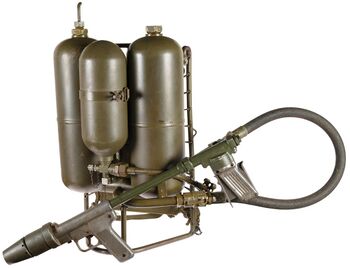
M2 Flamethrower
The M2 was the American portable flamethrower of the late Second World War and the Korean War. It was a backpack with two fuel tanks and a… Continued…
-
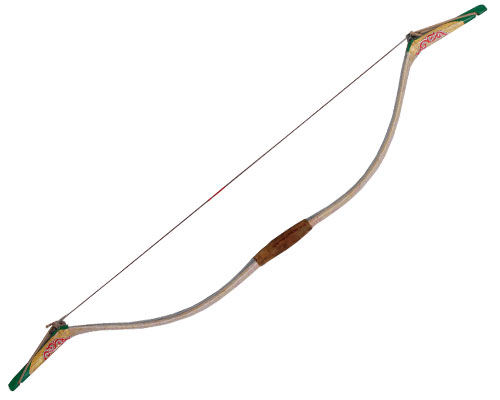
Mongol Composite Bow
The Mongol composite bow was the weapon that built the largest contiguous land empire in history: a short recurved bow of horn, wood, and… Continued…
-
Ottoman Composite Bow
The Ottoman composite bow was the short, strongly recurved bow of horn, wood and sinew used by Ottoman Turkish armies from the fourteenth… Continued…
-
Prehistoric Sling
The sling is one of the oldest and simplest projectile weapons: a pouch on two cords, whirled and released to throw a stone or a shaped… Continued…
-
Pyeonjeon
The pyeonjeon is a short Korean arrow, often called aegisal, or baby arrow, shot from an ordinary bow through a split wooden guide called a… Continued…
-
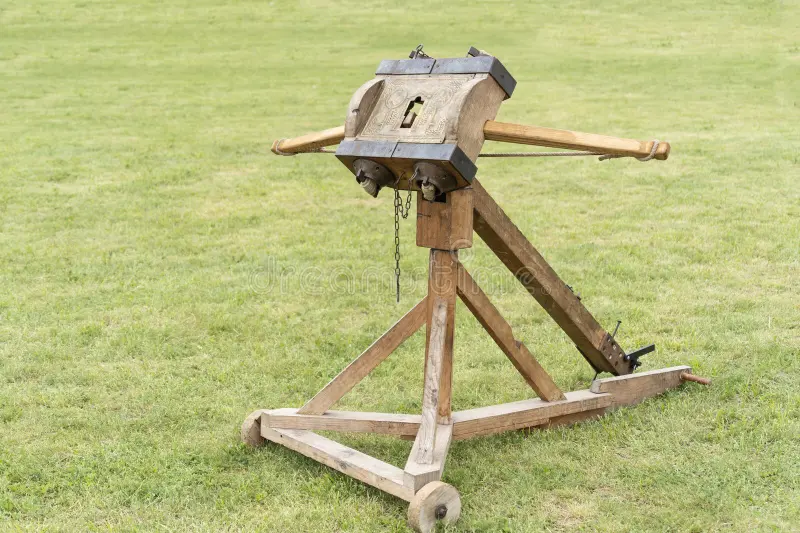
Roman Ballista
The ballista was the torsion artillery of the ancient world: a two-armed engine powered by twisted skeins of sinew or hair, shooting heavy… Continued…
-
Roman Pilum
The pilum was the Roman legionary's heavy javelin: a barbed iron head on a long, thin iron shank socketed into a wooden shaft, thrown in a… Continued…
-
Tanegashima
Tanegashima is the Japanese name for the matchlock arquebus, taken from the island of Tanegashima where, by the traditional account… Continued…
-
Tomahawk
The tomahawk is the light axe of the North American frontier: an Algonquian name, a Native American weapon concept, and a European-forged… Continued…
-
Wheellock Pistol
The wheellock was the first self-igniting firearm: a spring-driven steel wheel spun against pyrite to shower sparks into the pan, no… Continued…
-
Yumi
The yumi is the Japanese longbow, more than seven feet long and unusual among the world's bows because it is gripped well below the middle… Continued…