Era
Interwar
Development of semi-automatic and automatic weapons.
1918 – 1939
Overview
The twenty-one years between the World Wars were not a period of military stagnation — they were a period of intense theoretical and practical weapons development. Armies that had survived the trenches debated what the next war would look like and invested accordingly. The results, for those who got it right, were decisive advantages in 1939–1941.
The major developments were the maturation of the tank and combined arms doctrine, the development of military aviation into a strategic weapon, and the refinement of automatic infantry weapons that shifted the balance from the rifle to the light machine gun and submachine gun.
Infantry Weapons
Semi-Automatic Rifles
The inefficiency of bolt-action rifles under fire — requiring the shooter to take the eye from the sight to cycle the bolt — drove development of semi-automatic (self-loading) rifles.
- M1 Garand — Adopted by the US Army in 1936; 8-round en bloc clip; gas-operated; the first standard-issue semi-automatic rifle for any major military; General Patton called it "the greatest battle implement ever devised"
- Soviet SVT-38/40 — Soviet semi-automatic in 7.62×54mmR; reliable but complex to manufacture
- German Gewehr 41/43 — German semi-automatics; the G43 was a capable weapon that arrived too late in numbers
- Johnson M1941 — American semi-automatic; used by USMC Raiders
Submachine Guns
Submachine guns — firing pistol-caliber ammunition from a fully automatic, compact platform — became standard issue for vehicle crews, paratroopers, and close-quarters troops.
- Thompson M1921/M1928 ("Tommy Gun") — American; .45 ACP; 20 or 50-round drum/stick magazines; used by US military, Prohibition gangsters, and British forces
- German MP 28 — Improved MP 18; 9mm; influenced many subsequent designs
- Bergmann MP 35 — German; 9mm; used by SS and exported widely
- Finnish KP/-31 (Suomi) — 71-round drum; highly influential on Soviet SMG design
- Soviet PPD-34/38 — Soviet 7.62×25mm; Suomi-influenced drum magazine
Light Machine Guns
- Browning Automatic Rifle (BAR) — American; .30-06; 20-round magazine; served as the squad automatic weapon for US forces
- Bren gun — British .303; 30-round curved top-mounted magazine; highly accurate; became the standard Commonwealth LMG
- German MG 34 — The first general-purpose machine gun (GPMG); could be used as a light or heavy MG; 900 rounds/minute; fed by drum or belt
Pistols
- Browning Hi-Power (P35) — Designed by John Browning, completed by Dieudonné Saive at FN; 9mm; 13-round magazine; one of the most successful pistol designs ever made
- Walther PP/PPK — German double-action semi-automatic; influential design
- Walther P38 — German service pistol intended to replace the Luger; double-action trigger
Tanks and Armored Vehicles
Tank Doctrine Debate
Two schools emerged from WWI tank experience:
- Infantry support — Tanks attached to infantry to suppress machine guns (French and British orthodox view)
- Independent armored formations — Concentrated armor with motorized infantry and aircraft support (Guderian's Panzerwaffe concept, Fuller and Liddell Hart in Britain)
Germany adopted the second approach. The results were demonstrated in Poland (1939) and France (1940).
Notable Interwar Tanks
- Renault FT — WWI design still in service with many nations into WWII
- British Vickers Medium Mk II — Standard British tank of the 1920s
- Soviet T-26 — Light tank based on the Vickers 6-ton; widely exported
- Soviet BT series — Fast tanks emphasizing speed; precursor to the T-34
- German Panzerkampfwagen I and II — Training and light tanks; inadequate for frontline combat but the vehicles Panzer doctrine was built around
Aviation
Military aviation matured rapidly in the interwar period:
- Biplane to monoplane transition — By 1939, all major air forces were converting to all-metal monoplane fighters
- Dive bombing — The German Junkers Ju 87 Stuka and American Douglas Dauntless demonstrated precision ground attack
- Strategic bombing theory — Giulio Douhet argued that strategic bombing could win wars independently; the RAF's Bomber Command and US Air Corps built forces around this concept
- Carrier aviation — The US Navy and Imperial Japanese Navy developed carrier doctrine that would prove decisive in the Pacific
Artillery and Other Weapons
- German 88mm FlaK 18/36 — Designed as an anti-aircraft gun; proved devastatingly effective as an anti-tank and field gun; one of the most versatile weapons of the era
- Anti-tank rifles — Heavy rifles firing hardened projectiles to penetrate tank armor; effective in the early war, obsolete by 1942
- Rocket artillery — Soviet Katyusha and German Nebelwerfer multiple-launch rocket systems were developed in this period
This article is a stub. Contributions covering specific weapons, doctrinal developments, and national programs are welcome.
-
8.8 cm Flak
The 8.8 cm Flak was the German family of heavy anti-aircraft guns known to Allied soldiers simply as the 88. The Flak 18 of 1933 and the… Continued…
-
Bangalore Torpedo
The Bangalore torpedo is a long explosive charge made of steel tubes that can be joined end to end, pushed under barbed wire or across a… Continued…
-
Bofors 40 mm Gun
The Bofors 40 mm gun is a light anti-aircraft gun designed by the Swedish firm AB Bofors in the early 1930s. It fired a two-pound explosive… Continued…
-
Bren
The Bren was the light machine gun of the British and Commonwealth armies from 1938 until the 1990s: a Czech design from Brno… Continued…
-
Brodie Helmet
The Brodie helmet is the shallow, wide-brimmed steel helmet designed by John Leopold Brodie in 1915 and worn by British and Commonwealth… Continued…
-
Browning Hi-Power
The Browning Hi-Power is a 9x19mm semi-automatic pistol begun by John Browning in the 1920s and completed after his death by Dieudonne… Continued…
-
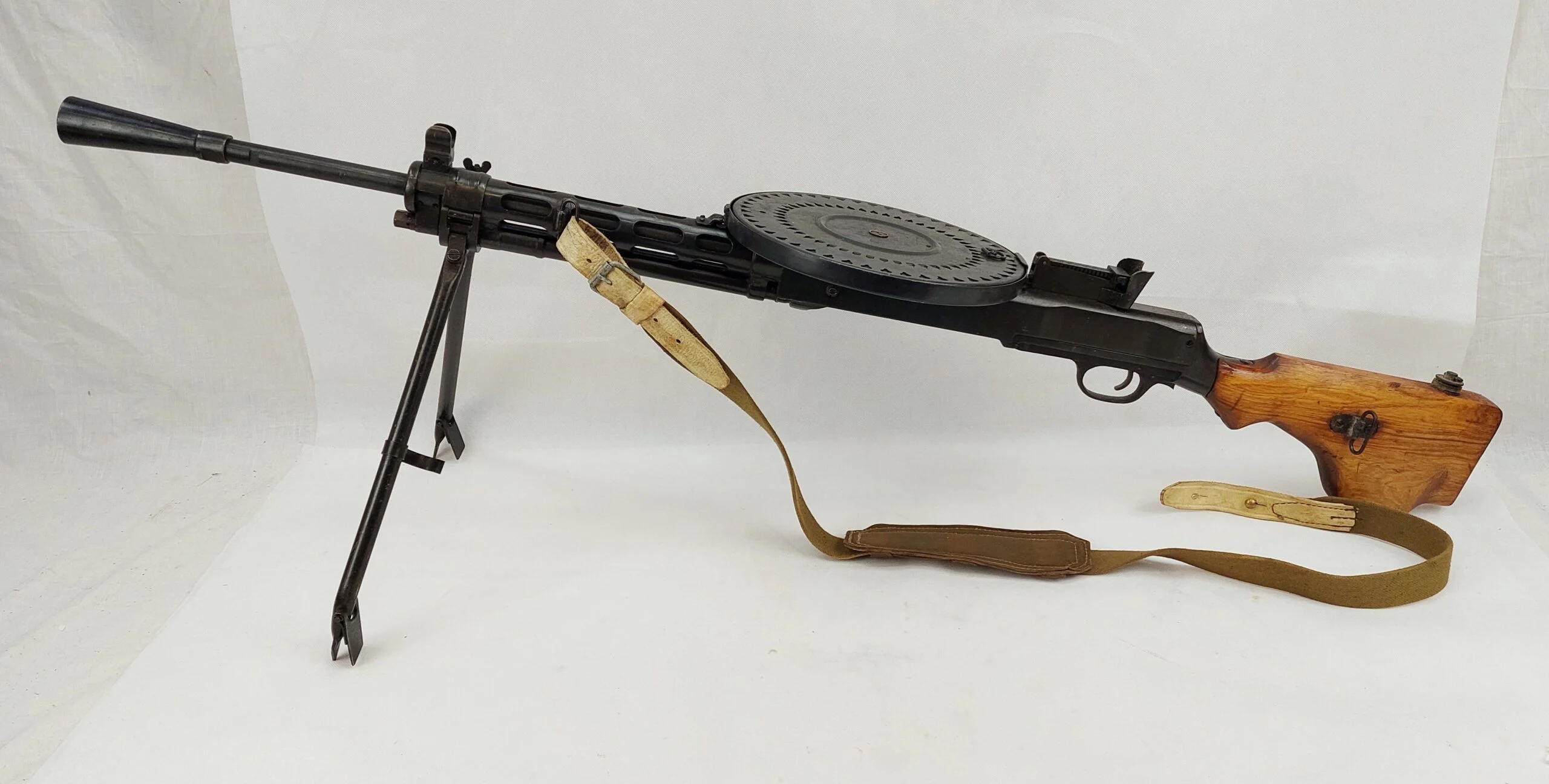
Degtyaryov DP-27
The DP-27 was the standard light machine gun of the Soviet Army from the late 1920s through the Second World War. Designed by Vasily… Continued…
-
French 75
The French 75, the Canon de 75 modèle 1897, was the first modern quick-firing field gun. A hydraulic and air recoil system let the barrel… Continued…
-
Hotchkiss M1914
The Hotchkiss M1914 was the standard heavy machine gun of the French army in the First World War. Made by the Hotchkiss company near Paris… Continued…
-
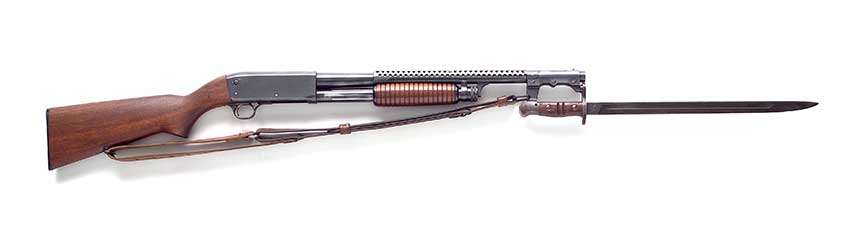
Ithaca 37
The Ithaca 37 is an American pump-action shotgun made by the Ithaca Gun Company of Ithaca, New York, from 1937. Based on a John Browning… Continued…
-
Kai Gunto
The kai gunto, 'navy military sword', was the sword of officers of the Imperial Japanese Navy from the late 1930s through the Second World… Continued…
-
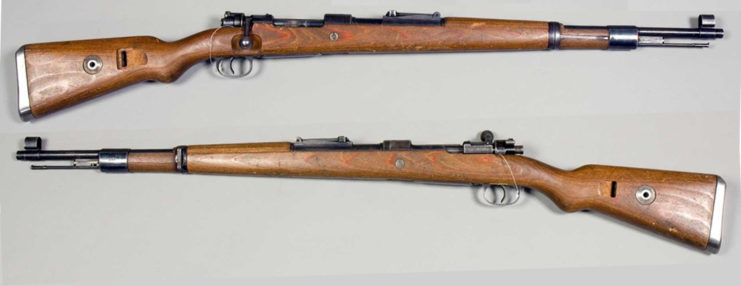
Karabiner 98k
The Karabiner 98k was the standard rifle of the German armed forces in the Second World War. Adopted in 1935, it was a shortened version of… Continued…
-
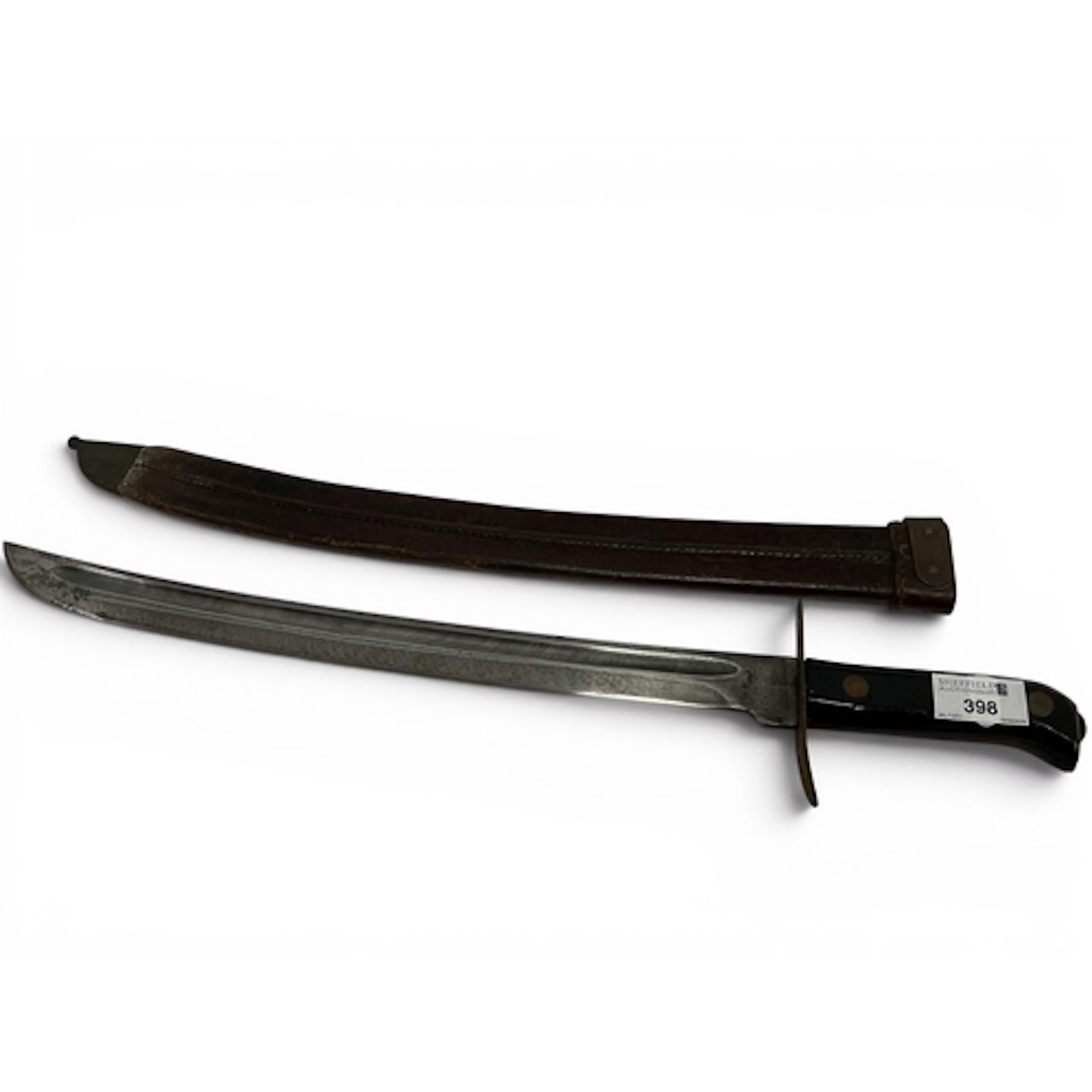
Klewang
The klewang is a single-edged short sword from the Indonesian archipelago, and the name of the Dutch military weapon developed from it.… Continued…
-
Lebel Model 1886
The Lebel Model 1886 was the first military rifle to fire smokeless powder, and it made every other army's rifle obsolete overnight. Its… Continued…
-
Lewis Gun
The Lewis gun was the British Empire's light machine gun of the First World War: an air-cooled, gas-operated gun with a distinctive fat… Continued…
-
Luger P08
The Luger P08 is the toggle-locked semi-automatic pistol of the German military through both World Wars, and for many the most recognizable… Continued…
-
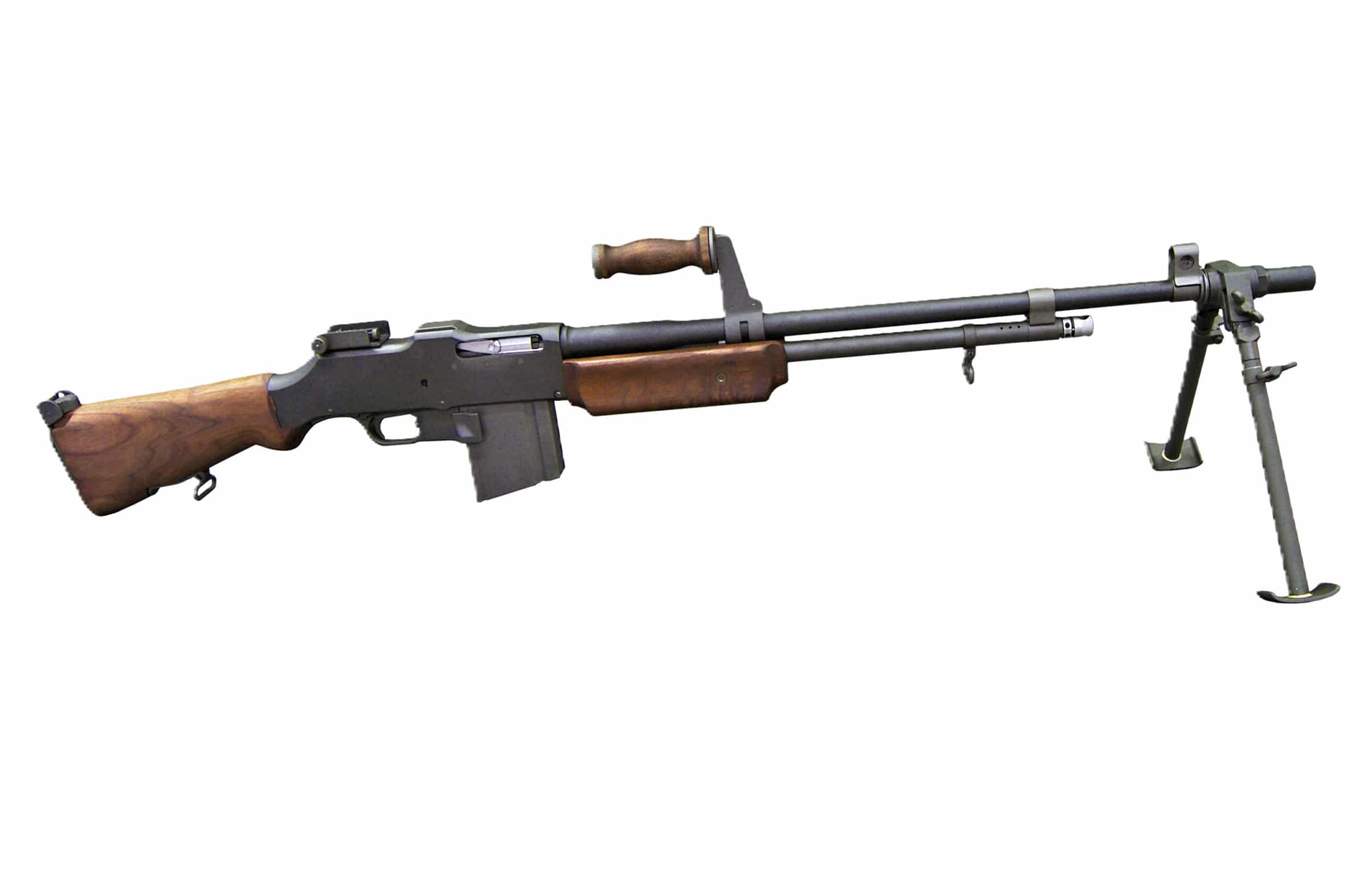
M1918 BAR
The Browning Automatic Rifle was John Moses Browning's shoulder-fired automatic weapon, adopted by the United States Army in 1918 and the… Continued…
-
M1919 Browning Machine Gun
The M1919 Browning is John Browning's water-cooled M1917 machine gun made air-cooled: a short-recoil, belt-fed .30-06 weapon that armed… Continued…
-
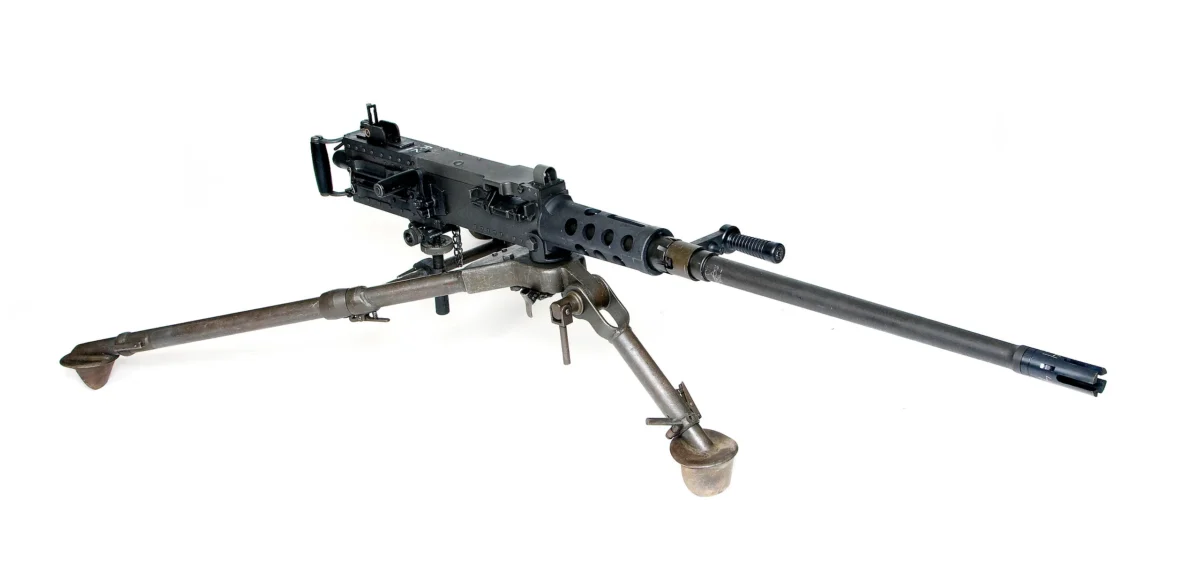
M2 Browning Machine Gun
The M2 is the American heavy machine gun of .50 caliber, designed by John Browning at the end of the First World War and adopted in its… Continued…
-
MG FF Cannon
The MG FF was a 20 mm aircraft cannon used by the German Luftwaffe from the late 1930s. It was a licensed version of the Swiss Oerlikon FF… Continued…
-
MP 18
The MP 18 was the first practical submachine gun to go into service: a light automatic weapon firing pistol cartridges, designed by Hugo… Continued…
-
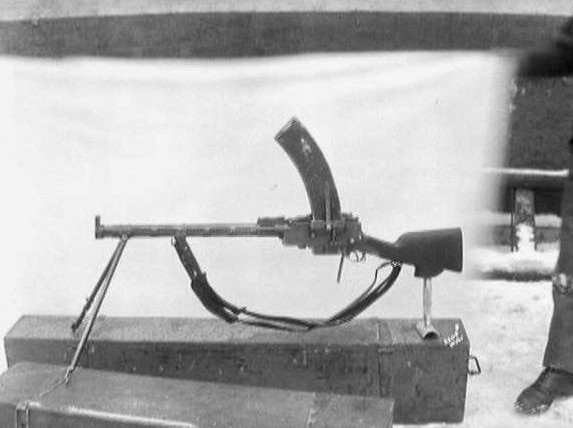
Madsen Machine Gun
The Madsen was a Danish light machine gun and the first weapon of its kind to be mass-produced, entering service in 1902. Light enough for… Continued…
-
Mark 13 Torpedo
The Mark 13 was the standard aerial torpedo of the United States Navy in the Second World War, carried by the TBD Devastator and TBF… Continued…
-
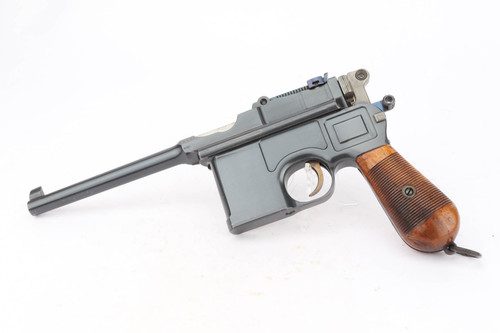
Mauser C96
The Mauser C96 is a German semi-automatic pistol that entered service in 1896, designed by the Feederle brothers at Mauser's Oberndorf… Continued…
-
Mills Bomb
The Mills bomb was the British Army's standard hand grenade from 1915 until the 1970s. Designed by the Birmingham engineer William Mills… Continued…
-
Mk 2 Fragmentation Grenade
The Mk 2 was the standard American fragmentation hand grenade from the end of the First World War into the Vietnam War. Its cast-iron body… Continued…
-
Model 24 Stielhandgranate
The Model 24 Stielhandgranate was the standard German hand grenade of the Second World War, the 'potato masher' of Allied soldiers. It had… Continued…
-
Molotov Cocktail
A Molotov cocktail is a glass bottle filled with gasoline or another flammable liquid, lit by a burning rag or a chemical igniter and… Continued…
-

Mosin-Nagant M/28-30
The Mosin-Nagant M/28-30 was a Finnish rifle made in the 1930s for the Suojeluskunta, the Civil Guard, a volunteer home-defense force. It… Continued…
-
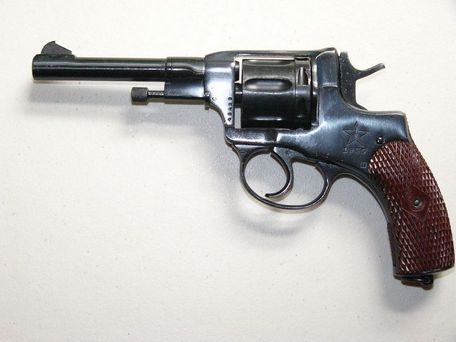
Nagant M1895 Pistol
The Nagant M1895 is the seven-shot Belgian-designed service revolver of Imperial Russia and the Soviet Union, unique among military… Continued…
-
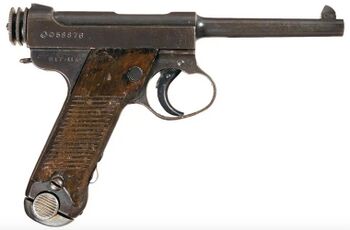
Nambu Type 14
The Nambu Type 14 was the standard service pistol of Japan in the Second World War. Designed by Kijirō Nambu's team and adopted in 1925… Continued…
-
Pattern 1907 Bayonet
The Pattern 1907 was the British Army's sword bayonet for the Short Magazine Lee-Enfield rifle through both world wars. Its 17-inch blade… Continued…
-
SC 250 Bomb
The SC 250 was the standard German 250 kg general-purpose bomb of the Second World War. The letters stood for Sprengbombe Cylindrisch… Continued…
-
Schwarzlose Machine Gun
The Schwarzlose was the standard heavy machine gun of the Austro-Hungarian army in the First World War. Designed by the German engineer… Continued…
-
Steyr-Mannlicher M1895
The Steyr-Mannlicher M1895 was the service rifle of the Austro-Hungarian army through the First World War. Designed by Ferdinand… Continued…
-
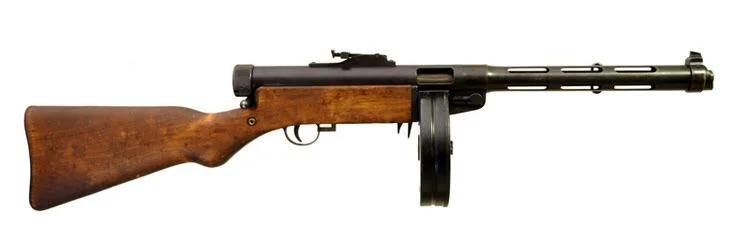
Suomi KP/-31
The Suomi KP/-31 was the Finnish Army's submachine gun in the Second World War. Designed by Aimo Lahti and made by the Tikkakoski company… Continued…
-
Swedish Military Mora Knife
The Mora knife is the plain Swedish sheath knife made in and around Mora, in the province of Dalarna, and it was the everyday knife of the… Continued…
-
Thompson Submachine Gun
The Thompson was America's first submachine gun: a .45 ACP automatic designed as a trench broom for a war that ended before it shipped.… Continued…
-
Type 89 Grenade Discharger
The Type 89 grenade discharger was a light 50mm mortar used by the Imperial Japanese Army from 1929 through the Second World War. It could… Continued…
-
Type 91 Torpedo
The Type 91 was the aerial torpedo of the Imperial Japanese Navy in the Second World War. Adopted in 1931, it was smaller and faster than… Continued…
-
Type 92 Heavy Machine Gun
The Type 92 was the standard heavy machine gun of the Imperial Japanese Army from the early 1930s to 1945. An air-cooled, gas-operated gun… Continued…
-
Type 96 Light Machine Gun
The Type 96 was the standard light machine gun of the Imperial Japanese Army in the early years of the Second World War. Designed by Kijirō… Continued…
-
Type 97 Hand Grenade
The Type 97 was the standard hand grenade of the Imperial Japanese Army and Navy in the Second World War. Adopted in 1937, it had a grooved… Continued…
-
Vickers Machine Gun
The Vickers was the British Army's medium machine gun for more than fifty years. Adopted in 1912, it was a lighter, improved version of the… Continued…
-
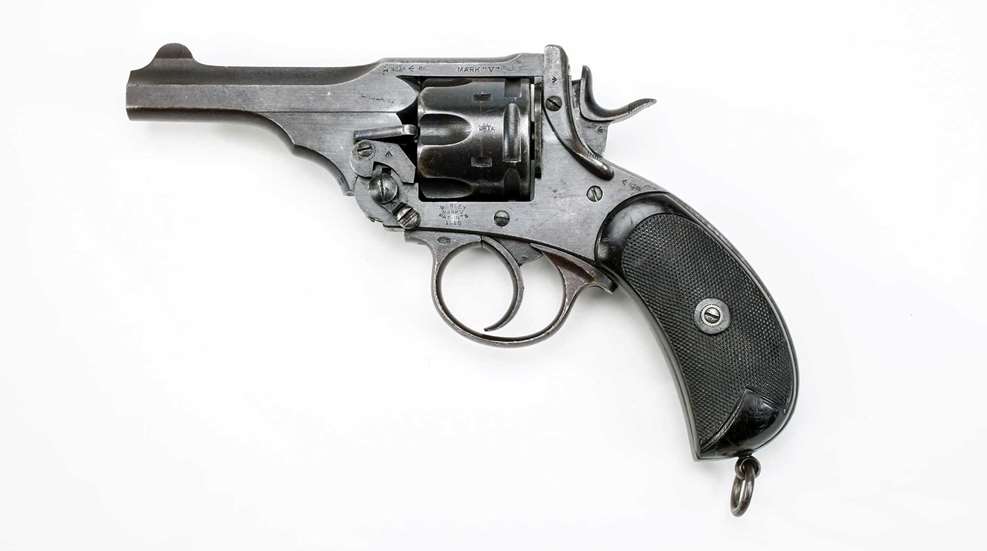
Webley Revolver
The Webley revolver was the British service sidearm from 1887 until after the Second World War. A top-break revolver made by Webley & Scott… Continued…
-
Winchester Model 1897
The Winchester Model 1897 is a pump-action shotgun designed by John Moses Browning and made by Winchester from 1897 to 1957. An improved… Continued…