Force
Vikings
Norse raiders, traders, and settlers whose seamanship and arms carried them from North America to Constantinople.
Origins
The Vikings were Scandinavia's seaborne raiders, traders and settlers, whose three centuries of expansion, roughly from the raid on Lindisfarne in 793 to Stamford Bridge in 1066, reshaped Europe from Ireland to the Volga. They were not a nation but a phenomenon: Norse farmers and chieftains from what became Norway, Denmark and Sweden, for whom the raiding season was economy, politics and reputation at once. Why the raids began when they did is still debated. Historians point to rich, poorly defended monasteries and trading towns, better ships, competition for power at home and, perhaps, a shortage of land or of marriageable wealth. (See Viking Age.)
Organization & Training
Viking forces were built around people, not institutions. A chieftain or king kept a household of sworn warriors, the hird or lið, who ate at his table and shared his plunder. For bigger expeditions several leaders combined their crews, and in 865 the "Great Heathen Army" of the Anglo-Saxon Chronicle came to stay, conquering most of the English kingdoms. Crews were counted by ships, and a ship's crew was also a fighting unit. Boys learned weapons, riding, rowing and swimming as part of growing up, and some warriors joined bands with their own rules, like the Jomsvikings of the sagas. In later centuries Scandinavian kings organized a naval levy, the leidang, to raise ships and men.
Weapons & Equipment
The longship was the real weapon: shallow enough for rivers, fast enough for open sea, able to land warbands wherever water reached before defenders could gather. Almost every free man owned the Viking Spear and the Viking Round Shield, and most carried the Seax, a single-edged knife. The Viking Battle Axe came in every grade up to the great two-handed Dane Axe. Swords were costly, and the best, like the Ulfberht Sword, used imported Frankish blades. Only the wealthy could afford the Mail Hauberk and an iron helmet like the Gjermundbu Helmet, the only near-complete Viking Age helmet ever found. There is no evidence for horned helmets. Bows were also widely used.
Notable Actions
Tactics were pragmatic: raid, fight in a shield wall when cornered, and take ransom or tribute whenever possible. Vikings besieged Paris in 885-886, conquered much of England, and took the tribute called Danegeld after victories like the Battle of Maldon in 991. The Danish king Cnut ruled England, Denmark and Norway in the early eleventh century. In 1066 the Norwegian king Harald Hardrada invaded England and was killed at Stamford Bridge, just weeks before the Battle of Hastings, where the descendants of Viking settlers in Normandy won the English crown.
Legacy
The reach still astonishes. Dublin, Normandy and the Danelaw were founded or seized. Iceland and Greenland were settled, and North America was reached at L'Anse aux Meadows in Newfoundland around 1000. Norsemen traveled the rivers of Russia to Byzantium, where they served emperors as the Varangian Guard. By 1100 the raiders' homelands had become Christian kingdoms, but the Icelandic sagas kept the age alive, and few warrior cultures hold the modern imagination as completely.
Battles & Operations
-
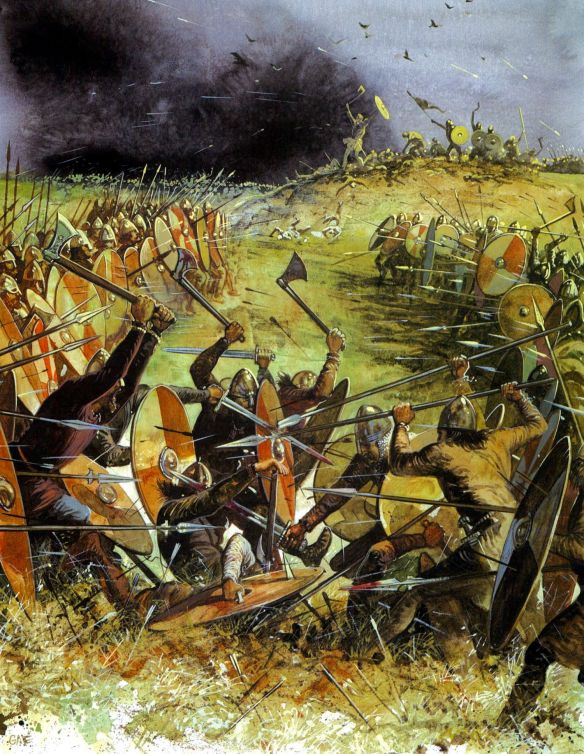
Battle of Maldon (10 August 991)
The Battle of Maldon, fought in August 991 on the Blackwater estuary near Maldon in Essex, pitted Byrhtnoth, ealdorman of Essex, and the… Continued…
-
The Battle of Stamford Bridge (25 September 1066)
The Battle of Stamford Bridge was fought on 25 September 1066 near York between the English army of King Harold Godwinson and a Norwegian… Continued…
Weapons
-
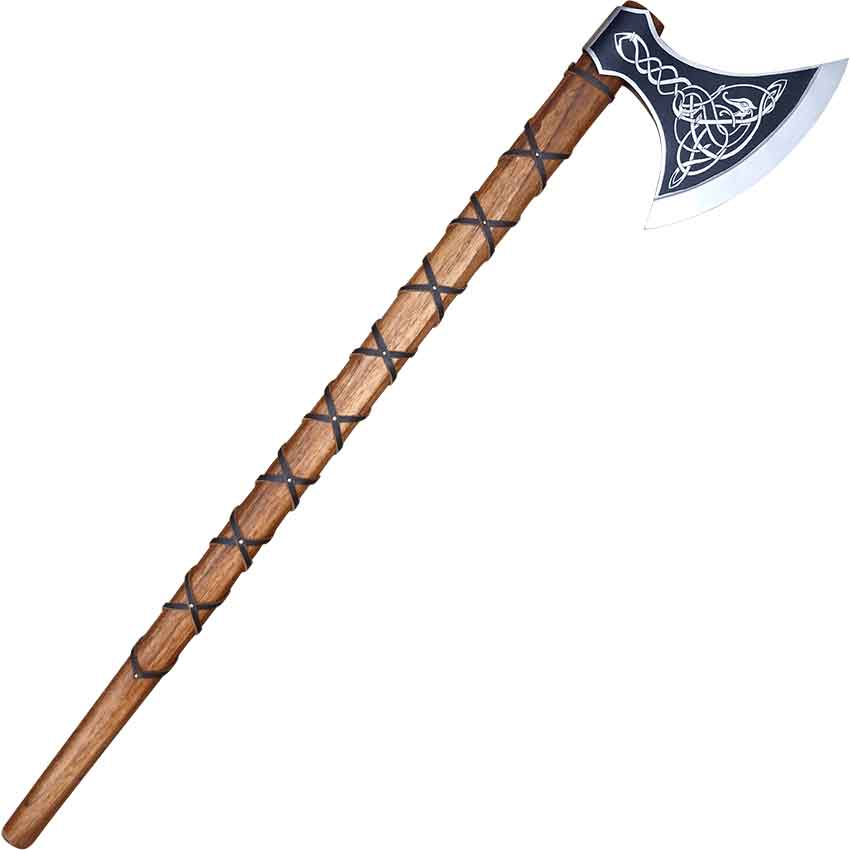
Dane Axe
The Dane axe is the great two-handed axe of the Viking Age and its aftermath: a thin, broad, crescent-edged head on a haft about a meter… Continued…
-
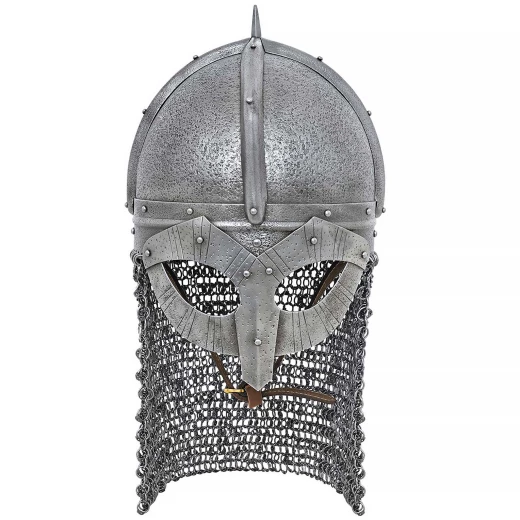
Gjermundbu Helmet
The Gjermundbu helmet is the only nearly complete helmet known from the Viking Age. It was found in 1943 in a tenth-century burial mound on… Continued…
-
Mail Hauberk
The mail hauberk was the principal body armor of European warriors for most of the Middle Ages: a long shirt of thousands of interlinked… Continued…
-
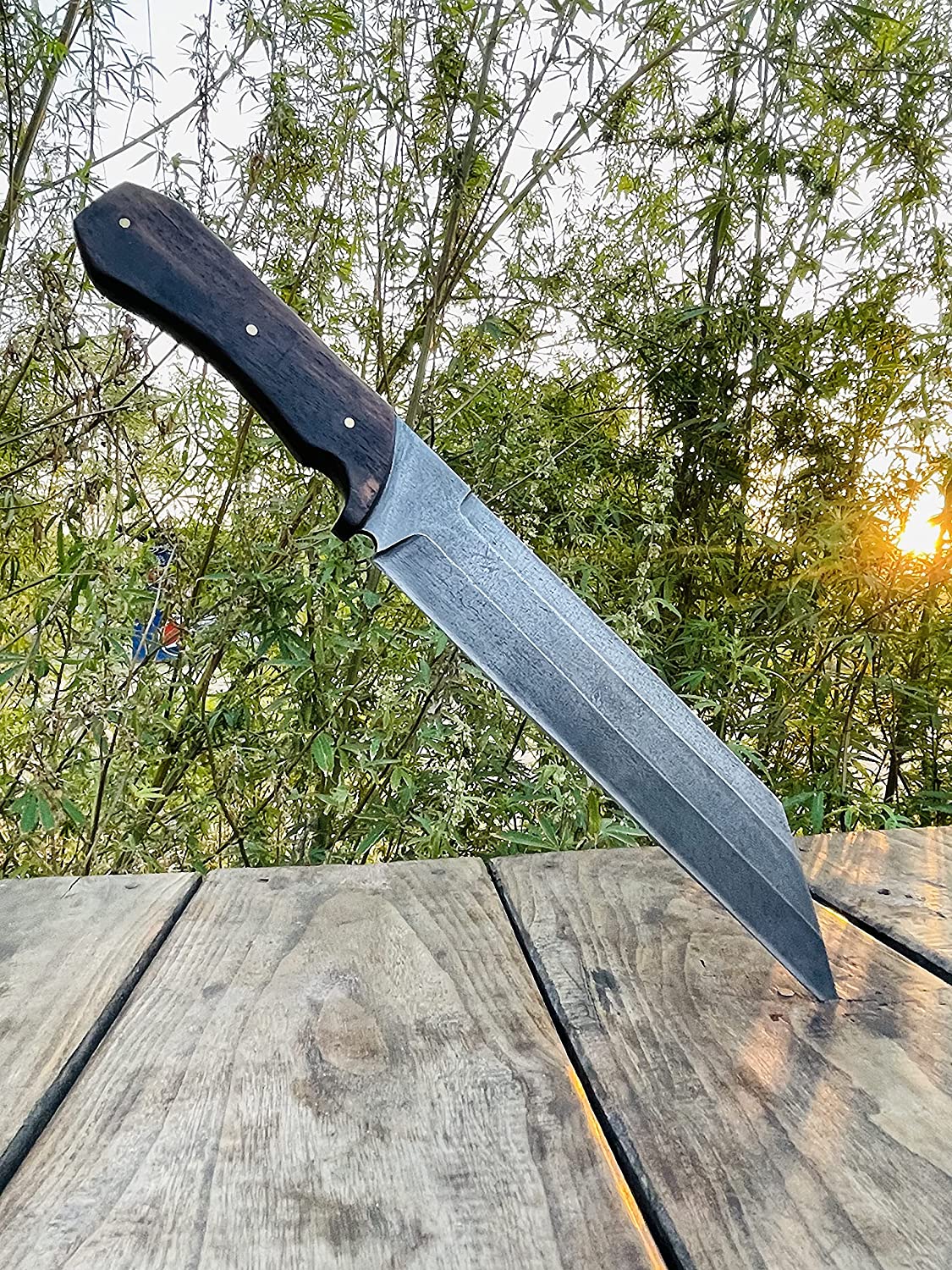
Seax
The seax is the single-edged knife of the early medieval Germanic peoples, carried from the fifth to the eleventh century by Franks… Continued…
-
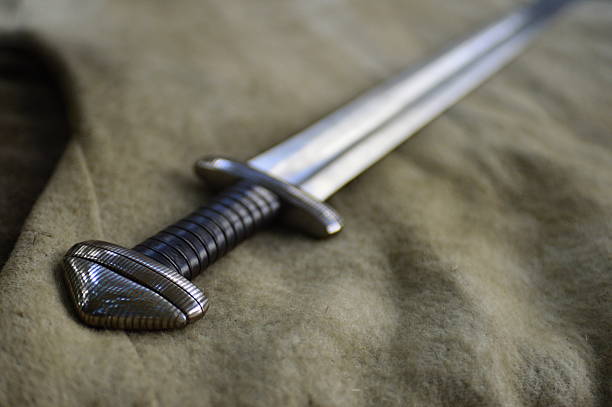
Ulfberht Sword
The Ulfberht swords are a group of about 170 early medieval sword blades inscribed with the name +VLFBERH+T, made between the ninth and… Continued…
-
Viking Battle Axe
The battle axe was the most distinctively Norse weapon of the Viking Age. From the one-handed bearded axe that doubled as a farm tool to… Continued…
-
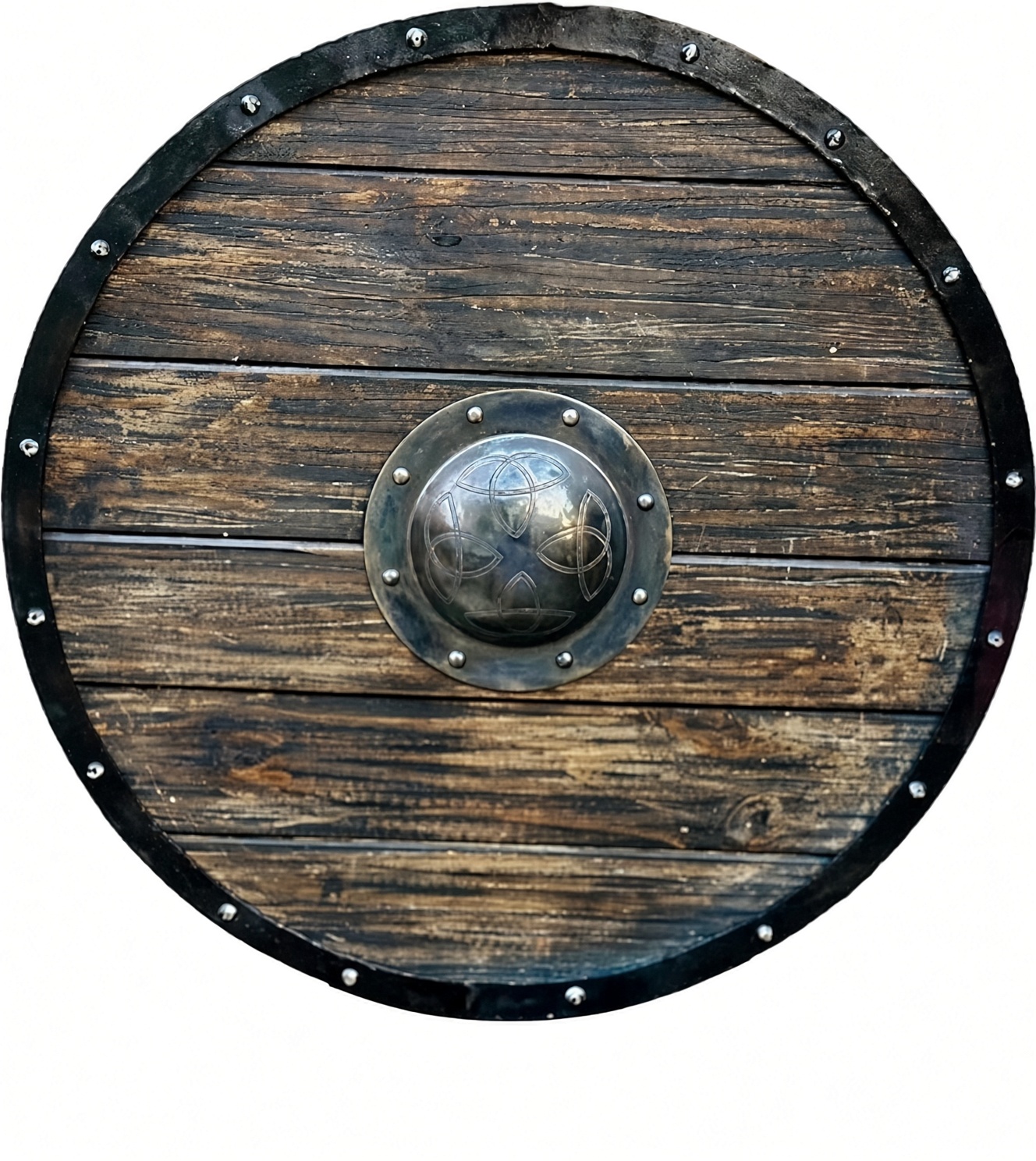
Viking Round Shield
The round shield was the main defense of the Viking warrior: a disc of wooden boards, usually about 80 to 95 centimeters across, with an… Continued…
-
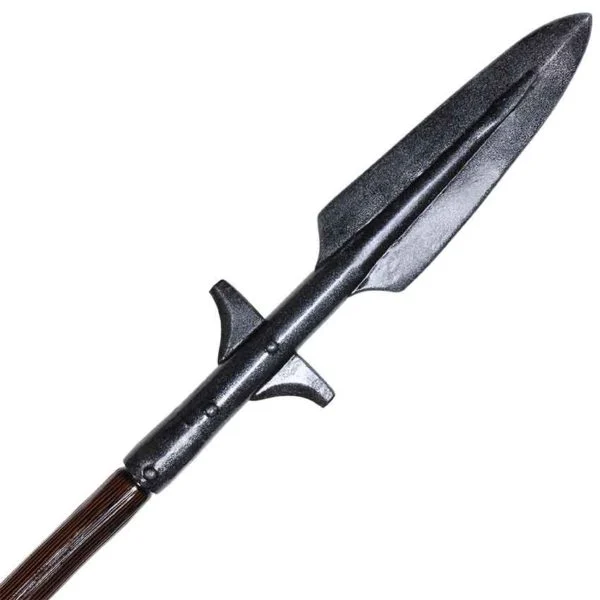
Viking Spear
The spear was the most common weapon of the Viking Age, carried by farmers and kings alike. It had an iron head, socketed onto an ash shaft… Continued…