Era
Cold War / Modern
Assault rifles, guided weapons, modern military arms.
1945 – 1991
Overview
The Cold War was defined by the paradox of nuclear deterrence: two superpowers capable of destroying each other — and potentially all human civilization — chose instead to compete through proxy wars, arms races, and technological competition. The direct confrontation that never came shaped every weapon system developed in this period.
Both the United States and Soviet Union poured vast resources into weapons development. The results included the assault rifle (which armed most of the world's militaries and insurgencies), precision-guided munitions, nuclear submarines, intercontinental ballistic missiles, jet aviation, and the first guided anti-tank and anti-aircraft systems available to infantry.
The Assault Rifle Era
The assault rifle — a selective-fire weapon firing an intermediate cartridge from a detachable magazine — became the universal infantry weapon of the Cold War period.
Soviet / Warsaw Pact
- AK-47 (Avtomat Kalashnikova 1947) — Designed by Mikhail Kalashnikov; 7.62×39mm; 30-round magazine; gas-operated rotating bolt; perhaps the most influential weapon design in history; estimated 100+ million produced; simple, robust, and effective in adverse conditions
- AKM — Modernized AK-47; stamped receiver; lighter; adopted 1959
- AK-74 — 5.45×39mm intermediate cartridge; adopted 1974; reduced recoil; still standard Russian service rifle
- RPK — AK-based light machine gun; 40 or 75-round magazine; squad automatic weapon
- PKM — 7.62×54mmR general-purpose machine gun; belt-fed; still widely used globally
American / NATO
- M14 — 7.62×51mm NATO; 20-round magazine; semi-automatic with selective fire; replaced by the M16
- M16 (AR-15) — 5.56×45mm; designed by Eugene Stoner; adopted 1964; initial reliability problems in Vietnam; subsequently refined; still in service as M16A4
- M4 Carbine — Shortened M16; 14.5" barrel; the current US standard infantry rifle
- M249 SAW — 5.56mm belt-fed light machine gun; squad automatic weapon
- M60 machine gun — 7.62mm GPMG; replaced in most roles by the M240
Handguns
- Soviet Makarov PM — 9×18mm; simple, reliable; Soviet and Warsaw Pact standard sidearm
- American M1911A1 — .45 ACP; continued in US service until 1985
- Beretta M9 (92FS) — 9mm; 15-round magazine; replaced the M1911 in US service 1985; NATO standard
- Glock 17 — Austrian polymer-framed 9mm; adopted by many NATO and civilian agencies; transformed handgun design
Sniper Rifles
- Soviet SVD Rifle (Dragunov) — 7.62×54mmR; 10-round magazine; designated marksman rifle; widely exported
- American M24 SWS — Remington 700 action in a precision chassis; 7.62×51mm
- Barrett M82 — .50 BMG semi-automatic anti-materiel rifle; can engage light vehicles and equipment at over a kilometer
Anti-Tank Weapons
Guided Missiles
- Soviet 9M14 Malyutka (AT-3 Sagger) — Wire-guided ATGM; used with devastating effect in the 1973 Yom Kippur War
- American BGM-71 TOW — Wire-guided heavy ATGM; vehicle and helicopter mounted; still in use
- American FGM-77 Dragon — Portable infantry ATGM
- FGM-148 Javelin — Fire-and-forget infrared-guided ATGM; "top attack" mode strikes tank roof armor
Recoilless Weapons
- RPG-7 — Soviet rocket-propelled grenade; introduced 1961; perhaps the most widely used anti-tank weapon in history; still in production and combat use worldwide
- American M72 LAW — Single-shot disposable rocket launcher; 66mm; replaced the bazooka
Air Defense
- Soviet SA-7 Grail (9K32 Strela) — First practical MANPADS (man-portable air defense system); shoulder-fired heat-seeking missile
- American FIM-92 Stinger — Improved MANPADS; infrared/UV guidance; used by Afghan Mujahideen against Soviet helicopters with significant effect
Nuclear Weapons
Both superpowers developed thermonuclear weapons (hydrogen bombs) orders of magnitude more powerful than the Hiroshima bomb, along with delivery systems including:
- ICBMs — Intercontinental ballistic missiles capable of reaching any point on Earth in 30 minutes
- SLBMs — Submarine-launched ballistic missiles; virtually invulnerable second-strike weapons
- Strategic bombers — B-52 Stratofortress (US), Tu-95 Bear (Soviet)
The doctrine of Mutually Assured Destruction (MAD) — that a nuclear first strike would guarantee a devastating response — maintained an uneasy peace between the superpowers.
Precision-Guided Munitions
The Vietnam War and subsequent conflicts drove development of precision weapons:
- Laser-guided bombs (LGBs) — First used in Vietnam; dramatically improved strike accuracy
- AGM-65 Maverick — Air-to-ground missile; TV or infrared guided; effective against armor
- Cruise missiles — BGM-109 Tomahawk; terrain-following guidance; accurate to meters at ranges exceeding 1,500 km
This article is a stub. Contributions covering specific weapons systems, conflicts, and technological developments are welcome.
Battles & Operations
-
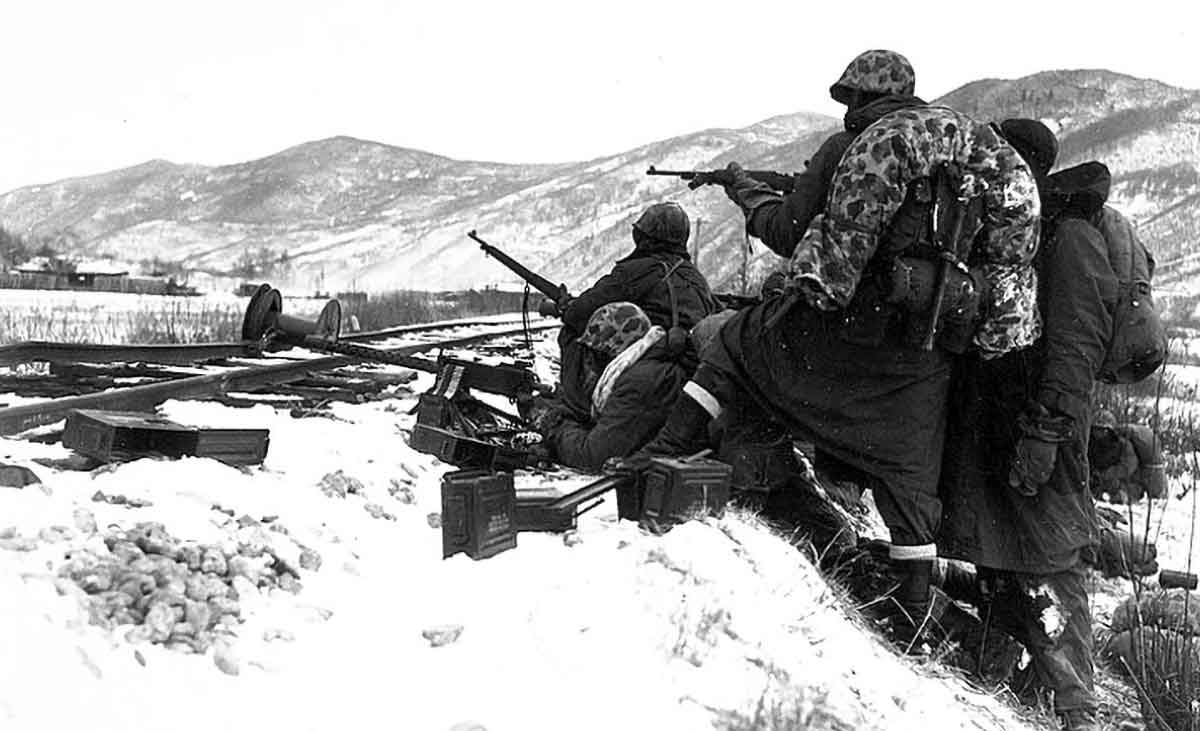
Battle of Chosin Reservoir (27 November - 13 December 1950)
The Battle of Chosin Reservoir was fought in the mountains of northeast Korea from late November to mid-December 1950. Chinese armies… Continued…
-
Rhodesian Bush War (4 July 1964 - 21 December 1979)
The Rhodesian Bush War was fought from 1964 to 1979 between the government of Rhodesia, which had declared independence from Britain in… Continued…
-
Battle of Ia Drang (14-18 November 1965)
The Battle of Ia Drang, fought from 14 to 18 November 1965 in the Central Highlands of South Vietnam, was the first major battle between… Continued…
-
Battle of Huế (31 January - 2 March 1968)
The Battle of Huế, fought from 31 January to 2 March 1968, was the longest and bloodiest battle of the Tet Offensive. North Vietnamese and… Continued…
-
Battle of Khe Sanh (21 January - 9 July 1968)
The Battle of Khe Sanh was a 77-day North Vietnamese siege of a US Marine Corps combat base near the Laotian border and the Demilitarized… Continued…
-
The Troubles (October 1968 - 10 April 1998)
The Troubles was a thirty-year conflict in Northern Ireland between republican paramilitaries seeking a united Ireland, chiefly the… Continued…
-
Battle of Mogadishu (3-4 October 1993)
The Battle of Mogadishu was fought on 3 and 4 October 1993 in the Somali capital between the American special operations force Task Force… Continued…
Weapons
-
AK-47
The AK-47 is the most produced firearm in human history: Mikhail Kalashnikov's gas-operated assault rifle in 7.62x39mm, built around loose… Continued…
-
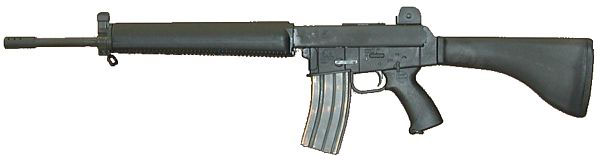
Armalite AR-18
The Armalite AR-18 is a 5.56mm select-fire rifle designed in 1963 by Arthur Miller and George Sullivan at Armalite in Costa Mesa… Continued…
-
Bangalore Torpedo
The Bangalore torpedo is a long explosive charge made of steel tubes that can be joined end to end, pushed under barbed wire or across a… Continued…
-
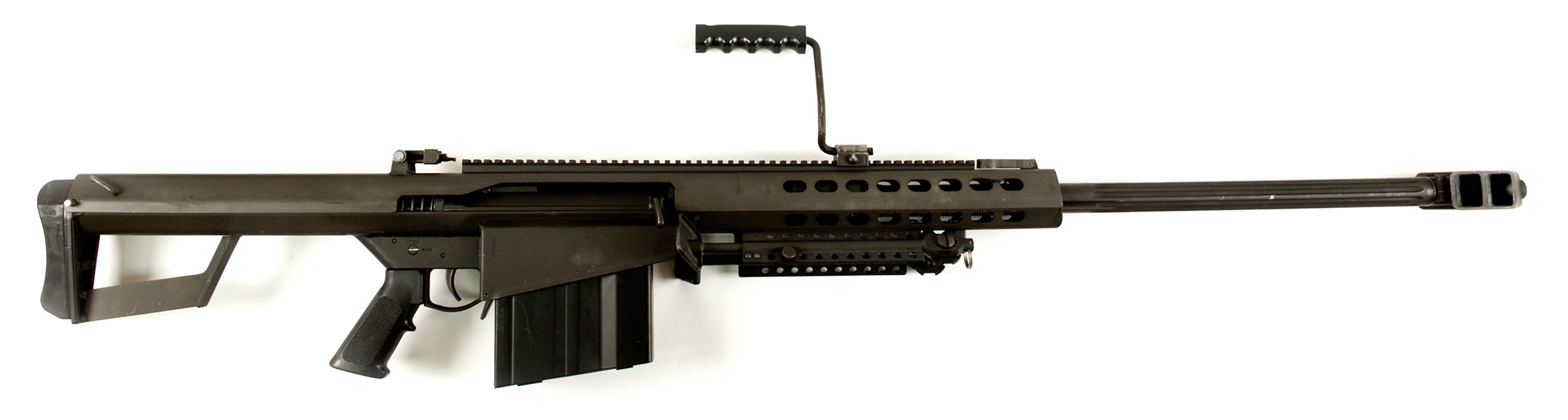
Barrett M82
The Barrett M82 is a semi-automatic rifle chambered for the .50 BMG machine-gun cartridge, designed by Ronnie Barrett in Tennessee in the… Continued…
-
Bazooka
The bazooka was the American 2.36-inch shoulder-fired rocket launcher of the Second World War, built as the M1, M1A1 and M9. Introduced in… Continued…
-
Beretta BM59 Rifle
The Beretta BM59 is the Italian answer to the same question the M14 answered in America: how to turn the M1 Garand into a select-fire… Continued…
-
Beretta M9
The Beretta M9 is the 9 mm semi-automatic pistol adopted by the United States armed forces in 1985 to replace the .45 caliber M1911A1. It… Continued…
-
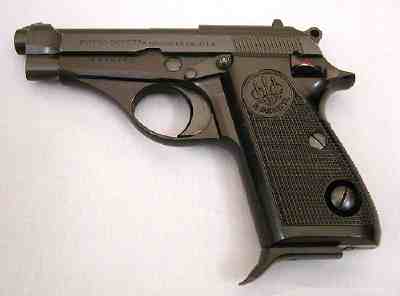
Beretta Model 70 (and Variants)
The Beretta Model 70 (also known as the Puma, among several other, less common, marketing names) and variants are a series of classic 20th… Continued…
-
Bofors 40 mm Gun
The Bofors 40 mm gun is a light anti-aircraft gun designed by the Swedish firm AB Bofors in the early 1930s. It fired a two-pound explosive… Continued…
-
Bren
The Bren was the light machine gun of the British and Commonwealth armies from 1938 until the 1990s: a Czech design from Brno… Continued…
-
Browning Hi-Power
The Browning Hi-Power is a 9x19mm semi-automatic pistol begun by John Browning in the 1920s and completed after his death by Dieudonne… Continued…
-
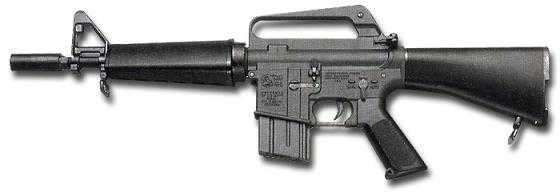
CAR-15
CAR-15 was Colt's name, from the mid-1960s, for a family of weapons built on the AR-15 and M16 rifle, and soldiers came to use it for the… Continued…
-
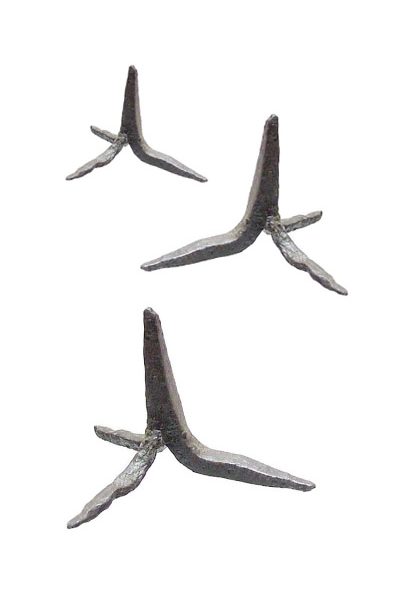
Caltrops
A caltrop is a small iron device of four spikes joined at the center so that however it lands, one spike always points up. Scattered on the… Continued…
-
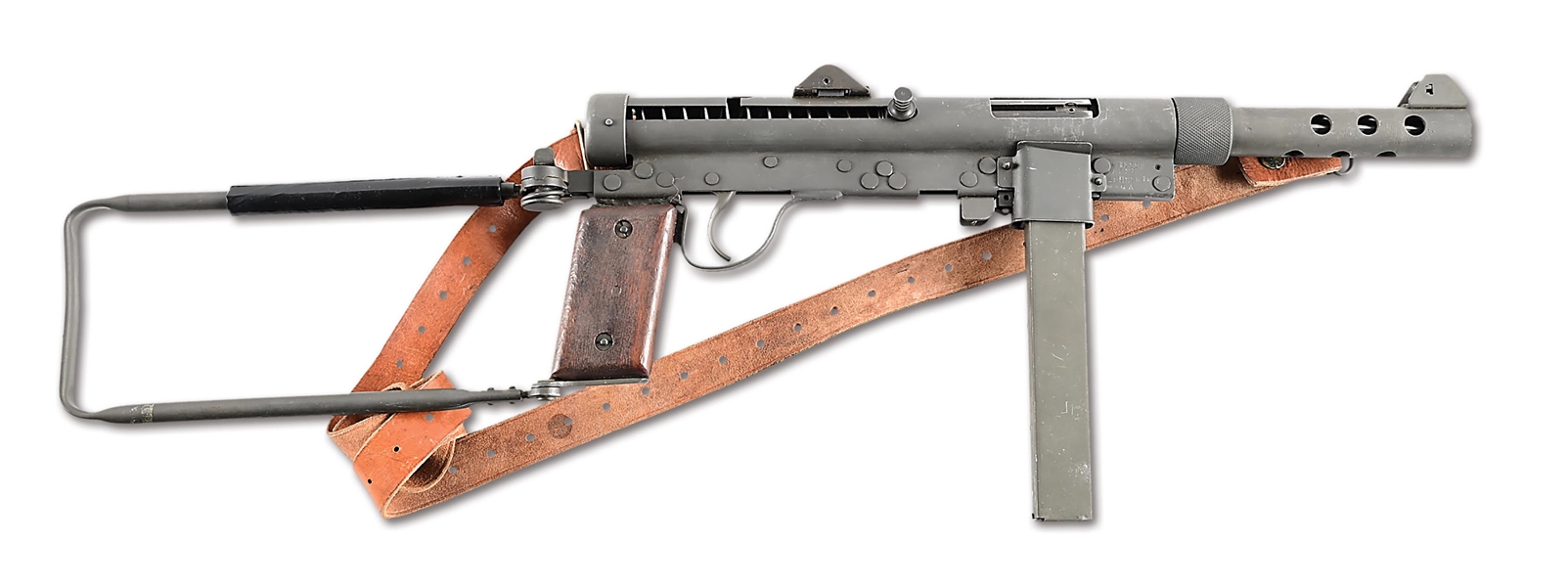
Carl Gustaf m/45
The Carl Gustaf m/45 is a Swedish 9mm submachine gun adopted in 1945 and made at the Carl Gustafs Stads Gevärsfaktori in Eskilstuna.… Continued…
-
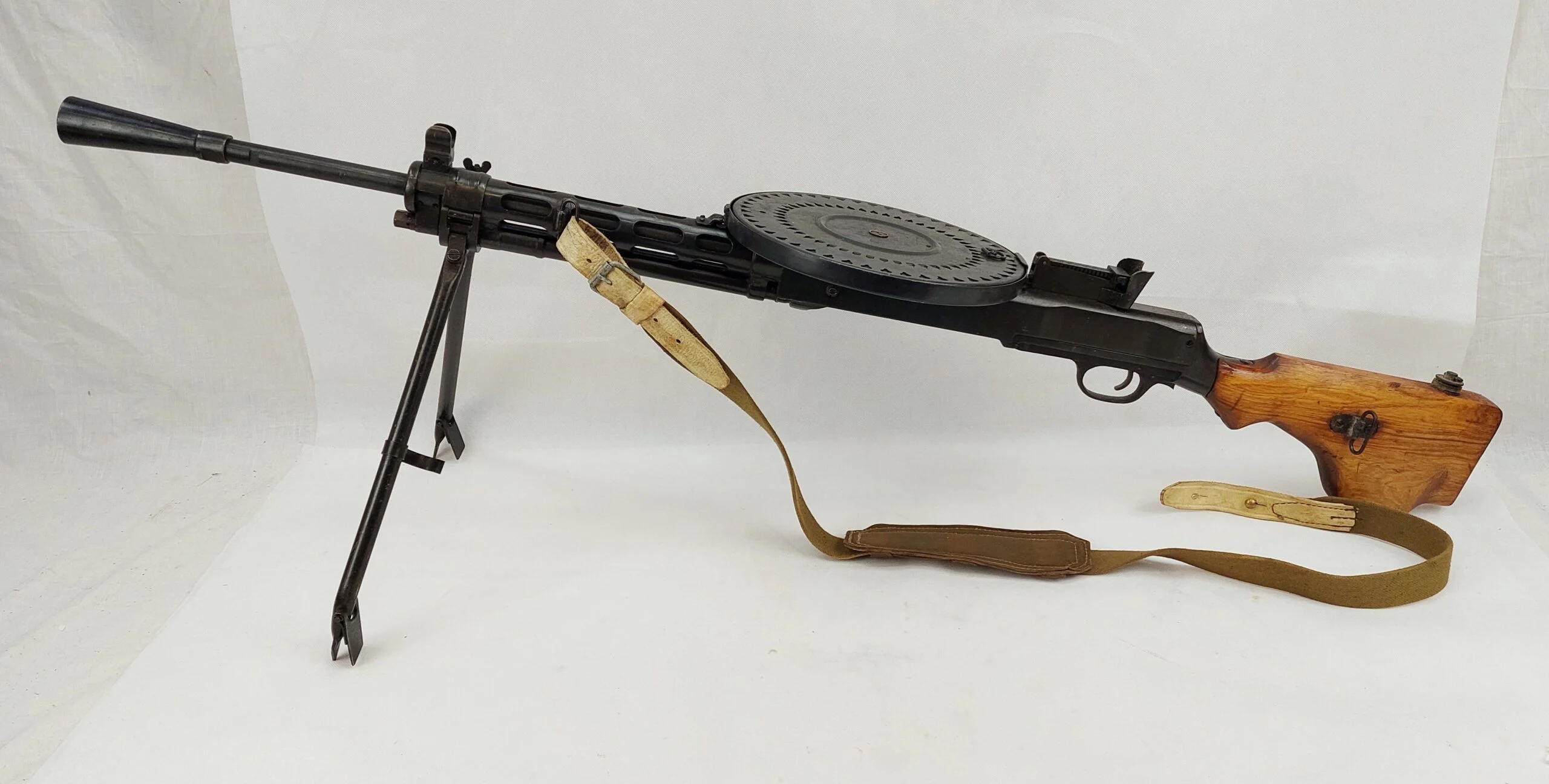
Degtyaryov DP-27
The DP-27 was the standard light machine gun of the Soviet Army from the late 1920s through the Second World War. Designed by Vasily… Continued…
-
FAMAS
The FAMAS is the French army's bullpup assault rifle, adopted in 1978 and in service for four decades. Made at the Saint-Étienne arms… Continued…
-
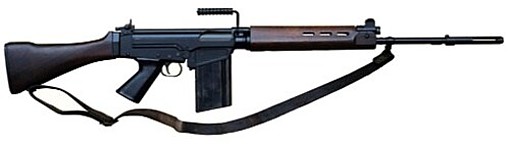
FN FAL
The FN FAL — Fusil Automatique Léger, or light automatic rifle — was the most widely adopted battle rifle of the Cold War. Designed by… Continued…
-
FN MAG
The FN MAG is a Belgian general-purpose machine gun designed by Ernest Vervier at Fabrique Nationale and introduced in 1958. It fires… Continued…
-
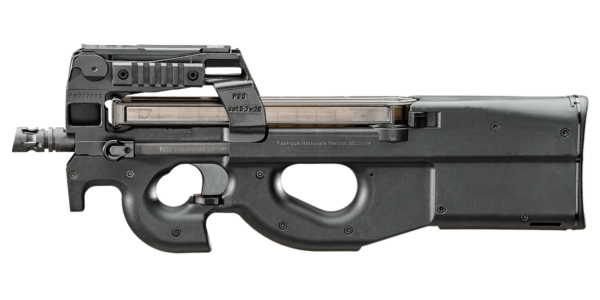
FN P90
The FN P90 is a Belgian personal defense weapon designed by FN Herstal in the late 1980s to give drivers, gunners and other rear-echelon… Continued…
-
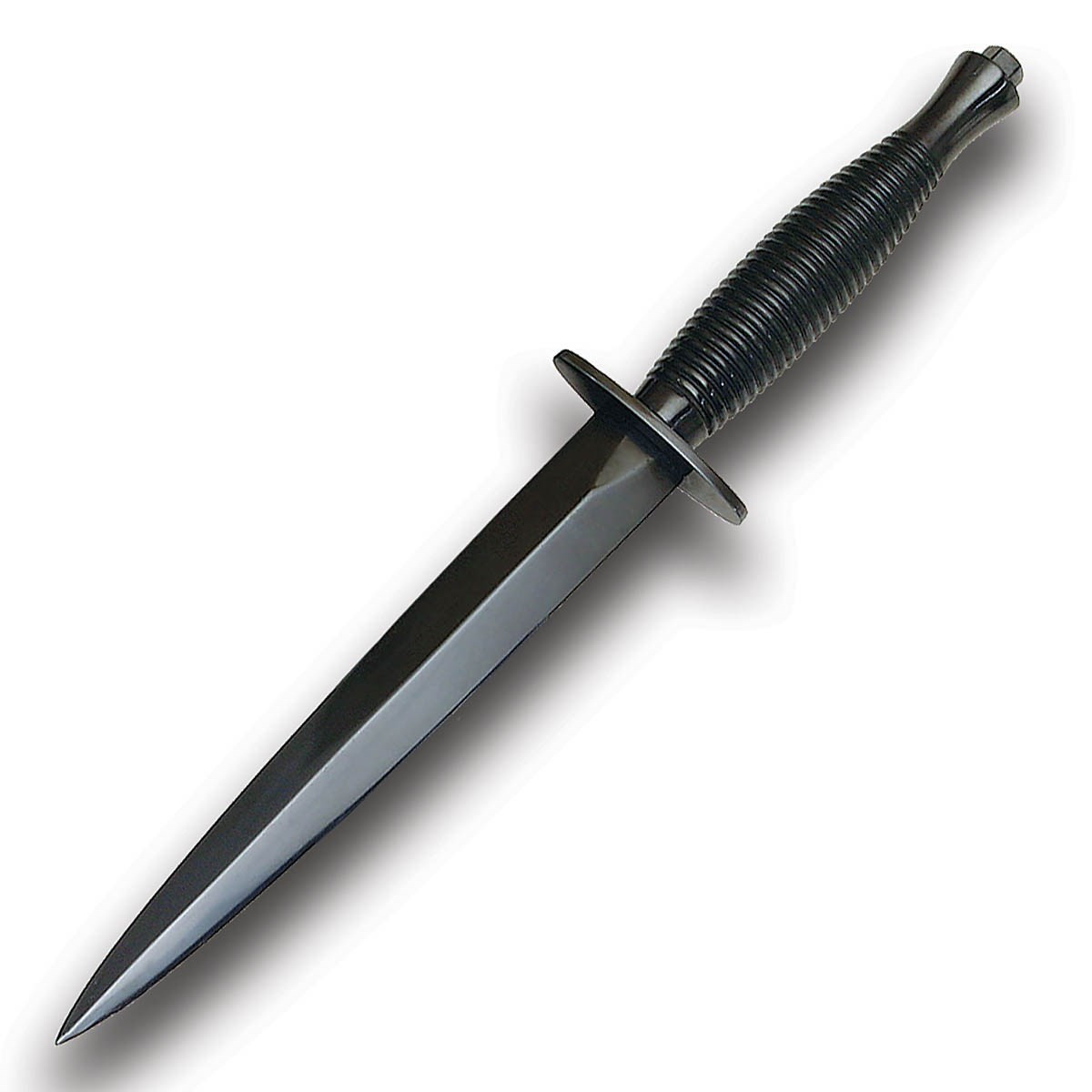
Fairbairn–Sykes Fighting Knife
The Fairbairn–Sykes Fighting Knife was a slim, double-edged dagger designed in 1940 by William Fairbairn and Eric Sykes, two former… Continued…
-
Flak Jacket
The flak jacket is the fragmentation-protective vest of the mid-twentieth century: first the steel-plated flak suits of American bomber… Continued…
-
Franchi SPAS-12
The Franchi SPAS-12 is a dual-mode Italian combat shotgun produced from 1979 to 2000 that can be switched between gas-operated… Continued…
-
G3 Rifle
The Heckler & Koch G3 is a select-fire 7.62x51 mm NATO battle rifle adopted by West Germany in 1959 and kept as its standard rifle until… Continued…
-
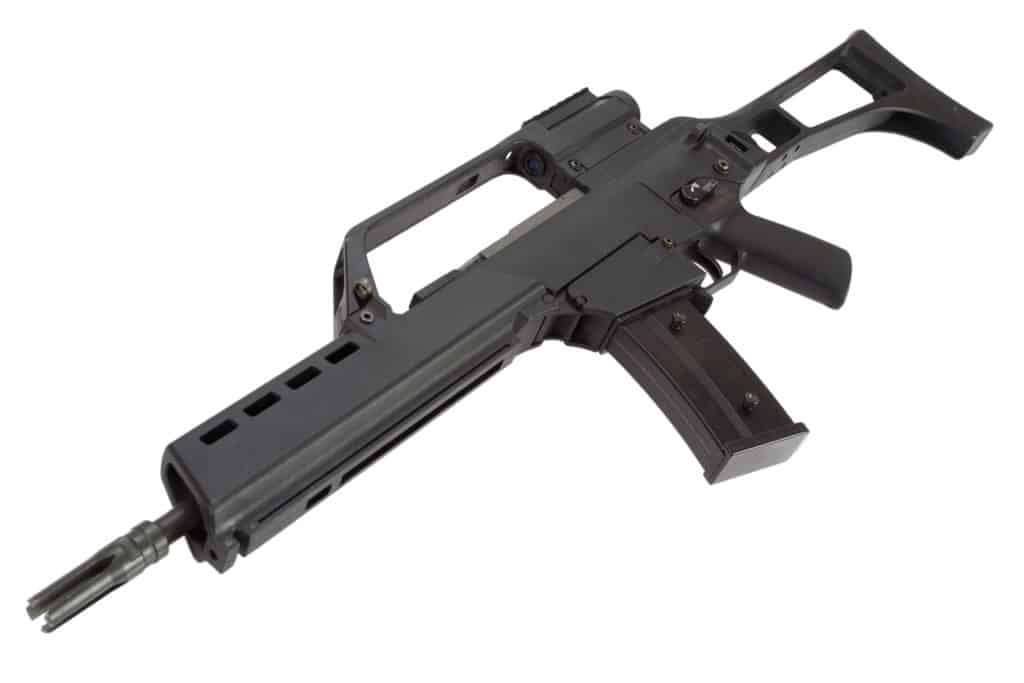
G36 Rifle
The Heckler & Koch G36 is a 5.56x45 mm NATO assault rifle adopted by the German Bundeswehr in 1997 to replace the G3. It uses a… Continued…
-
HK MP5
The Heckler & Koch MP5 is the submachine gun by which every other has been judged since the 1970s. It shrank the roller-delayed blowback… Continued…
-
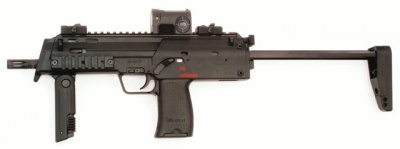
HK MP7
The Heckler & Koch MP7 is a personal defense weapon: a machine pistol the size of a large handgun that fires a small, very fast 4.6x30mm… Continued…
-
IWI Galil
The Galil is an Israeli assault rifle developed in the late 1960s by Yisrael Galili and Yaacov Lior of Israel Military Industries. It is… Continued…
-
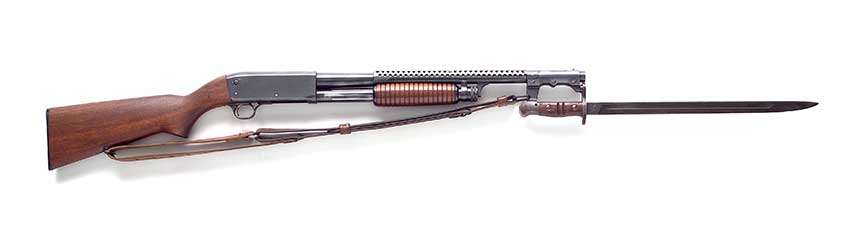
Ithaca 37
The Ithaca 37 is an American pump-action shotgun made by the Ithaca Gun Company of Ithaca, New York, from 1937. Based on a John Browning… Continued…
-
Jambiya
The jambiya is the curved, double-edged dagger of Arabia, worn at the front of the belt in a sheath with a sharply upturned tip. It is most… Continued…
-
K-50M
The K-50M is a North Vietnamese submachine gun of the late 1950s and 1960s: a rebuilt Chinese Type 50, itself a copy of the Soviet PPSh-41.… Continued…
-
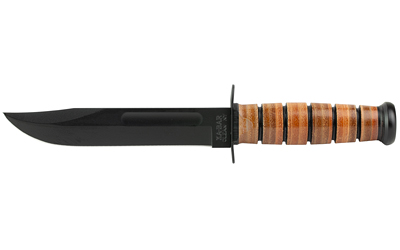
KA-BAR Knife
The KA-BAR is the fighting and utility knife of the United States Marine Corps: a seven-inch clip-point blade of carbon steel with a blood… Continued…
-
Katyusha Rocket Launcher
The Katyusha was a Soviet multiple rocket launcher of the Second World War. Its best-known form, the BM-13, carried rails for sixteen 132mm… Continued…
-
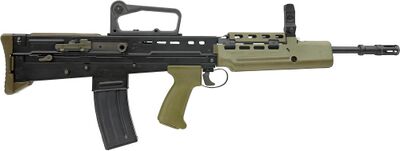
L85A1
The L85A1 is the British Army's 5.56mm bullpup rifle, the individual weapon of the SA80 family. Adopted in 1985 to replace the L1A1… Continued…
-
M1 Carbine
The M1 Carbine was the most-produced American small arm of the Second World War: a five-pound, semi-automatic .30-caliber carbine designed… Continued…
-
M1 Helmet
The M1 helmet was the steel combat helmet of the United States armed forces from 1941 until the mid 1980s, worn through the Second World… Continued…
-
M14 Rifle
The M14 was the United States' last wooden-stocked battle rifle: a select-fire development of the M1 Garand chambered for the new 7.62mm… Continued…
-
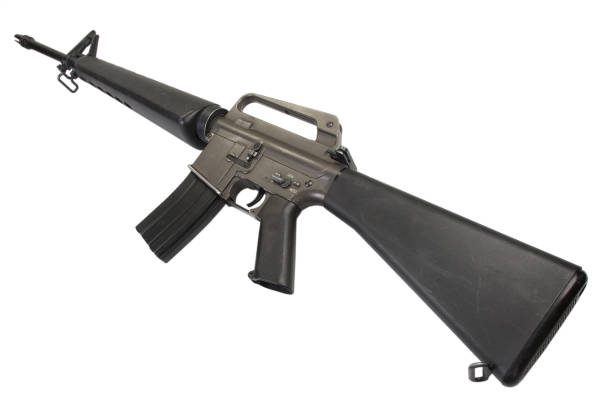
M16 Rifle
The M16 brought the assault rifle to the West: Eugene Stoner's AR-15 design in 5.56mm, built of aluminum forgings and polymer around a… Continued…
-
M18 Claymore Mine
The M18A1 Claymore is an American directional anti-personnel mine. Its curved plastic case holds a layer of C-4 explosive behind about 700… Continued…
-
M1903 Springfield
The M1903 Springfield was the United States' service rifle from 1903 until the M1 Garand replaced it in the late 1930s, and a sniper's and… Continued…
-
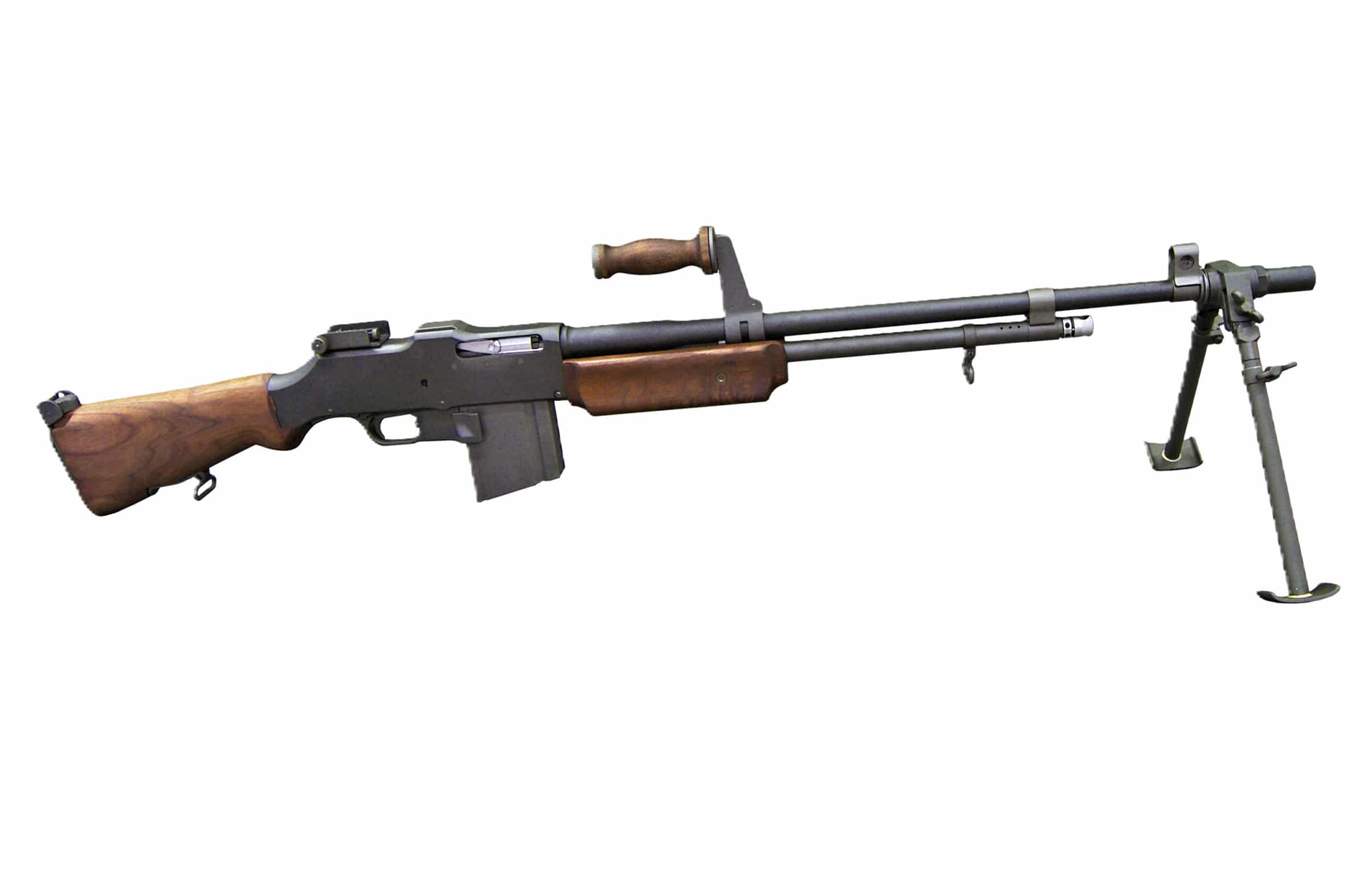
M1918 BAR
The Browning Automatic Rifle was John Moses Browning's shoulder-fired automatic weapon, adopted by the United States Army in 1918 and the… Continued…
-
M1919 Browning Machine Gun
The M1919 Browning is John Browning's water-cooled M1917 machine gun made air-cooled: a short-recoil, belt-fed .30-06 weapon that armed… Continued…
-
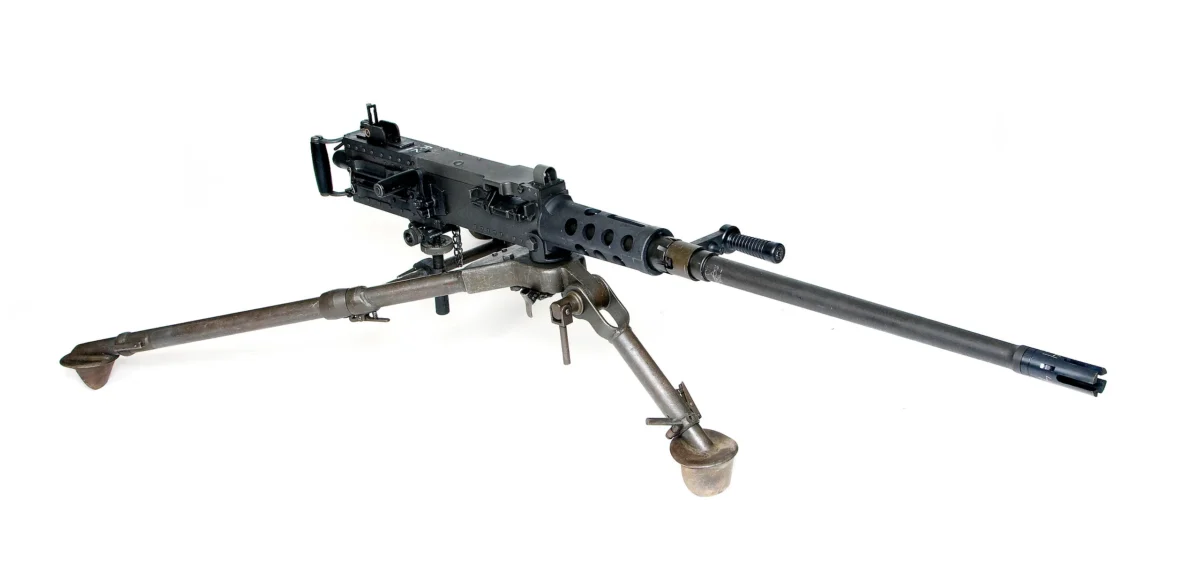
M2 Browning Machine Gun
The M2 is the American heavy machine gun of .50 caliber, designed by John Browning at the end of the First World War and adopted in its… Continued…
-
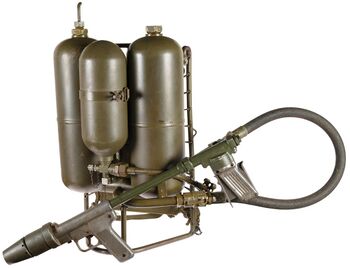
M2 Flamethrower
The M2 was the American portable flamethrower of the late Second World War and the Korean War. It was a backpack with two fuel tanks and a… Continued…
-
M203 Grenade Launcher
The M203 is a single-shot 40 mm grenade launcher that clips under the barrel of an M16 rifle or M4 carbine. Developed by the AAI… Continued…
-
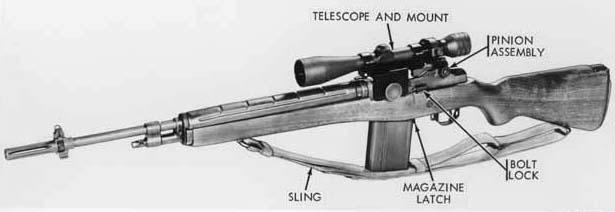
M21 Sniper Weapon System
The M21 Sniper Weapon System was the United States Army's sniper rifle from 1969 to 1988: a National Match M14 selected for accuracy… Continued…
-
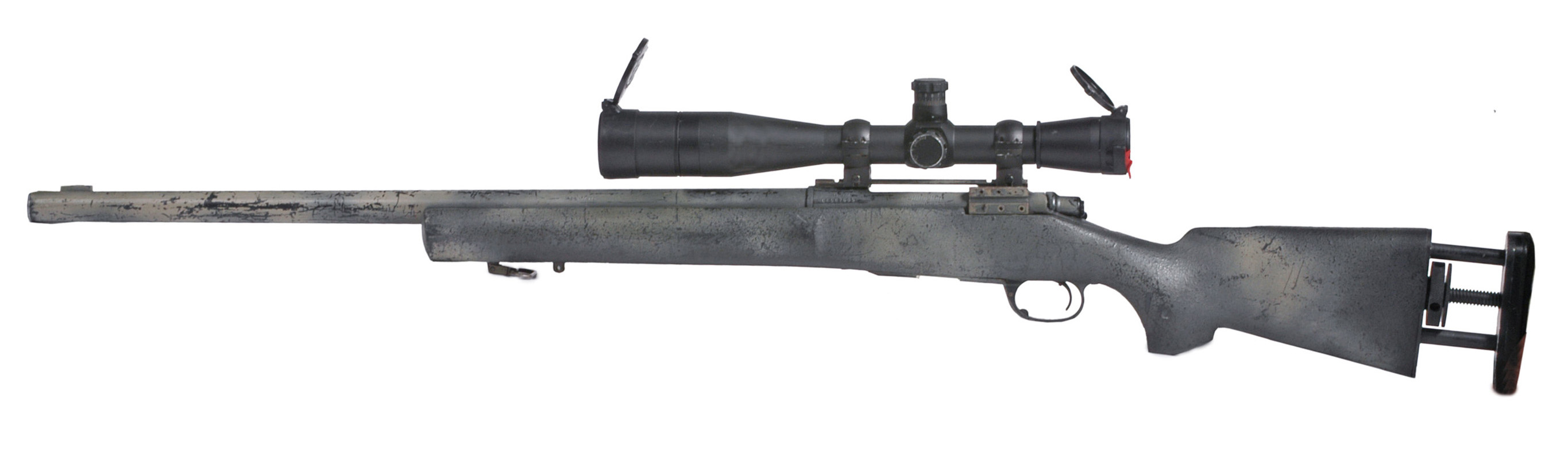
M24 Sniper Weapon System
The M24 Sniper Weapon System was the United States Army's standard sniper rifle from 1988 until the 2010s: a Remington Model 700 long… Continued…
-
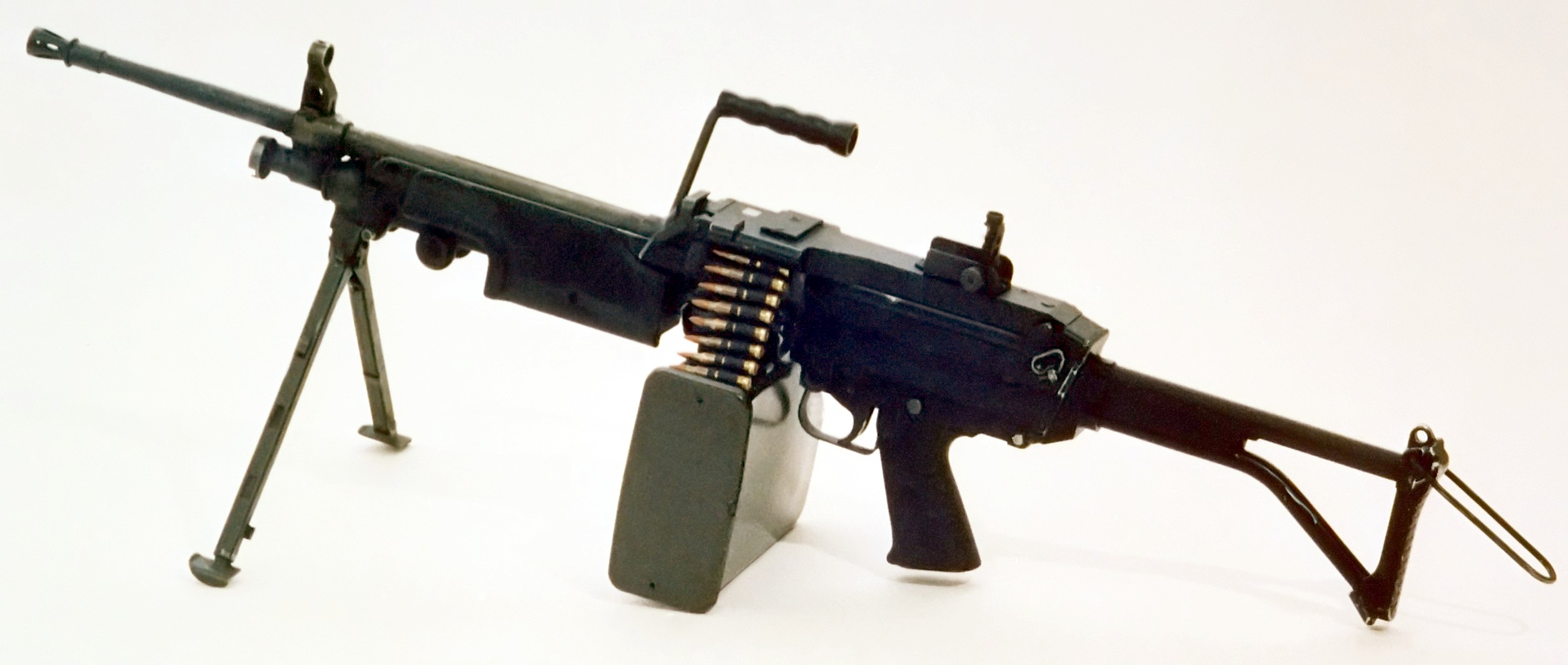
M249 Squad Automatic Weapon
The M249 Squad Automatic Weapon is the American version of the Belgian FN Minimi: a gas-operated, belt-fed 5.56mm light machine gun light… Continued…
-
M26 Grenade
The M26 was the standard American fragmentation hand grenade of the Vietnam War. Adopted in the early 1950s to replace the cast-iron Mk 2… Continued…
-
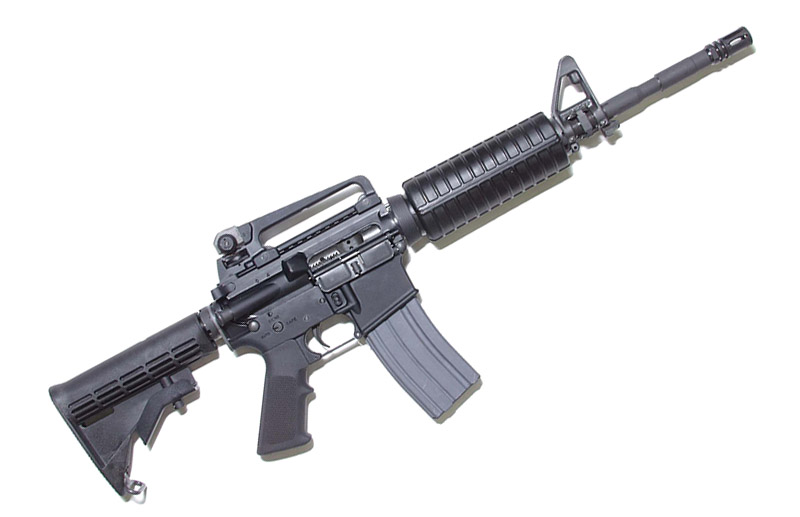
M4 Carbine
The M4 carbine is a shortened, lighter version of the M16 rifle, made by Colt and adopted by the US Army in 1994. It has a 14.5-inch… Continued…
-
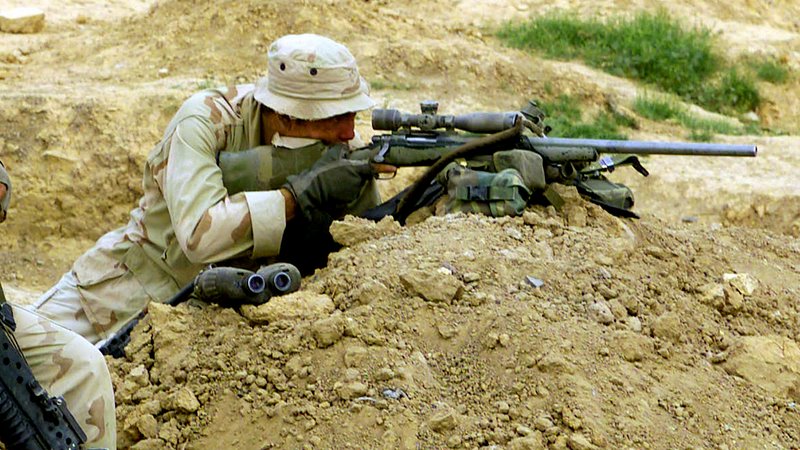
M40 Rifle
The M40 is the bolt-action sniper rifle of the US Marine Corps, adopted in 1966 and in service in successive versions until the 2010s. The… Continued…
-
M60 Machine Gun
The M60 was the United States' first general-purpose machine gun: a belt-fed 7.62mm weapon light enough for one soldier to carry on the… Continued…
-
M67 Grenade
The M67 is the standard fragmentation hand grenade of the United States armed forces. Adopted in the late 1960s, it is a smooth steel… Continued…
-
M72 LAW
The M72 LAW is an American 66 mm anti-tank rocket in a disposable, telescoping launch tube. Adopted by the US Army and Marine Corps in… Continued…
-
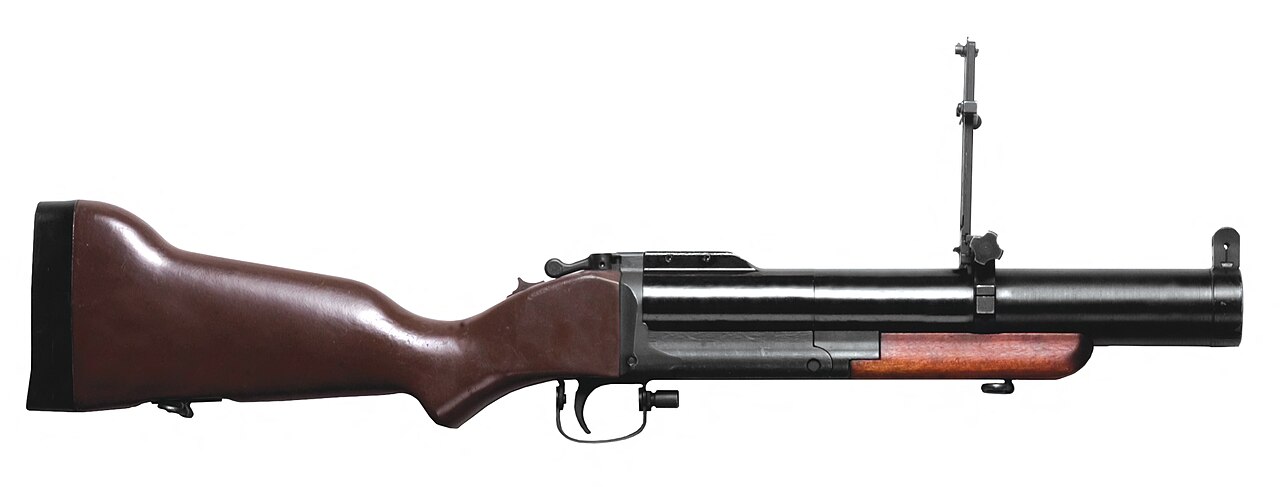
M79 Grenade Launcher
The M79 is a single-shot, break-open, shoulder-fired grenade launcher that fires a 40x46mm low-velocity grenade to about 400 meters… Continued…
-
MAC-10
The MAC-10, properly the Ingram M10, is a very compact submachine gun designed by the American engineer Gordon Ingram in the 1960s and made… Continued…
-
MG 42
The MG 42 was the German general-purpose machine gun of the Second World War and the most influential machine gun of the twentieth century.… Continued…
-
Mills Bomb
The Mills bomb was the British Army's standard hand grenade from 1915 until the 1970s. Designed by the Birmingham engineer William Mills… Continued…
-
Mk 2 Fragmentation Grenade
The Mk 2 was the standard American fragmentation hand grenade from the end of the First World War into the Vietnam War. Its cast-iron body… Continued…
-
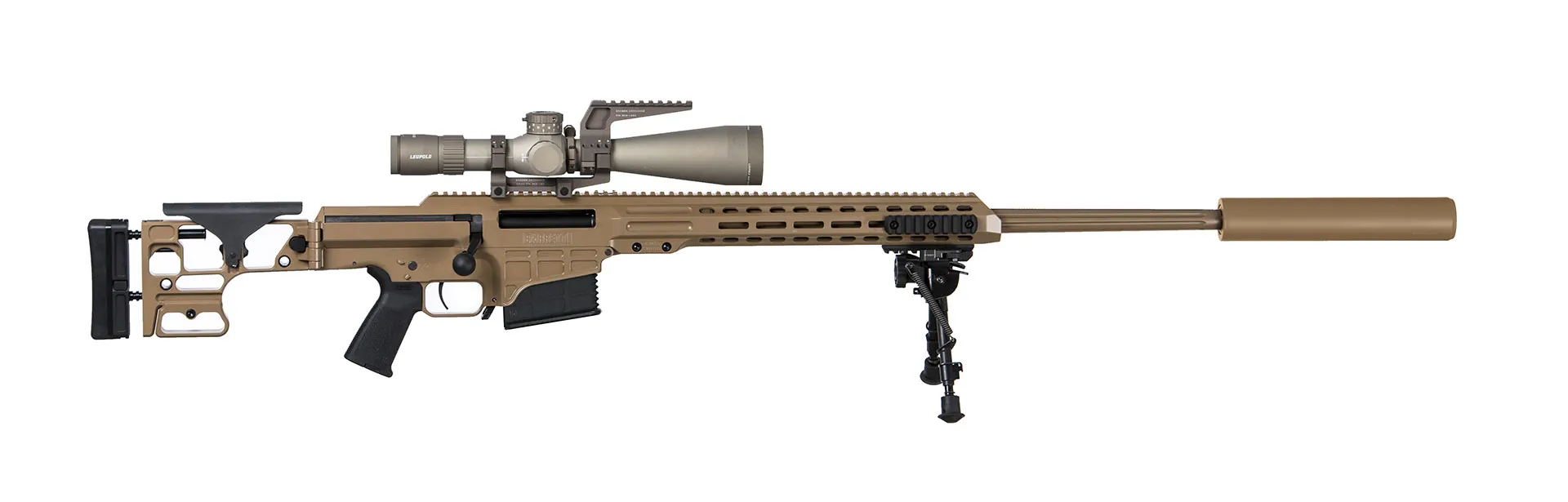
Mk 22 Advanced Sniper Rifle
The Mk22 Advanced Sniper Rifle is a multi-caliber bolt-action sniper rifle based on the Barrett MRAD, chosen by US Special Operations… Continued…
-
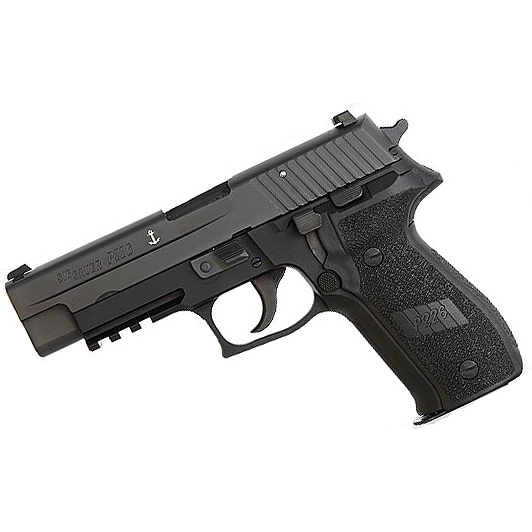
Mk 25
The Mk 25 is the United States Navy's designation for the SIG Sauer P226 as carried by the Navy SEALs: a standard P226 in 9mm with a… Continued…
-
Molotov Cocktail
A Molotov cocktail is a glass bottle filled with gasoline or another flammable liquid, lit by a burning rag or a chemical igniter and… Continued…
-
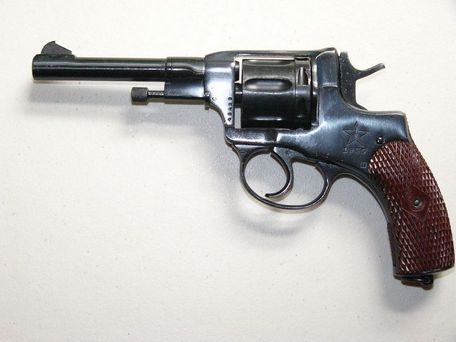
Nagant M1895 Pistol
The Nagant M1895 is the seven-shot Belgian-designed service revolver of Imperial Russia and the Soviet Union, unique among military… Continued…
-
PASGT Helmet
The PASGT helmet was the standard combat helmet of the United States armed forces from the early 1980s until the mid-2000s. Its name stands… Continued…
-
PIAT
The PIAT (Projector, Infantry, Anti-Tank) was the British and Commonwealth infantry's hand-held anti-tank weapon from 1943 to the early… Continued…
-
PK Machine Gun
The PK is a Soviet belt-fed general-purpose machine gun designed by Mikhail Kalashnikov's team and adopted in 1961. It fires the old rimmed… Continued…
-
PPS-43
The PPS-43 is a Soviet submachine gun introduced in 1942, designed by Alexei Sudayev and first built in besieged Leningrad. Made almost… Continued…
-
PTRD-41
The PTRD-41 was a Soviet single-shot anti-tank rifle designed by Vasily Degtyaryov in a few weeks in the summer of 1941 and adopted that… Continued…
-
Plate Carrier
A plate carrier is a piece of body armor equipment: a load-bearing vest built to hold hard ballistic plates over the chest and back, the… Continued…
-
Puukko
The puukko is the traditional Finnish belt knife: a short, single-edged blade with a straight back, a plain handle usually made of birch… Continued…
-
RPD Machine Gun
The RPD was the Soviet Union's first light machine gun for the 7.62x39 mm intermediate cartridge. Designed by Vasily Degtyaryov in 1944 and… Continued…
-
RPG-2
The RPG-2 was the first Soviet shoulder-fired anti-tank grenade launcher to be issued in large numbers. Adopted in 1949, it was a plain 40… Continued…
-
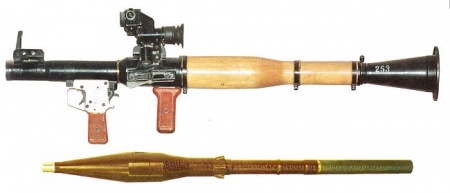
RPG-7
The RPG-7 is a Soviet shoulder-fired, reusable anti-tank grenade launcher adopted in 1961 and the most widely used weapon of its kind in… Continued…
-
Raufoss Mk 211
The Raufoss Mk 211 is a .50 caliber (12.7x99mm) multipurpose cartridge developed in Norway by Raufoss, now part of the Nammo group. Its… Continued…
-
Remington 870
The Remington 870 is a pump-action shotgun made by Remington Arms since 1950. With a steel receiver machined from a solid block and twin… Continued…
-
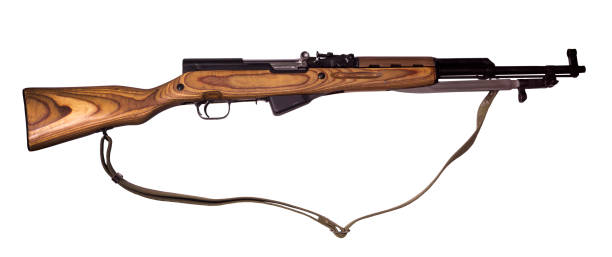
SKS
The SKS is Sergei Simonov's semi-automatic carbine for the Soviet 7.62x39mm intermediate cartridge, adopted in 1949 and made obsolete in… Continued…
-
SVD Rifle
The SVD Rifle, or Dragunov, is a Soviet semi-automatic sniper rifle designed by Yevgeny Dragunov and adopted in 1963. It fires the old… Continued…
-
Satchel Charge
A satchel charge is a bag of explosive blocks, with a carrying strap and a fuse, that a soldier throws or places against a bunker, pillbox… Continued…
-
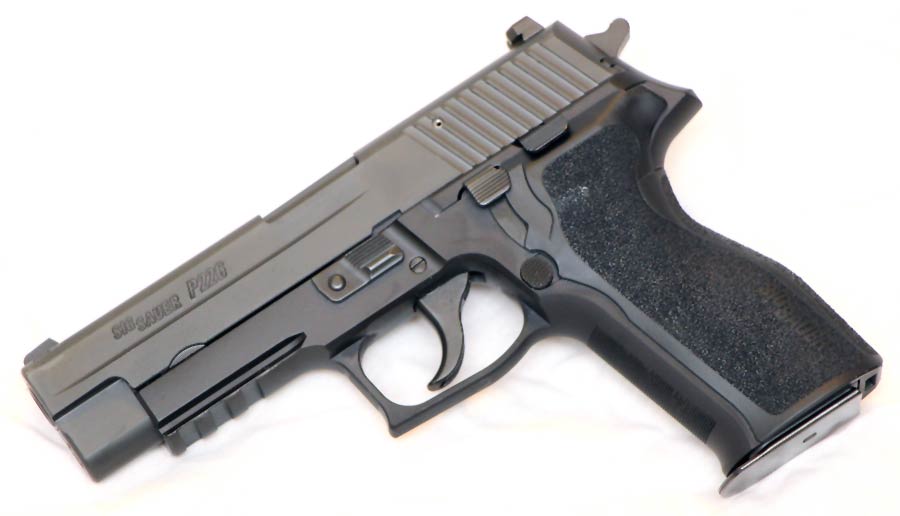
Sig Sauer P226
The SIG Sauer P226 is a full-size double-action service pistol introduced in 1984 for the United States Army's XM9 trials, which it lost to… Continued…
-
Spetsnaz Trench Shovel
The Russian small infantry spade, the MPL-50, is a short, all-steel-bladed entrenching tool of nineteenth-century design that became a… Continued…
-
Sterling Submachine Gun
The Sterling is the 9mm submachine gun that replaced the Sten in British service. George Patchett designed it at Sterling Armaments in… Continued…
-
Swedish Military Mora Knife
The Mora knife is the plain Swedish sheath knife made in and around Mora, in the province of Dalarna, and it was the everyday knife of the… Continued…
-
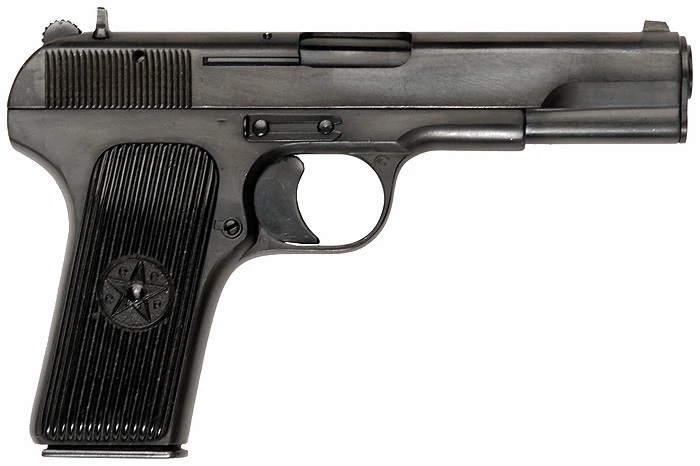
Tokarev TT-33 Pistol
The Tokarev TT-33 was the service pistol of the Red Army from the 1930s until the Makarov replaced it in the 1950s: Fedor Tokarev's… Continued…
-
Type 92 Heavy Machine Gun
The Type 92 was the standard heavy machine gun of the Imperial Japanese Army from the early 1930s to 1945. An air-cooled, gas-operated gun… Continued…
-
Type 99 Rifle
The Type 99 was the last bolt-action rifle of the Imperial Japanese Army: a 7.7mm development of the 6.5mm Type 38 Arisaka adopted in 1939… Continued…
-
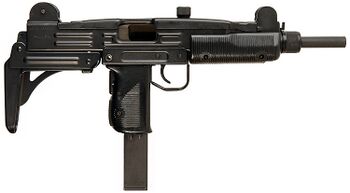
Uzi
The Uzi is a submachine gun designed in Israel by Major Uziel Gal around 1950 and made by Israel Military Industries. By placing the… Continued…
-
ZiS-3
The ZiS-3 was the standard Soviet 76.2mm divisional gun of the Second World War, officially the 76 mm divisional gun model 1942. Designed… Continued…